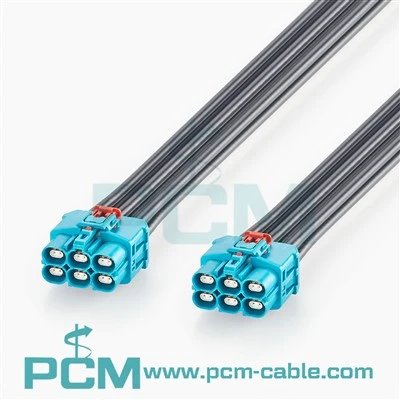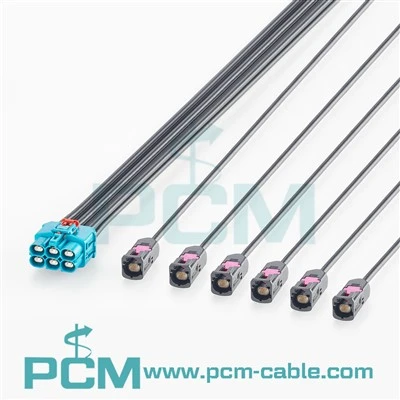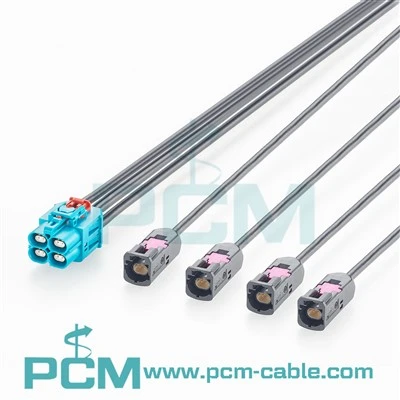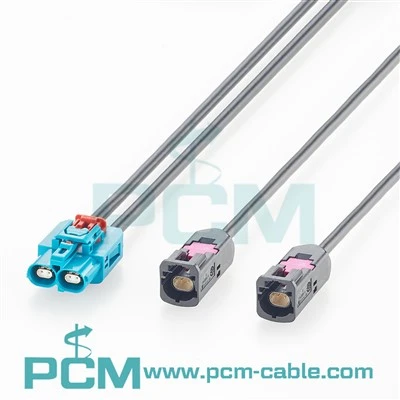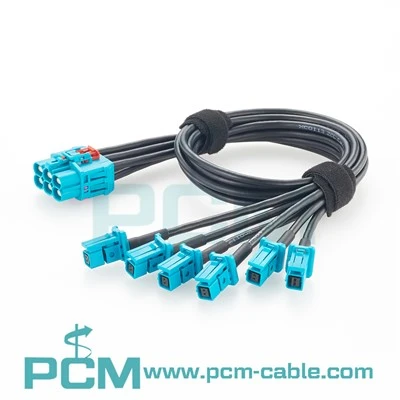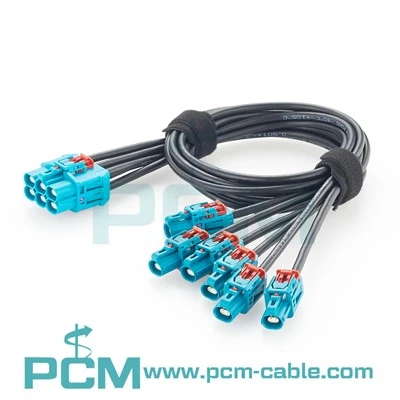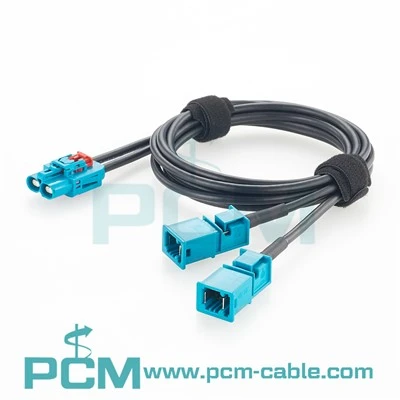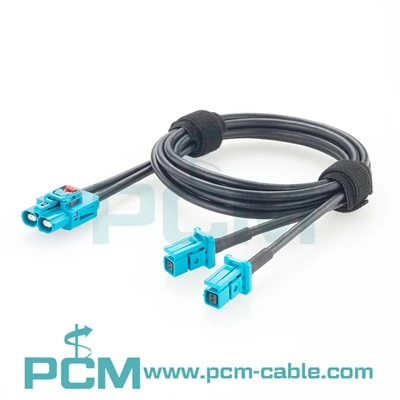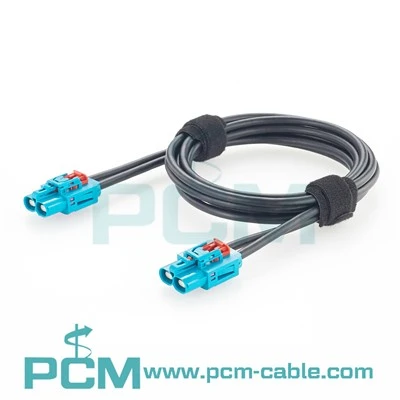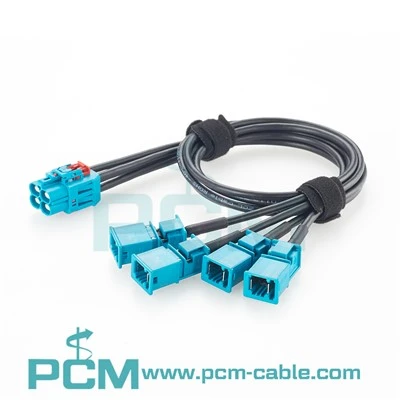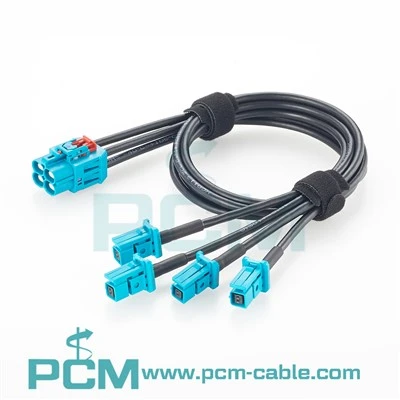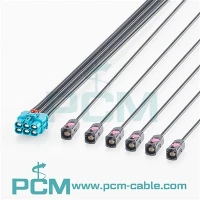


GEMnet Cable Assembly
Product Overview
What is a GEMnet Cable Assembly
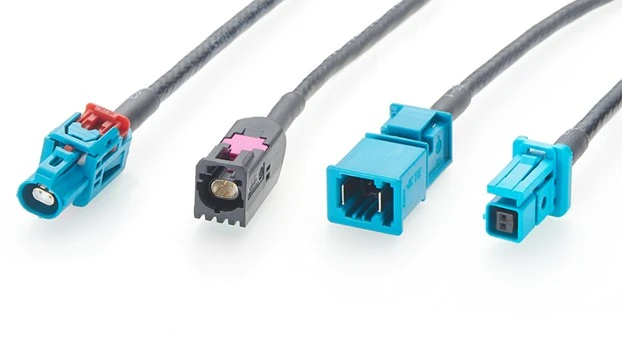
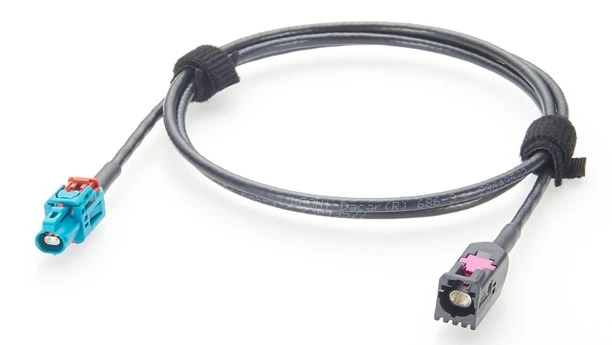
A GEMnet Cable Assembly is a high-speed automotive Ethernet cable assembly built around TE Connectivity’s GEMnet connector system, designed for multi-gigabit Ethernet and SerDes-based vehicle networks. GEMnet interfaces are mechanically and electrically compatible with Rosenberger H-MTD connectors, allowing different automotive Ethernet connector platforms to be mated within the same vehicle network architecture.
These cable assemblies are used to deliver reliable, high-bandwidth data transmission between automotive Ethernet ports while maintaining signal integrity, EMI performance, and automotive-grade robustness.
Why GEMnet Cable Assembly Matters in High-Speed Vehicle Networks
As vehicle architectures evolve toward 10 Gbps and above data links, the cable assembly becomes a critical part of system performance. High-speed automotive Ethernet interfaces operating up to 15 GHz / 56 Gbps place strict requirements on impedance control, shielding continuity, and connector-to-cable transitions.
A dedicated GEMnet Cable Assembly ensures that the electrical performance of the connector system is fully preserved across the cable, avoiding signal degradation that can occur with generic or improperly matched wiring solutions.
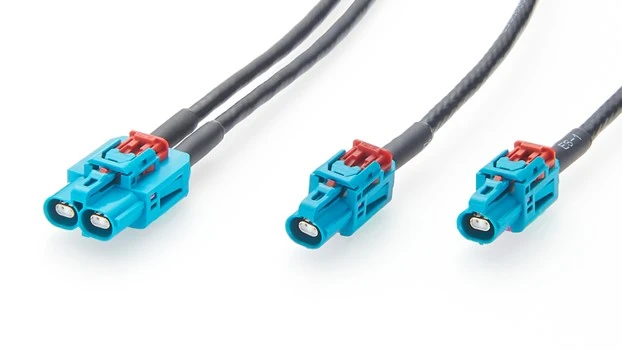
Benefits
- Automotive-grade, robust and compact design
- High bandwidth and data rates up to 15 GHz / 56 Gbps
- Support for next-generation automotive applications and protocols
- Compatibility with STP, UTP, and SPP cable constructions
These features make GEMnet an ideal connector platform for multi-gigabit automotive Ethernet cable assemblies in current and future vehicle architectures.
Applications
- ADAS cameras, radar, and LiDAR systems
- 4K / 8K high-resolution automotive displays
- Autonomous driving and safety-critical data links
- Infotainment and rear-seat entertainment networks
- Zonal and domain controller interconnections
- High-speed automotive Ethernet backbone routing
Specifications
- Transmission medium: Twisted pair
- Bandwidth: Up to 15 GHz
- Data rate: Up to 56 Gbps
- Cable compatibility: STP / UTP / SPP
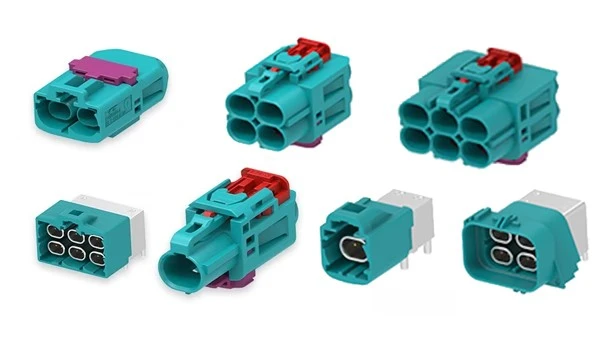
- Connector orientation: 90° / 180°
- Port configurations: 1, 2, 4, and 6 ports
- Interface standard: USCAR compatible
Supported Protocols
- IEEE 802.3cy
- Open Alliance TC9 (100Base-T1, 1000Base-T1, NGBase-T1)
- APIX
- GMSL2 / GMSL3
- FPD-Link IV
- PCIe
- MIPI
- HDBaseT
- ASA
- USB
- GVIF
Frequently Asked Questions
Q1: What is the main difference between the GEMnet connector and the H-MTD connector?
A1: GEMnet and H-MTD are both designed for high-speed automotive Ethernet and share mechanical and electrical compatibility, allowing them to mate with each other. The main difference lies in connector system design, portfolio structure, and supplier ecosystem, rather than signal performance. GEMnet is TE Connectivity’s connector platform optimized for multi-gigabit Ethernet and SerDes applications, while H-MTD is Rosenberger’s equivalent high-speed automotive Ethernet interface.
Q2: Can GEMnet cable assemblies be used to bridge different connector ecosystems in the same vehicle?
A2: Yes. GEMnet cable assemblies are commonly used to interconnect modules using different automotive Ethernet connector ecosystems, especially during platform transitions, multi-supplier programs, or phased architecture upgrades.
Q3: Can GEMnet cable assemblies reduce redesign effort during vehicle platform updates?
A3: Yes. By enabling connector interoperability and flexible routing, GEMnet cable assemblies help OEMs and Tier-1 suppliers adapt network layouts without redesigning entire wiring harnesses.
Q4: Are GEMnet cable assemblies suitable for safety-critical applications?
A4: They are widely used in safety-relevant vehicle systems, but final suitability depends on system-level validation, redundancy design, and OEM safety requirements.
Q5: What are the advantages of sourcing GEMnet cable assemblies from a dedicated manufacturer?
A5: A specialized manufacturer ensures authentic connectors, controlled assembly processes, repeatable quality, and the ability to support mixed-connector architectures and project-specific requirements.