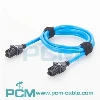
Connecting the plug and socket of PCM Energy Storage Connectors is a straightforward process, designed for safety, high current capacity, and reliable performance in battery energy storage systems (ESS), electric vehicles (EVs), and industrial power applications.
Step 1: Check Compatibility
Ensure that the plug and socket are compatible in terms of:
- Rated current (100A, 120A, 150A, 200A, 350A)
- Radsok size (6mm, 8mm, 12mm)
- Cable gauge and polarity (black for negative, orange for positive)
- Using the correct pair minimizes power loss and contact resistance while maintaining a secure high-voltage connection.
Step 2: Inspect Components
Before connecting, inspect the plug and socket:
- Make sure the Radsok contacts are clean and free from debris.
- Check the IP67 sealing rings to ensure waterproof integrity.
- Verify that the locking mechanism is functional.

Step 3: Align and Insert
- Rotate the plug to align with the socket orientation.
- Insert the plug fully into the socket until you hear or feel the click of the locking mechanism.
- The 360° rotating plug design ensures flexibility and compact installation in battery modules or panel mounts.
Step 4: Secure and Test
- Confirm that the locking system is engaged, preventing accidental disconnection.
- Test the connection under no-load first, then under operational conditions.
- The PCM Energy Storage Connector is designed for repeatable insertion/removal, up to 1000 cycles for plugs and sockets.
Key Tips:
- Do not force the plug into a mismatched socket; always check rated voltage and current compatibility.
- Follow standard safety procedures for high-voltage connections.
- Regularly inspect the connectors for wear, especially in outdoor or industrial environments.
By following these steps, you ensure safe, efficient, and durable high-current connections for PCM Energy Storage Connectors in any battery storage, EV, or renewable energy system.

You May Also Like

350A BESS Connectors

200A High Current Energy Storage Connectors

150A Battery Energy Storage Connectors

12mm Female Energy Storage Connector

8mm Female Energy Storage Connector

6mm Energy Storage Connector Receptacle