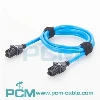
When setting up an NMEA 2000 network, it is recommended to use a backbone cable that meets the NMEA 2000 specifications for maximum performance and reliability. The backbone cable is the main cable that connects all the devices on the network, and it is important to choose the right cable for your specific application.
The NMEA 2000 backbone cable consists of two wires, a data wire and a power wire. The data wire is used to transmit data between devices, while the power wire provides power to the devices on the network. It is important to use the correct wire size for the power wire to ensure that there is enough power for all the devices on the network.
When choosing a backbone cable, it is important to consider the length of the cable, the number of devices on the network, and the power requirements of the devices. In general, it is recommended to use a backbone cable that is no longer than 6 meters (20 feet) to ensure reliable communication between devices. If a longer cable is required, a backbone extender or additional power source may be necessary.
NMEA 2000 backbone cables are available from a variety of manufacturers, including Garmin, Lowrance, Simrad, and others. It is important to choose a cable that is compatible with your specific devices and meets the NMEA 2000 specifications for maximum performance and reliability.