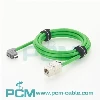
VFD cables have some significant advantages over non-VFD cables, especially in applications where frequency converters and motors are connected. Here are a few of the main advantages of VFD cables:
- Electromagnetic interference protection: VFD cables usually have a shielding design to effectively reduce electromagnetic interference (EMI) and ensure the stability and reliability of signal transmission. Non-VFD cables may lack this protection.
- High-frequency performance: VFD drive cable is specially designed for high-frequency signal transmission, which can adapt to the speed regulation requirements of the frequency converter and reduce signal reflection and distortion.
- High temperature and abrasion resistance: Shielded VFD cable usually uses high-temperature and abrasion-resistant materials, suitable for the harsh conditions of industrial environments, while non-VFD cables may be weaker in these aspects.
- Flexibility: VFD spindle cable is generally designed to be more flexible and easier to use in complex cabling environments.
- Multi-conductor configuration: Flexible VFD cables often contain multiple conductors that can transmit power and control signals simultaneously for easy connection and use.
Although VFD cables are superior to non-VFD cables in many ways, selecting the appropriate cable still depends on specific application needs and environmental conditions. If your system uses a frequency converter, choosing VFD cable is usually a better choice.

You May Also Like

Spindle Cable

VFD Cables
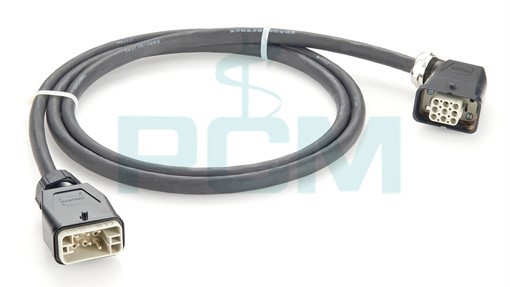
Shielded VFD Cable

CNC Spindle Cable

Spindle Extension Cable

VFD Cable Assembly VFD Spindle Cable