When building a double-shielded cable assembly for a CNC system, you can follow these steps:
Material Preparation
- Cable: Select a double-shielded cable suitable for the CNC system, which usually contains multiple wires.
- Connector: Select a suitable connector (such as M23/M12/7/8" connector, H17 or H20 connector, D-sub, etc.) according to system requirements.
- Heat shrink tubing or cable jacket: Used to protect the connection part.
- Tools: Wire strippers, crimping tools, heat guns, or lighters (for heat shrink tubing).
Steps
1. Cut the cable:
Cut the double-shielded cable according to the required length.
2. Strip the insulation layer:
Use wire strippers to carefully strip the outer insulation of the cable to expose the inner shielding layer and wires. Be careful not to damage the inner wires.
3. Handle the shield layer:
Gently peel off the shielding layer (usually aluminum foil or braided mesh) and fold it together for subsequent connection.
4. Strip the wire insulation:
Strip the insulation layer of each wire to expose the conductor of the appropriate length.
5. Connect the wires:
Connect each wire to the corresponding connector pin according to the wiring diagram of the connector. Make sure the connection is firm to avoid poor contact.
6. Connect the shield:
Connect the cable shield to the ground terminal to ensure good grounding performance.
7. Fix the connector:
Use a crimping tool to fix the connector on the cable to ensure a secure connection.
8. Protective treatment:
Wrap the connection part with heat shrink tubing and heat it with a hot air gun to make it tightly fixed and protect the connection.
9. Test:
After completion, check each connection to ensure that there are no exposed wires and perform an electrical test to confirm whether the connection is normal.
Notes
- Make sure to keep clean in all steps to avoid impurities affecting the connection.
- Wear protective equipment during operation to ensure safety.
With the above steps, you can successfully build a high-quality double-shielded cable assembly to provide stable and reliable power and signal transmission for the CNC system.
You May Also Like

Spindle Cable

VFD Cables
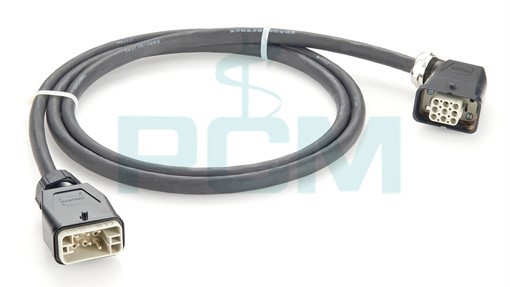
Shielded VFD Cable

CNC Spindle Cable

Spindle Extension Cable

VFD Cable Assembly VFD Spindle Cable