

USB cameras and GMSL cameras are two different types of cameras. They have significant differences in data transmission methods, application scenarios and technical characteristics.
1. USB camera
USB cameras are connected to computers or other devices through USB interfaces, and are commonly found in ordinary network cameras, security surveillance cameras, or industrial cameras. They usually use USB 2.0 or USB 3.0/3.1 interfaces for data transfer.
Advantage:
- Convenience: USB cameras are simple to connect, and almost all modern computers have USB ports.
- Plug and play: Most USB cameras support plug and play for easy installation and configuration.
- Lower cost: USB cameras are generally cheaper than GMSL cameras.
Shortcoming:
- Limited bandwidth: The bandwidth of the USB interface is low and may not be able to handle high-resolution or high-frame-rate video data, especially in scenarios that require high-quality video streaming (such as 4K or higher resolution applications).
- Short transmission distance: USB transmission distance is usually limited to a few meters, beyond which a signal extender is required.
2. GMSL camera
GMSL (Gigabit Multimedia Serial Link) cameras use the GMSL protocol for high-speed data transmission. GMSL technology was originally used in the automotive industry to support high-resolution video streaming and long-distance transmission, and is widely used in fields such as autonomous driving, industrial automation and machine vision.
Advantage:
- High-speed transmission: GMSL cameras can provide higher data transmission rates (for example, GMSL3 supports speeds up to 12Gbps), suitable for transmitting high-resolution video data and supporting video streams up to 4K.
- Long-distance transmission: Stable data transmission up to 15 meters or more can be achieved through coaxial cables or twisted pairs, which is suitable for application scenarios that require long-distance connections.
- Support multi-camera systems: GMSL cameras support multiple cameras working in parallel, suitable for complex vision systems and multi-camera networks.
Shortcoming:
- Requires additional hardware support: GMSL cameras require matching GMSL capture cards or decoders, which increases the complexity of the system.
- Higher cost: GMSL cameras have higher hardware costs and are typically used in high-end applications.
3. Which camera is better for nature photography?
For nature photography (such as landscape photography, wildlife photography, etc.), USB cameras are usually more suitable for the following reasons:
- Easy to use: USB cameras are usually used for lightweight devices or home use, and are easy to connect to laptops, desktops, etc., suitable for daily photography needs.
- Cost-Effectiveness: For most nature photography applications, USB cameras provide adequate resolution and image quality at a lower cost.
- Portability: USB cameras are usually small and suitable for carrying to various outdoor environments.
If very high resolution is required (such as shooting ultra-high-definition images or videos) or when multiple cameras are used in specific scenarios (such as machine vision, autonomous driving, etc.), GMSL cameras may be a better choice, but for ordinary natural For photography applications, USB cameras are sufficient.

You May Also Like

GMSL Cable Fakra Female to Female Cable
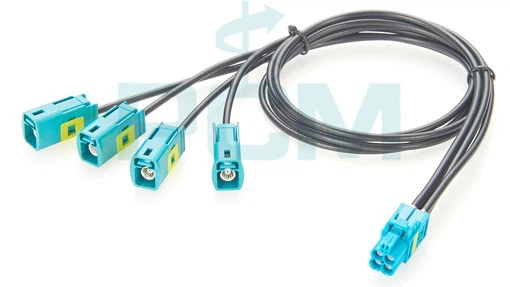
Quad Fakra Female to Female Cable
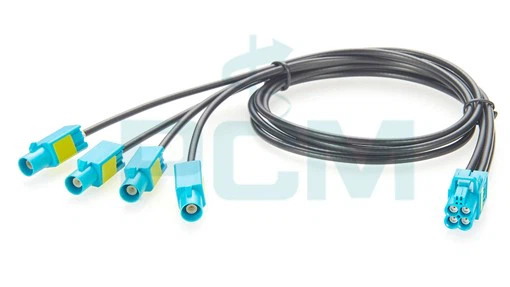
Quad Mini Fakra HFM Cable Assembly
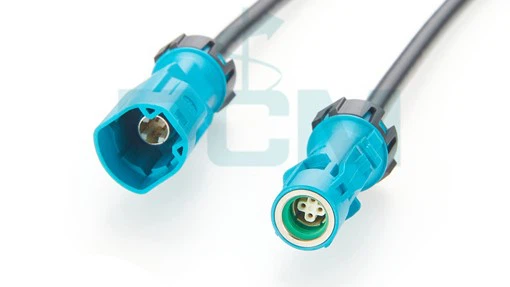
HSD Male to Female Automotive Cable
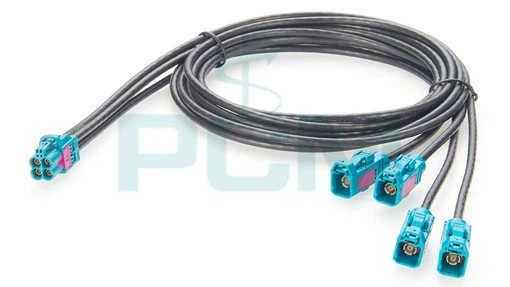
FAKRA Mini HFM Quad to 4 x FAKRA Z Plug

GMSL Fakra 1-to-4 M-F Cable for Camera


