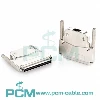
Terminating a CAN (Controller Area Network) bus is an essential step in ensuring reliable communication between devices in the network. The termination process involves adding resistors to the two ends of the network to minimize signal reflections and prevent signal distortion.
To terminate a CAN bus, you first need to identify the endpoints of the network. The endpoints are the devices that are farthest away from each other in the network. It could be the last node in the network or a device that is not connected to any other device.
Once you have identified the endpoints, you should add a CAN termination resistor of 120 ohms across the two ends. This resistor will provide a path for the current to flow and will minimize signal reflections. Without the termination resistor, the signals will bounce back and forth in the network, causing noise and signal distortion.
It is important to note that termination resistors should only be added to the endpoints of the network. Adding a terminator in the middle of the network can create signal reflection and cause communication problems.
In summary, proper termination of a CAN bus is a crucial step in ensuring reliable communication between devices in the network. By adding termination resistors to the endpoints of the CAN bus, you can prevent signal distortion and ensure efficient data transfer.

You Might Also Like

CAN Bus Adaptor With 9 Pin D-Sub

CAN Termination Plug

120 Ohm Bus Termination For CAN Systems

CAN Terminator With 120 Ohm Resistor

M12-to-DB9 5-Pin Adapter Cable [NMEA 2000, CANopen]

CAN T-Adapter