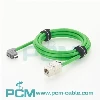
To convert GMSL signals to PCIe signals via SerDes, the following steps are usually involved:
1. Serialization (GMSL to serial data)
- Serializer: GMSL interfaces usually involve high-speed serial data transmission. The serializer converts parallel data from a source device (such as a camera, sensor, or FPGA) into a high-speed serial signal that can be transmitted through GMSL.
- GMSL serializer: A GMSL serializer IC is required, which converts parallel data from a camera or sensor into serialized GMSL signals. These signals are transmitted over coaxial cable or twisted pair.
2. Transmission via GMSL
- GMSL cable: Serialized data is transmitted via GMSL cable, usually using Fakra connectors or similar coaxial cables. GMSL links can transmit not only data, but also power and control signals depending on the different versions of GMSL (GMSL1, GMSL2 or GMSL3).
3. Deserialization (Serial Data to PCIe)
- Deserializer: On the receiving end, the deserializer converts the serial GMSL data stream back into parallel data. Deserializers are usually able to handle both GMSL and PCIe protocols.
- GMSL to PCIe Deserializer IC: A GMSL to PCIe Deserializer is required. This component converts the received serial GMSL data into a format that can be processed by the PCIe end device or card.
4. PCIe bridging
- PCIe bridging: After the data is deserialized, it needs to be mapped to the PCIe protocol through a PCIe bridge IC or PCIe switch. The bridge converts the deserialized parallel data into a PCIe compatible format, which can then be transferred to a PCIe card or interface, enabling high-speed data transmission between devices (such as cameras or sensors) and PCIe systems.
Summary:
To convert GMSL to PCIe via SerDes:
- Serialize parallel data using a GMSL serializer.
- Transmit serial data over a GMSL cable.
- Deserialize data using a GMSL to PCIe deserializer.
- Convert deserialized data to PCIe interface format using a PCIe bridge.

You May Also Like

GMSL Cable Fakra Female to Female Cable
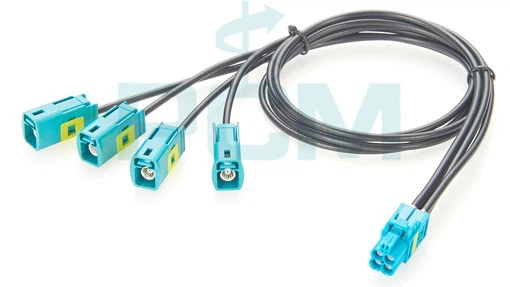
Quad Fakra Female to Female Cable
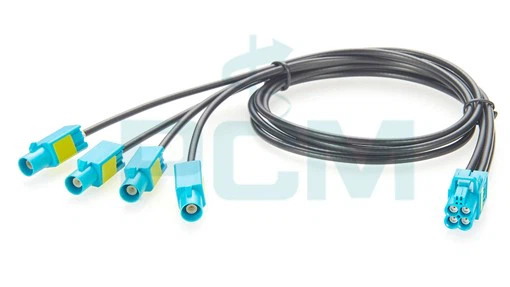
Quad Mini Fakra HFM Cable Assembly
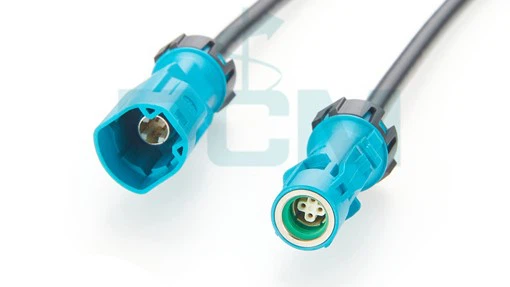
HSD Male to Female Automotive Cable
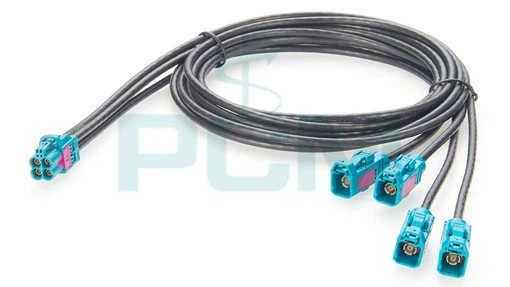
FAKRA Mini HFM Quad to 4 x FAKRA Z Plug

GMSL Fakra 1-to-4 M-F Cable for Camera