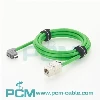
Both GMSL2 and GMSL3 cables are coaxial cables used to support high-bandwidth video and data transmission. The main difference lies in the supported protocol versions and performance requirements. Here is a comparison:
1. Data Rate and Resolution Support
GMSL2 Cable
- Data Rate: Supports data rates up to 6 Gbit/s.
- Resolution Support: Supports cameras up to 8 megapixels, and supports 4K resolution displays and video streams through Display Stream Compression (DSC) technology.
- Application: Suitable for transmitting single high-resolution camera data, or 4K display video streams.
GMSL3 Cable
- Data Rate: Supports forward link rates up to 12 Gbit/s, which is twice that of GMSL2.
- Resolution Support: Mainly supports multi-channel 4K resolution video stream transmission, and can daisy-chain multiple displays and cameras.
- Application: Designed for scenarios that require multi-channel video stream aggregation, such as ADAS (Advanced Driver Assistance System), surround view cameras, and daisy-chain connections for in-vehicle displays.
2. Cable requirements and parameters
Common cable types
- GMSL2 and GMSL3 systems typically use shielded coaxial cables (such as RTK031, etc.) or twisted pairs to transmit signals.
- Fakra or HSD connectors are commonly used in these systems to ensure the reliability and anti-interference of high-frequency signal transmission.
Transmission distance:
- GMSL2 Cable: On standard shielded coaxial cable, the transmission distance is typically 15 to 20 meters, depending on the cable type and transmission rate.
- GMSL3 Cable: Due to the higher signal rate, the transmission distance is generally 10 to 15 meters, and high-quality cables and connectors can extend the distance.
3. Key Features and Benefits
GMSL2
- Provides compressed and uncompressed video data transmission.
- Supports Ethernet tunneling, allowing Ethernet data transmission over a single cable (up to 1.5 Gbit/s reverse channel rate).
- Suitable for mainstream automotive systems with high-resolution single cameras and displays.
GMSL3
- Enhanced multi-device aggregation capabilities, allowing video streams from multiple cameras or displays to be transmitted over a single cable.
- Supports higher data rates and more complex system architectures, such as multi-channel 4K display video streams.
- Provides an ideal solution for multi-sensor and display connectivity in autonomous vehicles.
4. History and evolution of GMSL
- GMSL (2008): supports 3.125 Gbit/s for transmitting high-definition display or camera video streams.
- GMSL2 (2018): supports 6 Gbit/s and adds display stream compression and Ethernet tunneling functions.
- GMSL3 (2021): supports 12 Gbit/s, optimizes multi-device aggregation, daisy chain connection, and enhances system flexibility.
GMSL2 cable VS GMSL3 cable
| Attribute | GMSL2 Cable | GMSL3 Cable |
|---|---|---|
| Data Rate | Up to 6 Gbit/s | Up to 12 Gbit/s |
| Resolution Support | Supports 4K displays (via DSC technology) | Supports multiple 4K video streams |
| Device Connectivity | Suitable for single camera or single display connections | Supports multi-camera aggregation, daisy-chained displays |
| Transmission Distance | 15–20 meters (depending on conditions) | 10–15 meters |
| Backchannel Rate | 187.5 Mbit/s or 1.5 Gbit/s | 187.5 Mbit/s or 3 Gbit/s |
| Key Features | Supports Display Stream Compression (DSC) and Ethernet tunneling | Supports multi-camera aggregation, high-speed daisy-chaining |
| Typical Applications | Single camera systems, 4K video streaming displays | Autonomous driving systems, multi-camera ADAS, multi-display connectivity |
| Cable Type | Shielded coaxial cables or twisted pairs | High-quality shielded coaxial cables |
| Release Date | 2018 | 2021 |
| Cost | Lower | Higher |
| Use Cases | Moderate complexity systems (e.g., infotainment systems, single-camera ADAS) | High-complexity systems (e.g., autonomous driving, surround view, multi-display setups) |

You May Also Like

GMSL Cable Fakra Female to Female Cable
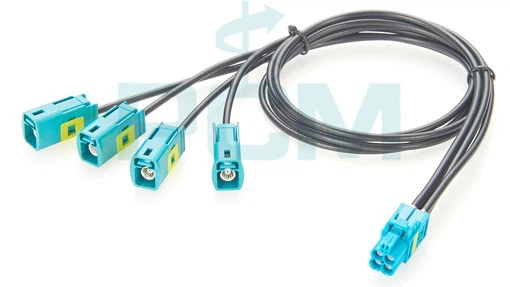
Quad Fakra Female to Female Cable
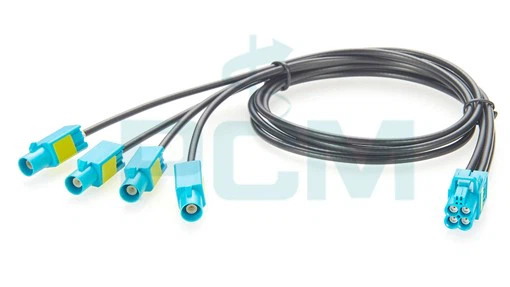
Quad Mini Fakra HFM Cable Assembly
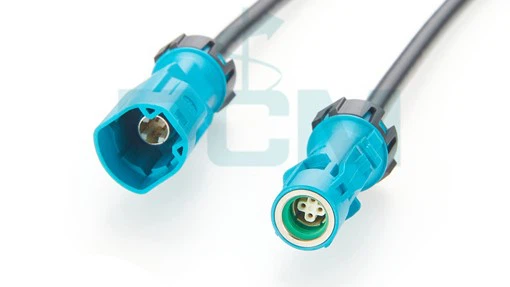
HSD Male to Female Automotive Cable
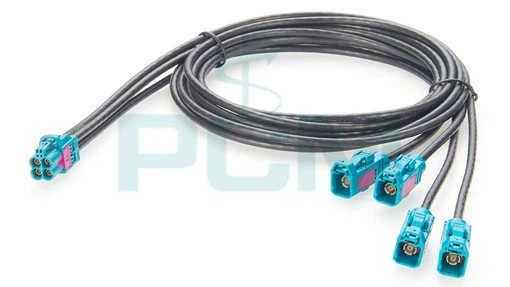
FAKRA Mini HFM Quad to 4 x FAKRA Z Plug
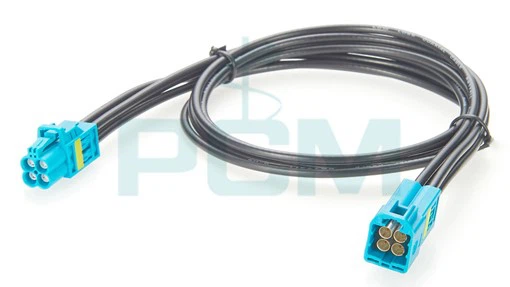
Quad Mini Fakra Male to Female Cable