When it comes to network connectivity, Ethernet is the most common and widely used technology. As the standard for Ethernet connections, RJ45 cables have also become an indispensable part of modern networks. This article will delve into the feasibility, advantages, and proper use of RJ45 cables as Ethernet connections.
What is an RJ45 cable?
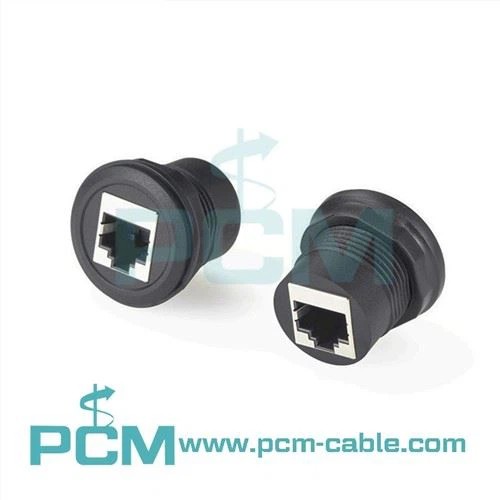
RJ45, also known as Registered Jack 45, is a common network connection interface used to connect computers, network devices, and other devices to a local area network (LAN) or wide area network (WAN). The RJ45 interface adopts the design of 8P8C (8-position 8-connector), which means it has 8 metal pins and 8 connection positions. This type of interface is commonly used to transmit data through the Ethernet protocol, hence the RJ45 cable is also known as an Ethernet cable.
Advantages of RJ45 cable
There are many advantages to using RJ45 cables as Ethernet connections, some of which are as follows:
High speed connection: The RJ45 cable supports high-speed data transmission and can provide connection speeds ranging from megabits per second (Mbps) to gigabits per second (Gbps), making it suitable for various scenarios that require different bandwidths.
Wide compatibility: Almost all modern computers, network devices, and routers are equipped with RJ45 interfaces, making RJ45 cables a convenient connection solution.
Stable and reliable: The RJ45 cable is firmly connected and not easily loose, so it has high stability during the connection process, avoiding network interruption problems caused by loose connections.
Flexibility: RJ45 cables can adapt to different lengths, ranging from a few inches to hundreds of feet. Users can choose the appropriate length according to their actual situation.
Cost effectiveness: Compared to some other high-end connectivity solutions, the cost of RJ45 cables is relatively low, making it the preferred choice for many home and enterprise networks.
Precautions for using RJ45 cables
Although RJ45 cables have many advantages, there are still some precautions to be taken when using them to ensure optimal connection quality and network performance.
Correct wiring sequence: Each pin of the RJ45 cable has a specific function and must be connected in the correct wiring sequence. In general, using T568A or T568B standards for connection is a common practice, which helps to avoid connection errors.
Cable quality: Choosing high-quality RJ45 cables is crucial. Low quality cables may cause signal interference, reduced speed, or unstable connections.
Connector quality: The connector of RJ45 cable should be firm and of reliable quality. A poor connector may cause the connection to be unstable or even completely disconnected.
Avoid bending and pulling: During use, cables should avoid excessive bending and pulling, which may damage the internal cables and affect signal quality.
Appropriate length: Select the appropriate length of cable as needed. Long or short cables may affect signal quality, so appropriate lengths should be selected based on the actual situation.
Scenarios using RJ45 cables
RJ45 cables are widely used in various scenarios, including but not limited to:
Home network: In home networks, RJ45 cables can be used to connect computers, game consoles, smart TVs, and other devices to home routers, achieving high-speed and stable network connections.
Office environment: In the office, RJ45 cables are used to connect employees' computers, printers, servers, and other devices to support various needs of the office network.
Data center: In the data center, RJ45 cables connect servers, storage devices, and network devices to build large-scale data transmission and processing infrastructure.
Industrial control: In the industrial field, RJ45 cables are used to connect industrial automation equipment and achieve data transmission and control between devices.