When designing or upgrading an industrial automation system using Profinet, selecting the right cable type is just as critical as choosing the right hardware. The Profinet standard defines three types of cables-Type A, Type B, and Type C-each optimized for different installation environments and mechanical demands.
In this guide, we'll break down the differences between Profinet cable types, their applications, and how to make the right choice for your project.
What Is a Profinet Cable?
Profinet cables are industrial Ethernet cables used to connect field devices, controllers (PLCs), and I/O systems in real-time data networks. They are designed to meet high standards of EMI resistance, mechanical durability, and reliability in harsh industrial conditions.
Profinet cables typically use:
- Shielded twisted pairs (STP)
- Green outer jacket (Profinet standard)
- Solid or stranded conductors
- PVC, PUR, TPE, or TPU insulation depending on flexibility and durability needs
Profinet Cable Types Comparison
| Feature | Type A | Type B | Type C |
|---|---|---|---|
| Installation | Fixed | Occasional movement | Continuous flexing (dynamic use) |
| Conductor | Solid copper | Stranded copper | Fine-stranded copper |
| Flexibility | Low | Medium | High (drag chain rated) |
| Durability | Standard | Enhanced | Maximum |
| Typical Jacket | PVC, FRNC, or TPU | PUR or TPU | TPE, TPU, or drag chain PUR |
| Applications | Cable trays, cabinets | Semi-mobile setups | Robotic arms, cable carriers |

Type A – For Fixed Installation
Type A cables are designed for static, non-moving installations. They feature solid copper conductors and are generally more rigid. These are the most cost-effective Profinet cables and are widely used in control cabinets and cable trays.
Key Features:
- Solid conductors
- PVC, or TPU outer jacket
- Low flexibility, lower cost
Applications:
- PLC-to-switch communication
- Inside control cabinets
- Wall-mounted cable runs
Type B – For Occasional Movement
Type B cables are intended for installations that may experience limited movement or vibration. With stranded conductors and more flexible jacketing, they strike a balance between durability and mobility.
Key Features:
- Stranded copper conductors
- PUR or TPU outer jacket
- Resistant to vibration and light motion
Applications:
- Sensor and actuator connections
- Mobile testing equipment
- Semi-flexible machine wiring
Type C – For Continuous Flexing
Type C cables are high-flex cables built for continuous motion, such as in cable chains or robotic arms. These use extra-fine stranded conductors and highly durable jackets to withstand millions of bending cycles without failure.
Key Features:
- Fine-stranded copper (e.g., 19 or 37 strands)
- TPE, TPU, or drag chain-rated PUR jacket
- Long life in dynamic environments
Applications:
- Robotic systems
- Moving gantries
- CNC machines with cable chains
Choosing the Right Profinet Cable
Making the correct choice depends on the physical demands of your application:
- Choose Type A for static runs with no movement.
- Choose Type B for installations with moderate motion or vibration.
- Choose Type C for high-flex applications like drag chains and robotics.
Matching the cable type and jacket material to your environment ensures longevity and performance.
Premier Cable: Your Profinet Cable Supplier
At Premier Cable, we provide a complete selection of Profinet cable assemblies:
- Available in Type A, Type B, and Type C
- Jacket options: PVC, PUR, TPE, TPU
- Custom lengths and connector types (RJ45, M12 D-code, M12 X-code)
- Shielded cables for EMI protection
- IP67-rated options for industrial environments
Get in Touch
Looking for help choosing the right Profinet cable type or jacket material for your setup?
Contact Premier Cable today for expert support and custom solutions built to perform.
You May Also Like

Profinet Cable Adapter RJ45 Female to Female

M12 4 Pin D Code to RJ45 Connector Profinet EtherCat Network Cable

IE Connecting Cable M12 To RJ45

M12 Profinet Connector M12 D Code to RJ45
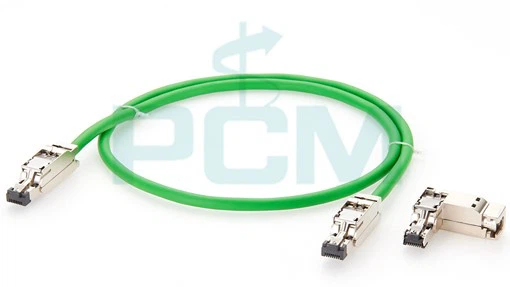
RJ45 Profinet Ethernet Connector EasyConnect Cable

Industrial Profinet Cable RJ45 Male Connector