1, The role of AISG cables in 5G base stations
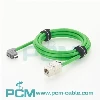
AISG cables are the bridge connecting 5G base stations and antenna systems, responsible for transmitting data, control signals, and power. The importance of AISG cables in 5G networks is reflected in the following aspects:
Data communication: AISG cables connect the base station and antenna control unit (ACU) through a serial port, enabling remote monitoring and control of the antenna by the base station. This communication method enables operators to monitor the status of antennas in real-time, such as power, gain, and other parameters, to ensure stable and optimized network performance.
Control signal transmission: The control signal transmitted by AISG cable is used to adjust parameters such as antenna direction, tilt angle, and frequency. These adjustments help improve signal coverage and penetration, reduce signal blind spots, and enhance the overall performance of the network.
Power supply: AISG cables also provide DC power to the antenna system, ensuring that the antenna can operate normally under various environmental conditions. A stable power supply is crucial for maintaining antenna performance and extending its lifespan.
2, Strategies for improving signal transmission efficiency through AISG cables
Optimize cable selection and layout
Choose high-quality cables: Choose high-quality cables that comply with AISG standards to ensure stable signal transmission and low loss. High quality cables have better anti-interference and weather resistance, and can maintain stable performance under harsh environmental conditions.
Reasonable cable layout: Lay AISG cables reasonably between the base station and antenna system to avoid signal attenuation caused by excessive cable length or bending. At the same time, ensure that the interface between the cable and the base station and antenna is tightly connected to reduce signal loss caused by poor contact.
Enhance the signal transmission capability of cables
Using shielded cables: Shielded cables can effectively prevent external electromagnetic interference and improve the quality of signal transmission. In 5G networks, using shielded AISG cables can reduce signal interference, improve signal stability and reliability.
Improving the transmission rate of cables: By optimizing the material and structure of cables, the transmission rate of cables can be increased. For example, using low loss materials and optimizing cable impedance matching can reduce signal loss during transmission and improve signal transmission efficiency.
Using AISG protocol for intelligent control
Remote monitoring and adjustment: Using the AISG protocol, operators can remotely monitor the status of antennas and make real-time adjustments based on network requirements. For example, dynamically adjusting the direction and tilt angle of the antenna based on user distribution and signal strength to optimize signal coverage.
Fault warning and diagnosis: The AISG protocol also supports fault warning and diagnosis functions. By monitoring the status parameters of the antenna in real-time, potential fault risks can be identified in a timely manner, and corresponding measures can be taken for repair to ensure the stable operation of the network.
Combining other technologies for comprehensive optimization
Multi antenna technology (MIMO): Combining multiple antenna technology, multiple antennas are used to simultaneously transmit and receive signals, improving signal transmission efficiency and capacity. AISG cables play a crucial role in connecting base stations and antennas in multi antenna systems.
Beamforming technology: Through beamforming technology, the transmission direction of signals is precisely controlled to improve the coverage range and penetration capability of signals. AISG cables are capable of transmitting control signals, enabling remote adjustment and optimization of beamforming systems.
3, Precautions during implementation
Ensure compatibility between cables and equipment: When selecting AISG cables, it is necessary to ensure compatibility with the interfaces of the base station and antenna system. At the same time, understand the performance and specification requirements of the equipment, and choose the appropriate cable type and specification.
Regular maintenance and inspection: Regularly maintain and inspect AISG cables to ensure they are in good working condition. Check whether the cable connection is tight, whether the insulation layer is damaged, and whether the signal transmission is stable.
Consider environmental factors: When installing and using AISG cables, it is necessary to consider the impact of environmental factors on cable performance. For example, avoid exposing cables to extreme temperatures, humidity, or corrosive environments to reduce damage to cable performance.

Feb 28, 2025
Leave a message
How to improve the signal transmission efficiency of 5G base stations through AISG cables?
Previous
Advantages of M23 CablesSend Inquiry