1, Overview of AISG Cable Connections
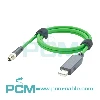
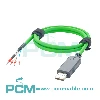
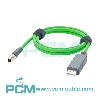
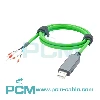
AISG cable is a specialized cable used to connect mobile communication devices and antennas. It follows the standards established by the AISG organization and aims to achieve reliable communication between base stations and antennas. AISG cables typically consist of two or more wires, with one used for transmitting power signals and the rest used for transmitting data signals. These wires are wrapped with insulation material to ensure the stability and reliability of signal transmission.
AISG cable connections not only have high anti-interference ability, effectively resist electromagnetic interference, ensure signal transmission quality, but also have excellent reliability and waterproofness, which can maintain stable signal transmission in harsh environmental conditions. In addition, AISG cables comply with AISG standards and are compatible with various AISG compatible devices, providing an interoperable solution.
2, Specific manifestations of AISG cable connection improving network quality
Remote monitoring and control
The AISG cable connection enables the base station to remotely monitor and control the antenna. Through AISG cables, operators can monitor various parameters of the antenna in real-time, such as power, gain, etc., to ensure that network performance is always in the best state. At the same time, operators can also remotely control the direction and tilt angle of antennas, achieving optimization and adjustment of network coverage. This remote monitoring and control capability greatly improves the efficiency and flexibility of network maintenance.
Fault detection and diagnosis
The AISG cable connection can also transmit the working status and fault information of the antenna. When the antenna malfunctions, the AISG cable will quickly transmit the fault information to the base station, helping the operator to detect and solve the problem in a timely manner. This fault detection and diagnosis capability greatly shortens the fault recovery time and reduces the risk of network interruption.
Dynamically optimize network coverage
With the development of mobile communication networks, users' demands for network coverage are becoming increasingly diverse. AISG cable connections enable base stations to dynamically optimize their networks based on constantly changing coverage requirements. By adjusting the tilt angle and position of the antenna, the base station can ensure the continuity and stability of network coverage, meeting the diverse needs of users.
Reduce wiring requirements and costs
AISG data is low-frequency modulated and can be transmitted using the same cable for RF data processing of AISG signals. This multifunctionality reduces wiring requirements, decreases the number of cables, and thus lowers wiring costs and complexity. At the same time, AISG cable connections also simplify the data flow arbitration of tower equipment, further reducing operating costs.
3, Application Example of AISG Cable Connection in Communication between Base Stations and Antennas
Taking a typical base station system as an example, RF data communication is conducted between the equipment at the top of the antenna tower and the ground control equipment through coaxial cables. After introducing AISG cable connections, base stations can remotely control tower equipment such as tower amplifiers (TMA) and remote electrically adjustable tilt devices (RET) through AISG cables. At the same time, AISG cables can also transmit alarm information to help operators detect and handle abnormal situations of tower equipment in a timely manner.
In practical applications, AISG cable connections have achieved significant results. For example, in some areas, due to complex terrain, the connection between base stations and antennas is often interfered with, resulting in unstable network quality. After introducing AISG cable connections, these problems were effectively solved. The high anti-interference and reliability of AISG cables ensure stable communication between base stations and antennas, improving network quality and user satisfaction.