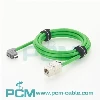
In many display and AV installations, a standard straight VGA cable is not always the best option-especially when working in confined spaces or specialized environments. Angled VGA cables (including right/left/up/down angle VGA, low-profile VGA, and ultra-slim VGA/SVGA variants) are designed specifically to solve clearance, routing, and durability challenges that traditional cables simply cannot handle.
Here are the top six real-world scenarios where angled VGA cables provide the perfect installation solution.
1. Tight-Space Wall-Mounted Displays
Wall mounts often leave very limited room behind the monitor. A straight VGA connector pushes outward, causing:
- Excessive bending
- Strain on the cable
- Difficulty mounting flush to the wall
- Risk of port damage
Angled VGA cables direct the cable downward or sideways, allowing the display to sit closer to the wall while reducing mechanical stress. This is especially valuable for:
- Digital signage
- Conference room displays
- Hospital patient monitors

2. Rack Cabinets With Limited Depth
In AV and server racks, every millimeter counts. The back of rack-mounted equipment often sits close to the rear panel, leaving no room for straight VGA plugs.
Angled VGA designs:
- Minimize rear-clearance requirements
- Improve cable routing inside dense racks
- Prevent accidental disconnection during maintenance
This leads to cleaner wiring and more reliable long-term operation.
3. Industrial Enclosures and Control Panels
Industrial machinery frequently uses embedded displays or HMIs (Human-Machine Interfaces). These environments typically feature:
- Rigid metal housings
- Vibration and movement
- Tight wiring ducts
The right/left-angle VGA connector ensures secure, low-profile connections that fit inside compact enclosures without stressing the port, maintaining signal integrity even in harsh conditions.

4. Desktop and Workstation Setups With Cable Management Needs
For office workstations, angled VGA cables provide cleaner cable routing behind:
- Desks
- Docking stations
- Monitor arms
- Cable trays
Users benefit from:
- A neater workspace
- Reduced clutter
- Less bending wear over time
The result is a professional-looking setup that is easier to maintain.
5. Equipment With Upward or Sideward Port Orientation
Some devices-especially older projectors, KVM switches, and compact PCs-place VGA ports in awkward positions, such as:
- Facing upward from the top
- Pointing sideways near a ventilation grille
- Positioned behind recessed areas
Using a straight cable often blocks airflow or interferes with nearby connectors.
An angled VGA cable provides the correct exit direction and ensures compatibility with non-standard port locations.

6. Portable and Mobile Equipment
Medical carts, portable diagnostic devices, and mobile display systems require robust cabling that withstands constant movement.
Angled VGA connectors offer:
- Reduced cable snagging
- Better strain relief
- Lower profile to avoid accidental pulling
This keeps the connection secure and extends the lifespan of both the cable and device port.
Angled VGA cables are more than a convenience-they are a practical engineering solution for installations where space, reliability, and durability matter. From wall-mounted displays to industrial panels and portable devices, these specialized cables help eliminate cable strain, optimize routing, and enhance long-term system performance.
Looking for High-Quality Angled VGA Solutions?
We manufacture 45° / 90° / right angle / left angle / upward angle / downward angle VGA cables, low-profile connectors, and ultra-slim VGA/SVGA solutions suitable for commercial, industrial, and consumer applications.
Contact us today to request samples, drawings, or a custom quotation tailored to your installation needs.

Related Products

Right/Left Angled HD15 VGA Cable Male

Up/Down Angled HD15 VGA Cable Male

Ultra Slim VGA SVGA Monitor Cable

Right/Left Angled HD15 VGA Cable Female

Up/Down Angled HD15 VGA Cable Female

Low-profile VGA Cables Male to Female