1, Definition and installation method
Board mounted connector
Board mounted connectors refer to connectors that are directly installed on a printed circuit board (PCB). This installation method is commonly used for high-density and micro connectors, as these connectors are small in size and have high packaging density, requiring installation before PCB board soldering to ensure the accuracy of connector position. Board mounted connectors can be fixed on PCBs in various ways, such as through-hole mounting, surface mount, etc. Through hole installation is the process of inserting connector pins into the through holes of a PCB and then soldering and fixing them; Surface mount is the process of directly attaching connectors to the surface of a PCB and fixing them through methods such as soldering or crimping.
Panel installation connector
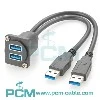
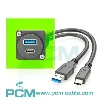
Panel mounted connectors are connectors installed on panels or partitions and secured with flanges or fasteners. This installation method is usually used in scenarios where it needs to be fixed on the device casing or panel. The panel mounting connector can be inserted through the reserved hole on the panel and then fixed with fasteners such as nuts or screws. In addition, some panel mounted connectors are designed with special locking mechanisms to ensure the stability of the connectors on the panel.
2, Characteristics and application scenarios
Characteristics of board mounted connectors
High density and miniaturization: Board mounted connectors are usually small in size and have high packaging density, making them suitable for the design of high-density PCB boards.
Accuracy: Due to the need for installation before PCB board soldering, board mounted connectors require high positional accuracy.
Easy to maintain: The board mounted connector is fixed on the PCB, not easily detached, and easy to repair and replace.
Diversification: There are various types of board mounted connectors, such as pre board installation and post board installation, to meet different design requirements.
Application scenarios: Board mounted connectors are widely used in miniaturized electronic devices such as smartphones, tablets, digital cameras, as well as in industrial automation, automotive electronics, and other fields.
Characteristics of panel mounted connectors
Stability: Panel mounted connectors are fixed to the panel through flanges or fasteners, providing high stability.
Flexibility: Panel mounted connectors can adapt to panels of different shapes and sizes, and the installation position is relatively flexible.
Protective: Some panel mounted connectors are also designed with waterproof, dustproof and other protective functions to adapt to harsh usage environments.
Application scenarios: Panel mount connectors are typically used in scenarios where they need to be fixed to device enclosures or panels, such as communication equipment, industrial control equipment, medical equipment, etc.
3, Comparison of advantages and disadvantages
Advantages of board mounted connectors
High density: Suitable for the design of high-density PCB boards, it improves the integration and performance of equipment.
Accuracy: High precision is required for the position, which helps ensure the stability and reliability of the equipment.
Easy to maintain: Fixed on the PCB, not easily detached, and easy to repair and replace.
Disadvantages:
Installation difficulty: Due to the need to install before soldering the PCB board, the installation difficulty is relatively high, and the design requirements for the PCB board are high.
Cost: Some boards have higher prices for installing connectors, which increases the cost of the equipment.
Advantages of panel mounted connectors
Stability: Fixed to the panel with flanges or fasteners, it has high stability and is not easy to fall off.
Flexibility: It can adapt to panels of different shapes and sizes, and the installation position is relatively flexible.
Protective: Some connectors have waterproof, dustproof and other protective functions, suitable for harsh use environments.
Disadvantages:
Installation complexity: It is necessary to reserve holes on the panel in advance and fix them with fasteners such as nuts or screws, which increases the installation complexity.
Maintenance difficulty: Compared to board mounted connectors, panel mounted connectors may require more time and tools for repair and replacement.
4, Choose Suggestions
When choosing between board mounted connectors or panel mounted connectors, it is necessary to consider comprehensively based on specific application scenarios and requirements. Here are some suggestions:
Consider the integration and performance of the device: If the device requires a high-density PCB board design with high requirements for stability and reliability, board mounted connectors can be chosen.
Considering the convenience of installation and maintenance: If the equipment requires frequent disassembly and maintenance, or has high flexibility requirements for installation positions, panel mounted connectors can be chosen.
Considering cost factors: In the case of limited budget, it is possible to balance the performance and price of connectors and choose a more cost-effective connection method.

Oct 31, 2024
Leave a message
What is the difference between board mounted connectors and panel mounted connectors?
Send Inquiry