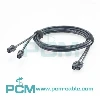
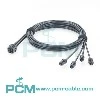
Introduction :
SDI cables and connectors provide reliable digital video connections for professional broadcasting, video production, and audiovisual equipment. They are widely used to connect cameras, monitors, video switchers, routers, and recording systems.
SDI defines how digital video signals are transmitted, while BNC and HD-BNC connectors provide the physical connection between equipment. Understanding their relationship and key electrical characteristics helps engineers and equipment manufacturers select suitable cable assemblies and maintain reliable video transmission.
Why Custom Boat Engine Adapter Cables Are Needed
SDI stands for Serial Digital Interface, a family of digital video transmission standards developed by the Society of Motion Picture and Television Engineers (SMPTE).
It allows uncompressed digital video, embedded audio, and auxiliary data to travel between compatible devices. Coaxial SDI connections are particularly common in professional video systems because of their reliable transmission and secure connector interfaces.
Common Types of SDI
Different SDI formats support different data rates, video resolutions, and frame rates.
| SDI Type | Data Rate | Typical Application |
| SD-SDI | 270 Mbps | Standard-definition video |
| HD-SDI | 1.5 Gbps | High-definition video |
| 3G-SDI | 3 Gbps | Full HD 1080p60 video |
| 6G-SDI | 6 Gbps | 4K UHD 30fps video |
| 12G-SDI | 12 Gbps | 4K UHD 60fps video |
How Do BNC and HD-BNC Connectors Relate to SDI ?
DI is a transmission standard, whereas BNC and HD-BNC are physical coaxial connector interfaces. Both connector types can carry SDI signals when their electrical performance meets the requirements of the intended SDI format.
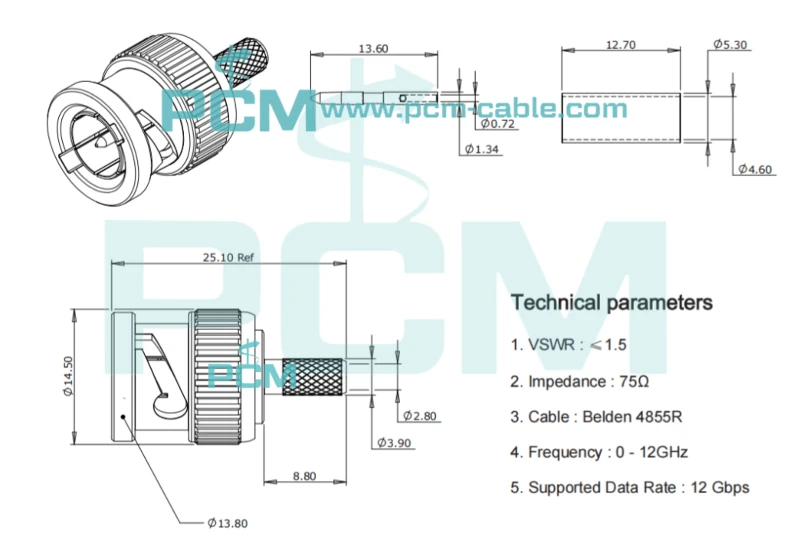
- BNC Connector
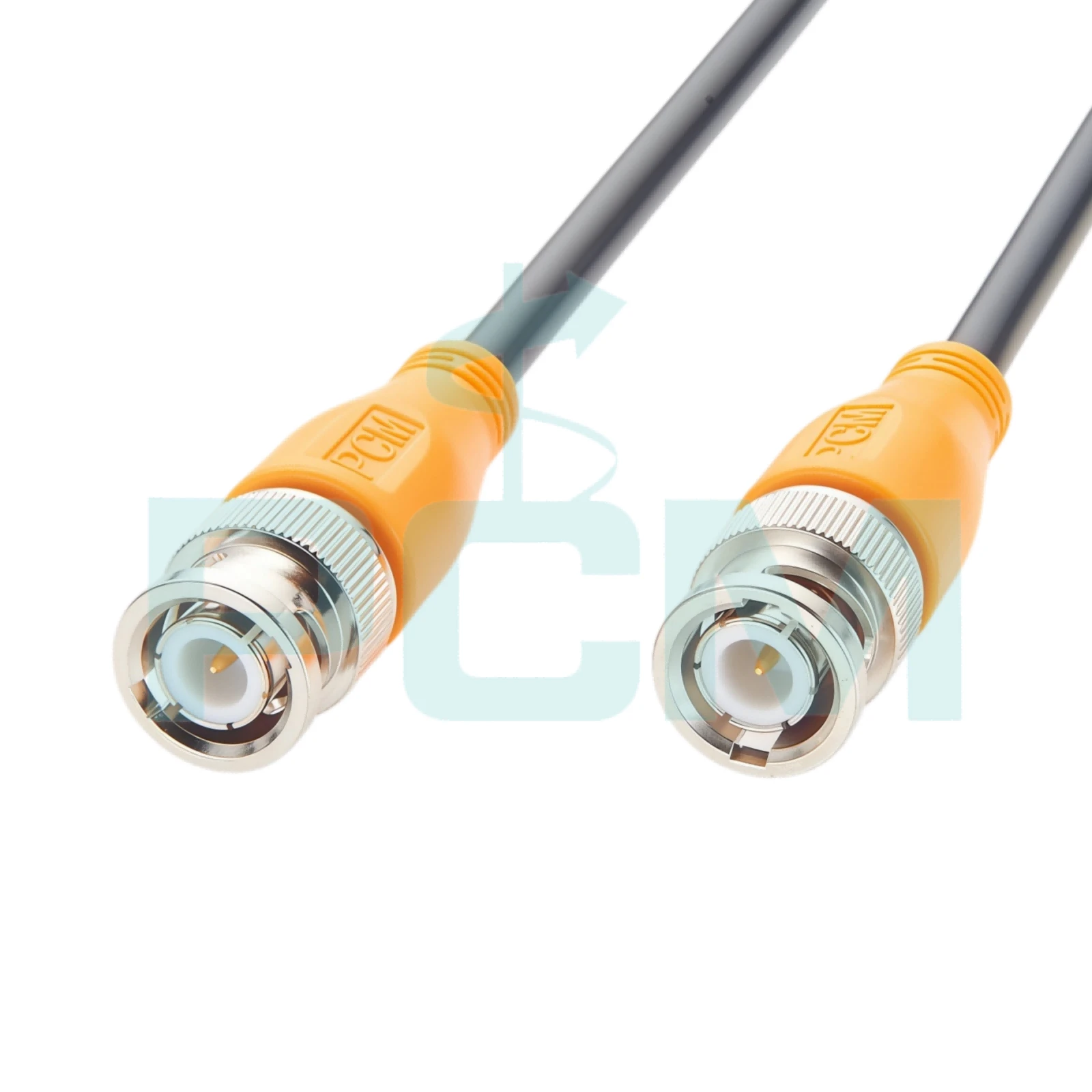
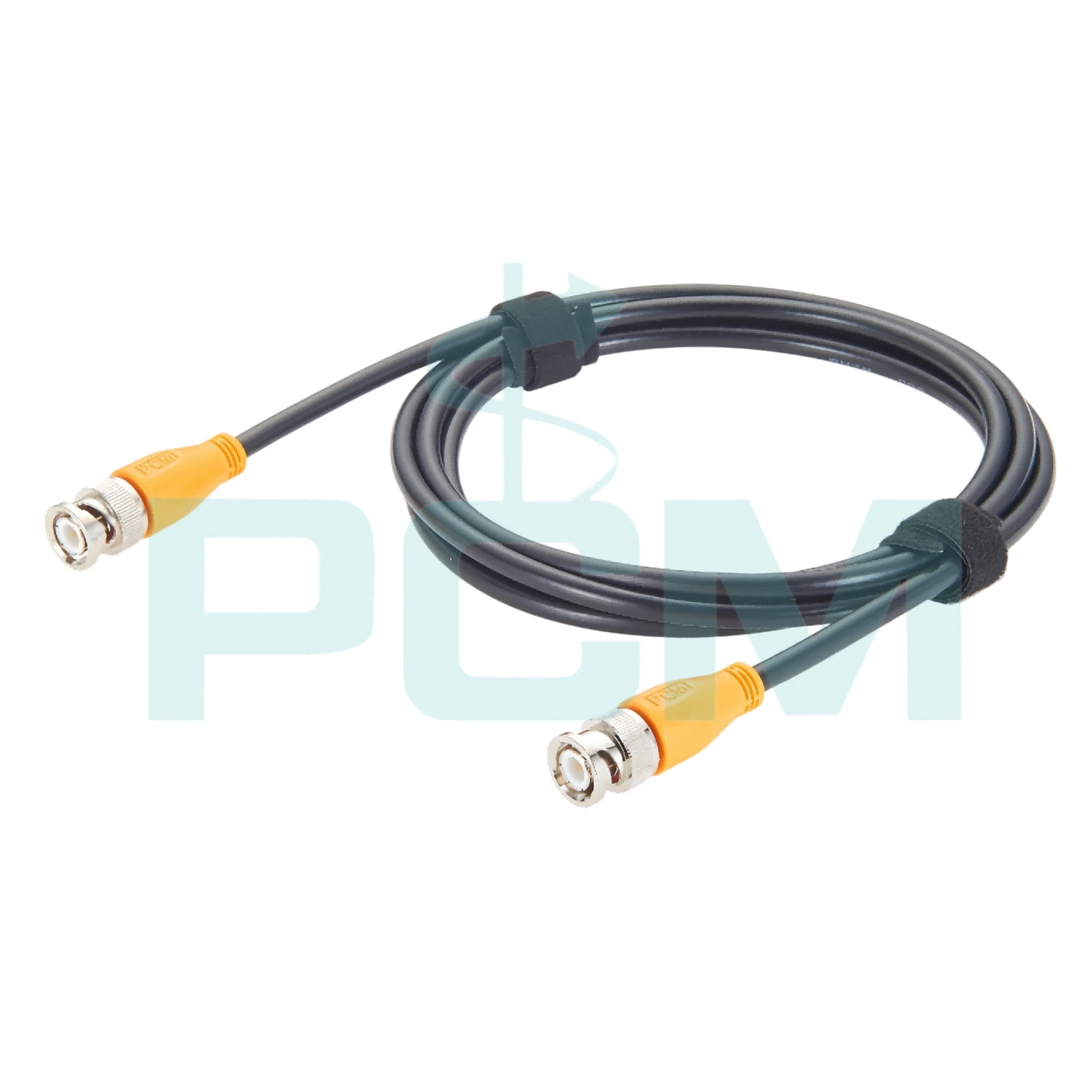
BNC stands for Bayonet Neill Concelman. It features a twist lock coupling mechanism that provides a secure connection and convenient installation. BNC connectors are widely used in broadcast cameras, video monitors, production switchers, patch panels, and video testing equipment.
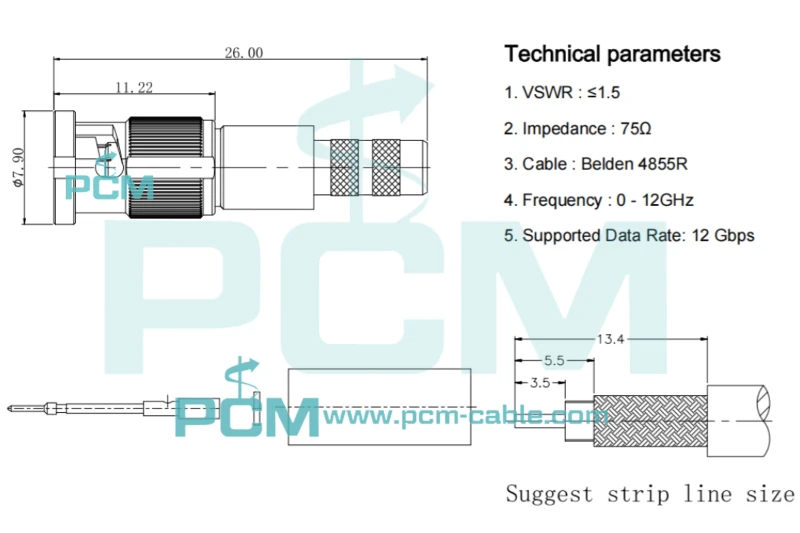
- HD-BNC Connector
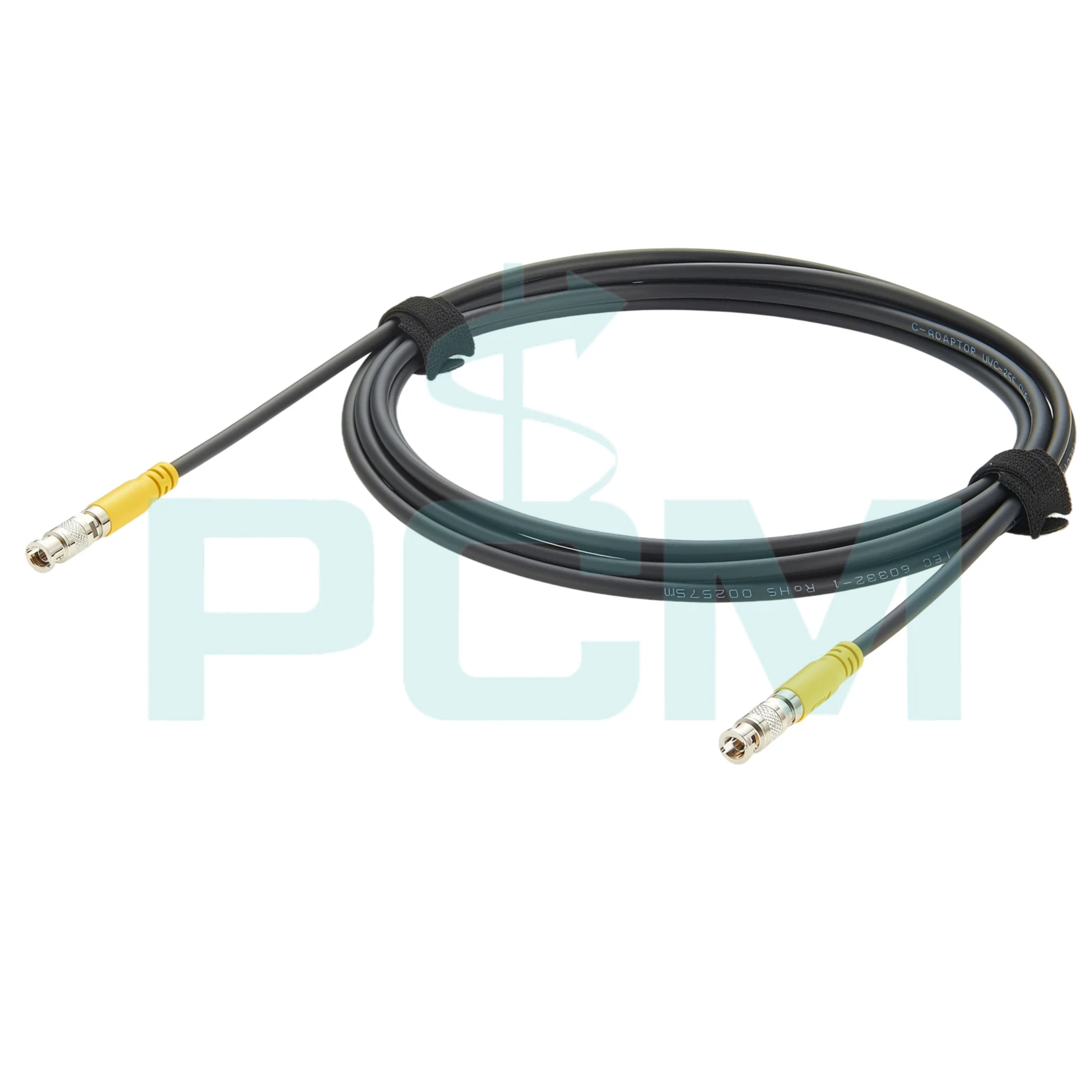
HD-BNC stands for High Density BNC. It provides a smaller connector footprint while retaining a secure bayonet style locking mechanism. Its compact design allows equipment manufacturers to accommodate more video connections within limited panel space, making it particularly suitable for multichannel video equipment and compact broadcast systems.
BNC vs. HD-BNC Connector
| Feature | BNC | HD-BNC |
| Connector Size | Standard | Compact |
| Port Density | Conventional | High density |
| Locking Mechanism | Bayonet locking | Bayonet locking |
| SDI Support | Depends on connector rating | Depends on connector rating |
| Typical Application | Cameras and monitors | Video routers and compact equipment |
BNC and HD-BNC connectors cannot mate directly because of their different physical interfaces. A suitable BNC to HD-BNC cable assembly or adapter is required.
The smaller size of HD-BNC does not automatically mean higher transmission speed. Both connector types are available in designs suitable for high-speed SDI applications.
Premier Cable Finished Product Showcase


Common Applications of SDI Cable Assemblies
Professional Broadcasting: Connecting studio cameras, video switchers, routers, and broadcast monitors.
Digital Video Production: Transmitting video between cinema cameras, external recorders, and production equipment.
Professional AV Systems: Supporting live events, video distribution, and control room installations.
High-Density Video Equipment: Providing compact connections for multichannel video processing and routing systems.
Video Testing and Measurement: Connecting signal generators, video analyzers, and equipment testing interfaces.
Custom SDI Cable Assemblies from Premier Cable
Premier Cable provides custom cable assembly solutions for professional broadcasting, digital video production, and audiovisual equipment.
Customers can specify connector combinations, cable types, cable lengths, connector orientations, and installation requirements to suit their equipment designs.
Contact Premier Cable with your required SDI format, connector configuration, and cable length to discuss a suitable cable assembly for your application.