

PoweredUSB is a widely used interface in POS systems, retail electronics, and commercial equipment, designed to deliver both USB data and external power through a single connection.
PoweredUSB supports multiple voltage levels, including 5V, 12V, and 24V. This article explains what PoweredUSB is, how it works, and the key differences between 12V and 24V PoweredUSB, helping system designers and buyers select the right solution.
What Is PoweredUSB?
PoweredUSB, also known as Retail USB, USB PlusPower, USB +Power, or USB Power Plus, is an enhanced USB standard developed to meet the power requirements of retail and commercial peripherals.
Unlike standard USB, which only supplies 5V power, PoweredUSB integrates:
- USB data communication
- Selectable higher power output (5V / 12V / 24V)
into a single cable and connector, eliminating the need for separate power adapters.
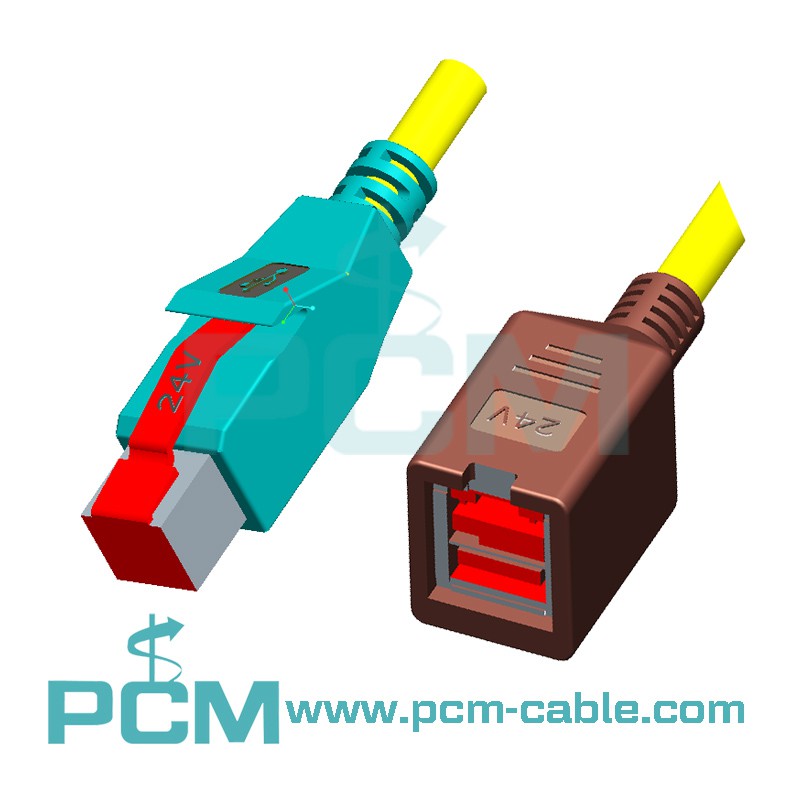
PoweredUSB Voltage Levels Explained
PoweredUSB is designed to support different voltage levels to accommodate a wide range of devices:
- 5V PoweredUSB – Similar to standard USB power, used for low-power devices
- 12V PoweredUSB – Medium power level for POS electronics
- 24V PoweredUSB – High power level for printers and industrial peripherals
Although 5V PoweredUSB exists, it offers limited advantages over standard USB and is therefore less commonly used in professional POS deployments.
As a result, 12V and 24V PoweredUSB have become the dominant choices in real-world applications.
Why PoweredUSB Is Used in POS and Retail Systems
POS systems often connect multiple peripherals that require reliable power and stable data transmission. PoweredUSB was specifically designed to address this need.
Typical PoweredUSB applications include:
- POS receipt and thermal printers
- Barcode scanners
- Customer-facing displays
- Payment terminals
- Retail kiosks
- PoweredUSB hubs and expansion cards
By combining power and data into one interface, PoweredUSB simplifies system design and improves reliability in commercial environments.
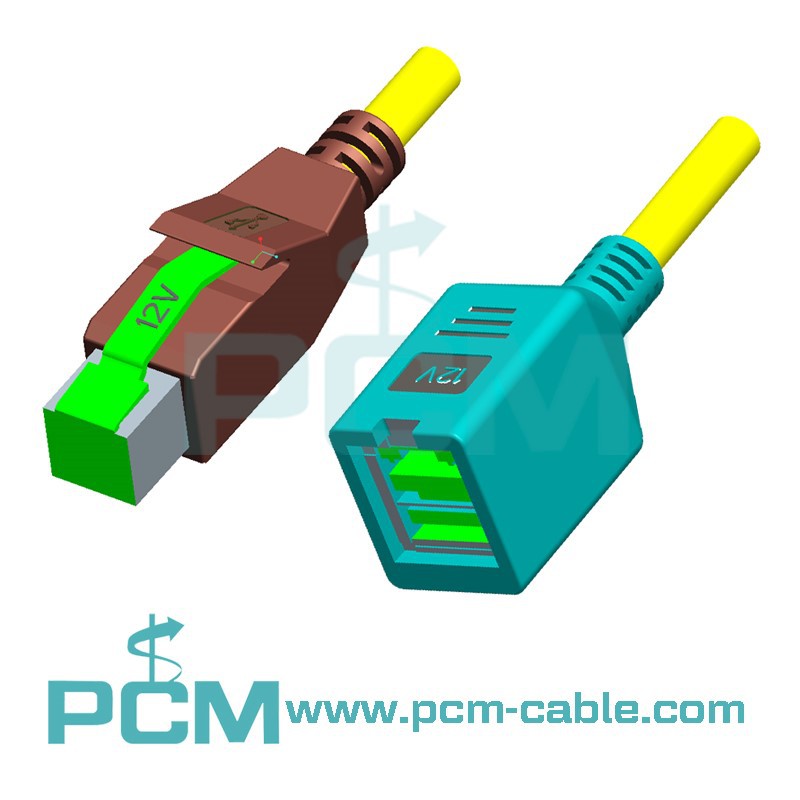
12V PoweredUSB Explained
12V PoweredUSB is commonly used for medium-power POS and retail devices.
Typical applications include:
- POS systems and terminals
- 12V PoweredUSB HUBs
- PoweredUSB expansion cards
- Barcode scanners
- Customer displays
Advantages of 12V PoweredUSB
- Suitable for most POS electronics
- Lower power consumption compared to 24V
- Broad compatibility with retail systems
- Ideal for system expansion and modular designs
12V PoweredUSB is often chosen when power requirements are moderate and system flexibility is a priority.
24V PoweredUSB Explained
24V PoweredUSB is designed for high-power retail and industrial peripherals.
Typical applications include:
- POS receipt and thermal printers
- Label and ticket printers
- Industrial or embedded devices
- High-duty commercial equipment
Advantages of 24V PoweredUSB
- Higher power delivery capability
- Stable operation for motors and heating elements
- Common standard for POS printers
- Suitable for demanding commercial environments
24V PoweredUSB is preferred when devices require consistent, higher power output over long operating periods.

Why PoweredUSB Extension Cables Are Needed
In many POS and embedded systems, the location of the PoweredUSB port on the host is not always ideal.
A PoweredUSB extension cable allows:
- Flexible port positioning
- Easier system expansion
- Cleaner internal wiring
- Improved accessibility for peripherals
Both 12V and 24V PoweredUSB extension cables are commonly used with POS systems, PoweredUSB hubs, PoweredUSB expansion cards, etc to optimize system layout.
Related PoweredUSB Extension Cable Solutions
To support flexible system design and port placement, we offer PoweredUSB extension cable solutions for both common voltage levels used in retail environments.
Our 12V PoweredUSB Extension Cable (PCM-0912) is ideal for POS systems, PoweredUSB hubs, and expansion cards, while the 24V PoweredUSB Extension Cable (PCM-0913) is designed for POS printers and high-power retail peripherals.
Both solutions help simplify system integration while maintaining stable data and power delivery.


