Connectors are widely used in various industries and applications to establish electrical, mechanical, or data connections between different devices or components. They come in a wide range of sizes, each designed for specific purposes and requirements. In this response, I will provide an overview of connector sizes, covering some of the common types and their respective dimensions.
USB Connectors:
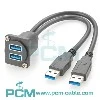
USB Type-A: This is the standard USB connector found on most computers and devices. It measures approximately 12 mm in width and 4.5 mm in height.
USB Type-B: Typically used for printers and other peripheral devices, it is squarer and larger than Type-A, measuring approximately 15 mm in width and 7 mm in height.
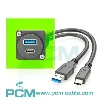
USB Type-C: This is a newer, reversible connector that is becoming more popular. It measures approximately 8.4 mm in width and 2.6 mm in height.
Audio Connectors:
3.5 mm (1/8 inch) Jack: This is commonly used for headphones, microphones, and audio outputs. It has a diameter of approximately 3.5 mm.
6.35 mm (1/4 inch) Jack: Found in professional audio equipment and instruments, it has a larger diameter of approximately 6.35 mm.
HDMI Connectors:
HDMI Type-A: The standard HDMI connector found on TVs, monitors, and audio/video devices. It has a width of approximately 14 mm and a height of about 4.5 mm.
HDMI Type-C (Mini HDMI): Smaller in size than Type-A, it measures approximately 10.5 mm in width and 2.5 mm in height.
HDMI Type-D (Micro HDMI): Even smaller, this connector measures approximately 6.4 mm in width and 2.8 mm in height.
DisplayPort Connectors:
DisplayPort Standard: This connector is commonly used for high-definition video and audio signals. It has a width of approximately 15 mm and a height of about 4.5 mm.
Mini DisplayPort: Smaller in size, it measures approximately 11 mm in width and 4.5 mm in height.
USB Type-C (DisplayPort Alt Mode): USB Type-C connectors can also support DisplayPort signals, eliminating the need for a separate DisplayPort connector.
Ethernet Connectors:
RJ-45: This is the standard connector used for Ethernet networking cables. It has eight pins and measures approximately 11.6 mm in width.
Power Connectors:
AC Power Connectors: Power connectors for household and industrial use can vary in size and shape, depending on the specific standards and country requirements.
DC Power Connectors: The size of DC power connectors varies depending on the voltage and current they are designed to handle. Common sizes include 2.1 mm and 2.5 mm for barrel connectors.
D-Sub Connectors:
DB9: This connector has 9 pins and is commonly used for serial communication. It measures approximately 34 mm in width and 12 mm in height.
DB15: Similar to DB9 but with 15 pins, it measures approximately 42 mm in width and 15 mm in height.
These are just a few examples of connector sizes and types. There are many more connectors available in various industries and applications, each designed with specific dimensions and features to meet different needs.