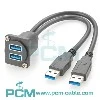
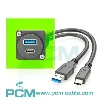
In the field of modern information technology, network connectivity is ubiquitous. Whether it's home or business networks, we often hear the terms "RJ45 jack" and "RJ45 plug". They are crucial components of network connectivity, but many people may be confused about the differences between them. This article will delve into the differences between RJ45 sockets and plugs to help readers better understand their role in network connectivity.
Basic concepts of RJ45 jack and plug
The RJ45 jack and plug are standard interfaces used to connect network devices. They are typically used for Ethernet connections, connecting devices such as computers, routers, switches, printers, etc., enabling them to communicate on a local area network (LAN) or wide area network (WAN). Both of these are physical interfaces used for transmitting data signals, but they have significant differences in structure and functionality.
RJ45 jack: A jack is a hole or interface used to receive RJ45 plugs. It is usually embedded on the surface of devices, such as routers, switches, or wall sockets. The number of RJ45 connectors depends on the design and purpose of the device, for example, common devices typically have multiple connectors to support the connection of multiple devices. The design and arrangement of sockets usually follow certain standards to ensure interoperability between devices.
RJ45 plug: A plug is a connector with a pin that is inserted into the RJ45 jack to establish a physical connection and transmit data. The design of the plug allows it to match the socket, ensuring correct connection and providing stable signal transmission. The end of a plug usually has 8 metal pins, each responsible for transmitting a specific data signal. These pins are arranged according to a certain standard to ensure the correct transmission of data signals.
Main differences
Although RJ45 jack and plug are closely related in network connections, there are some important differences between them.
1. Function and function: The jack mainly serves to receive the plug and provide physical connection. They are embedded in the device, allowing users to plug in to establish a connection. The plug establishes a connection by inserting it into the socket, transmitting data signals from one device to another.
2. Structure: The jack is usually a concave hole, designed to match the shape and size of the plug. A plug is a connector with pins, and the arrangement and number of pins match the sockets. The arrangement of the end pins of the plug follows certain standards to ensure correct data transmission.
3. Installation location: The jack is usually embedded in the device casing, such as the back or side of the router, and wall sockets. The plug is attached to the end of the connecting wire, and users can insert it into the socket to establish a connection.
4. Quantity: A device typically has multiple sockets to support the connection of multiple devices. And each connecting wire usually has only one plug.
5. Specification: The design and arrangement of sockets and plugs follow certain standards to ensure interoperability between devices and stability of data transmission. Common standards include T568A and T568B, which specify the arrangement order of plug pins.
Usage Scenario
The RJ45 jack and plug play different but closely connected roles in network connectivity. They are typically applied in the following scenarios:
RJ45 jack:
The rear of a router and switch, used to connect devices such as computers, printers, servers, etc.
Wall socket, used to connect devices to the local area network.
RJ45 plug:
The end of the connecting line used to connect the device to the jack.
In cable manufacturing, wires are connected to connectors through plugs.
The RJ45 jack and plug are crucial components in modern network connectivity. The jack serves as the interface for receiving the plug and providing physical connection, while the plug establishes a connection and transmits data by inserting it into the jack. Although they differ in function, structure, and functionality, their close collaboration enables us to easily connect devices and achieve data communication. Understanding the differences between the two can help to better configure, maintain, and understand network connections. Whether it's home or business networks, the RJ45 jack and plug will continue to play an important role in our digital world.