Power cord ports, although often overlooked, are crucial for the normal operation of electronic devices. From the earliest wire terminals to today's various standardized designs, power cord ports have gone through a long process of development. In the future, with the continuous progress of technology, we can expect more innovation and improvement to meet the growing demand for electronic devices and achieve more convenient, efficient, and environmentally friendly power supply methods. No matter how it develops in the future, the power cord port will continue to provide the necessary energy support for our lives and work.
Origin and Evolution
The history of power cord ports can be traced back to the invention and application of electricity. At the end of the 19th century, when electricity began to be used for lighting and mechanical power, the concept of cables and plugs gradually emerged. The earliest power cord ports were usually exposed wire ends that required manual connection to the power source. However, this design poses a safety hazard as exposed wires can easily lead to electric shock accidents.
With the further development of the power system, the design of power line ports is gradually improving. In the early 20th century, the first standardized plug and socket systems emerged, such as NEMA plugs and sockets in the United States and Schuko standards in Europe. These standardized designs have improved the safety and reliability of power connections, laying the foundation for the popularization of electronic devices.
Types of power cord ports
With the continuous development of technology, the types of power cord ports are becoming increasingly diverse to adapt to different types of devices and applications. The following are some common types of power cord ports:
1. AC power cord port
The AC power cord port is a common interface used to connect household appliances, computers, monitors, and other devices to a power outlet. It usually adopts standardized plug and socket designs, such as NEMA standards in the United States, Schuko standards in Europe, and BS 1363 standards in the United Kingdom.
2. DC power cord port
The DC power cord port is mainly used for portable electronic devices, such as laptops, smartphones, tablets, etc. They typically use specific shaped plugs and sockets to ensure correct voltage and polarity.
3. USB port
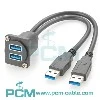
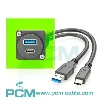
The USB (Universal Serial Bus) port has become a standard interface for connecting various devices, including charging, data transmission, and peripheral device connections. USB ports come in various specifications, including USB-A, USB-B, USB-C, etc. Each specification is suitable for different types of devices.
4. HDMI port
High definition multimedia interface (HDMI) is an interface used to connect high-definition televisions, monitors, and audio devices, which can transmit high-quality video and audio signals. The standardized design of HDMI ports makes them a key component in home entertainment systems.
5. Power adapter port
The power adapter port is typically used to connect power adapters and devices. The design of these ports varies depending on the device type, such as the circular power plug used in laptops or the Micro USB or USB-C plug used in mobile phones.
Application of Power Cord Port
Power cord ports play an indispensable role in modern life. The following are some common application areas:
1. Household appliances
Household appliances, such as televisions, refrigerators, washing machines, etc., all require power cord ports to connect to power sockets. Standard AC power cord ports are typically used for these devices.
2. Computers and office equipment
Office equipment such as computers, printers, monitors, etc. usually use AC power cord ports or power adapter ports to connect to the power supply. In addition, USB ports are also widely used for connecting external devices and data transmission.
3. Mobile devices
Mobile devices such as smartphones, tablets, and laptops typically use DC power cord ports or USB ports to charge and connect to other devices.
4. Home entertainment system
Home entertainment devices such as televisions, sound systems, and game consoles typically use HDMI ports and power cord ports to connect to power and other devices to achieve high-quality audio-visual experiences.
5. Industry and manufacturing
Industrial equipment, mechanical equipment, and automation systems typically require specific types of power cord ports to meet their power needs. The design of these ports usually considers the requirements of the working environment and security standards.
Future Development Trends of Power Cord Ports
With the continuous progress of technology, there are some interesting trends in the future development of power cord ports:
1. Wireless charging technology
Wireless charging technology has become one of the trends in electronic device charging. In the future, we may see more devices breaking away from traditional power cord ports and adopting wireless charging technology to achieve a more convenient charging experience.
2. Popularization of USB-C
USB-C, as a multifunctional and reversible plug design, has been widely used in various devices. In the future, USB-C is expected to become the standard power cord port for more devices, replacing other types of plugs and sockets.
3. Intelligent power management
With the development of the Internet of Things, interconnectivity between devices has become more common. The power cord port may be integrated with an intelligent power management system to achieve efficient energy utilization and remote control.
4. Environmental design
With the increasing awareness of environmental protection, the design of power cord ports may also develop towards a more energy-efficient and environmentally friendly direction, in order to reduce energy waste and resource consumption.

Sep 18, 2023
Leave a message
Power Cord Port: Revealing the Energy Source of Electronic Devices
Send Inquiry