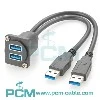
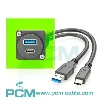
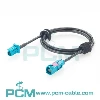
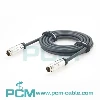
Plug connectors and socket connectors are indispensable components in modern life, used for power transmission, data transmission, and signal transmission. Although they play a crucial role in connecting different devices, they have significant differences, including physical structure, application domains, manufacturing standards, and interoperability. Understanding these differences can help users better choose suitable connectors, while also helping manufacturers design and produce more reliable connectors to meet various needs. Whether in the fields of home, industry, healthcare, or communication, plug connectors and socket connectors are key components of modern technological progress, and their continuous improvement and innovation will continue to drive our society forward.
1. Plug connector vs. socket connector: basic definition
Firstly, let's define these two terms to clarify their meanings.
Plug connector: A plug connector is an electronic component typically used to connect power, signal, or data cables to the input end of a device. It usually has pins or sockets to connect the device to a power supply or other device. The plug connector is usually located at one end of the cable, allowing users to insert the cable into the socket connector.
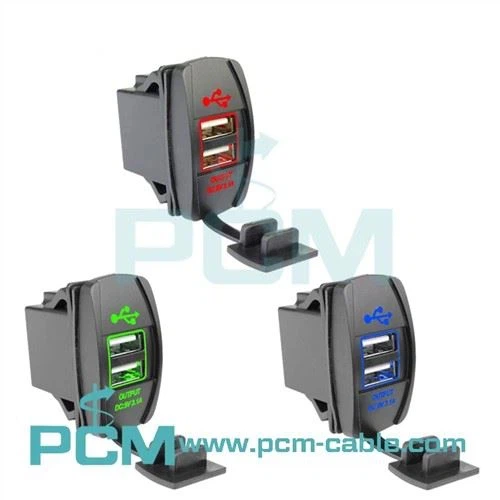
Socket connector: A socket connector is a complementary part of a plug connector, usually located on a device or wall. It has a socket or slot that is compatible with the plug connector, allowing users to insert the plug connector into it to establish a connection for power, signal, or data. Socket connectors are usually fixed in place and provide a convenient interface for users to connect and disconnect cables.
2. Physical structure and shape
The most obvious difference between plug connectors and socket connectors lies in their physical structure and shape. These differences are usually to ensure correct docking and prevent incorrect connections.
Plug connectors: Plug connectors are usually plug-in and have protruding pins or plugs that must be inserted into the socket or slot of the socket connector. They usually have a casing to protect the pins and ensure stable connection of the plug. The shape of plug connectors and the arrangement of pins may vary depending on their purpose and manufacturing standards.
Socket connectors: Socket connectors are usually interfaces fixed to devices or walls, and they have sockets or slots that match the plug connectors. The shape and arrangement of these sockets or slots are consistent with the corresponding plug connectors to ensure correct docking. The shell of a socket connector is usually used to protect the socket or slot and provides a secure connection interface.
3. Power and signal transmission
Plug connectors and socket connectors are mainly used for two types of connections: power transmission and signal/data transmission. They have different applications in these two aspects.
Power transmission: Both plug connectors and socket connectors can be used for power transmission, such as connecting electrical equipment to a power outlet. Plug connectors are usually located at the end of the power cord of electrical equipment, while socket connectors are usually installed on walls or floors for power supply.
Signal/data transmission: In terms of signal and data transmission, plug connectors and socket connectors also play important roles. For example, USB plug connectors and USB socket connectors are used to connect computers and external devices, transmit data, and provide power. In addition, audio and video connectors also use plug and socket connectors to transmit audio and video signals.
4. Application field
Plug connectors and socket connectors are widely used in various application fields, including home, industrial, medical, and communication. Their applications in these fields are slightly different.
Home and Consumer Electronics: In a home environment, plug connectors and socket connectors are used to connect consumer electronic devices such as televisions, sound systems, computers, and mobile phone chargers. These connectors are usually designed to facilitate user plugging and provide reliable power and signal transmission.
Industry and manufacturing: The industrial sector typically requires more robust and reliable connectors to cope with harsh environmental conditions. Plug and socket connectors play a crucial role in industrial automation, robotics, and power distribution.
Medical equipment: In medical equipment, plug connectors and socket connectors are used to connect various medical devices, such as electrocardiographs, medical imaging equipment, and surgical instruments. These connectors must comply with special standards in the medical industry to ensure safety and reliability.
Communication: The communication industry widely uses plug connectors and socket connectors, such as fiber optic connectors and radio frequency connectors, for transmitting data and signals. The design of these connectors usually considers factors such as the frequency range and loss of signal transmission.
5. Manufacturing standards and interoperability
The manufacturing of plug connectors and socket connectors is usually constrained by specific standards and specifications to ensure interoperability and safety. Some famous manufacturing standards include USB, HDMI, RJ45 (Ethernet), etc.
Interoperability: Manufacturing standards ensure interoperability between plug connectors and socket connectors produced by different manufacturers. This means that one manufacturer's plug connector can be compatible with another manufacturer's socket connector, thereby improving the flexibility and substitutability of the device.
Safety: Manufacturing standards also include safety requirements to ensure that plug connectors and socket connectors do not pose a hazard during use. These requirements may involve the design and testing of fire prevention, electrical isolation, waterproofing, and other aspects.
Sep 21, 2023
Leave a message
Plug connectors and socket connectors: differences and functions
Send Inquiry