

1. GMSL Cameras
GMSL (Gigabit Multimedia Serial Link) cameras are commonly used in automotive applications. They have a data transmission rate of up to 6-12 Gbps, support stable transmission over long distances (3-15 meters), and have strong anti-electromagnetic interference capabilities, making them suitable for complex automotive environments. In addition, GMSL supports Power over Coaxial Cable (PoC), which greatly simplifies wiring. Despite its high hardware and cost, it performs well in scenarios that require high resolution, fast frame rates, and real-time performance.
2. GigE Cameras
GigE (Gigabit Ethernet) cameras are the mainstream choice in industrial automation and monitoring systems, supporting data rates of up to 1 Gbps and can transmit 60~100 meters over Ethernet cables, making them suitable for large-scale, multi-camera industrial deployments. GigE cameras also support Power over Ethernet (PoE). The disadvantage is that latency may increase in complex network environments.
3. USB3 Cameras
USB3 cameras are ideal for consumer electronics, portable devices, and some industrial applications due to their plug-and-play features. Supporting data rates up to 5 Gbps, it is suitable for portable devices and short-distance applications (3~5 meters). The disadvantage is that its transmission distance is limited and its anti-interference ability is weak, so it is more suitable for low-end industrial applications, laboratory testing and consumer-level scenarios, but not suitable for complex industrial environments or long-distance monitoring.
4. Advantages and Disadvantages of GMSL vs. GigE vs. USB3 Cameras
| Camera Type | GMSL | GigE | USB3 |
| Advantages |
|
|
|
| Disadvantages |
|
|
|
5. Detailed Comparision of GMSL vs. GigE vs. USB3 Cameras
| Criteria | GMSL | GigE | USB3 |
| Data Transfer Speed | Up to 12 Gb/s | 1 Gbps | 5 Gbps |
| Cable Length | 3 to 15 meters | 60-100 meters | Up to 18 meters |
| Connectivity | Automotive, industrial-focused, and robot | Industrial, IT environment, and monitor | Consumer devices, short-range applications |
| Power Delivery | Power over Coax (Poc)(limited) | Requires separate power | Power delivery (up to 100W for USB-C) |
| Latency | Low | Moderate to high | Low to moderate depending on version |

You May Also Like

GMSL Cable Fakra Female to Female Cable
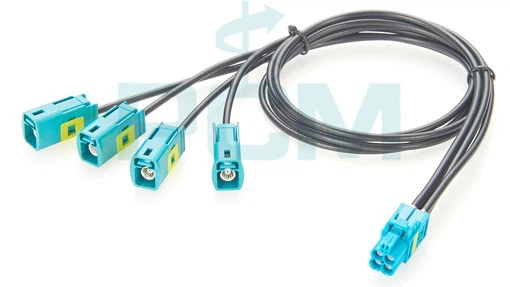
Quad Fakra Female to Female Cable
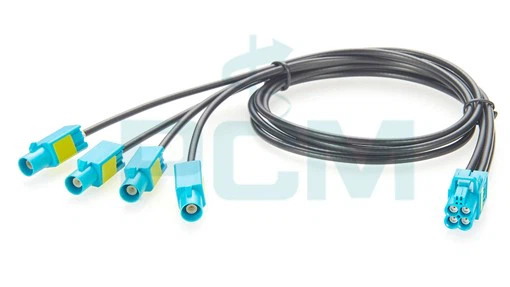
Quad Mini Fakra HFM Cable Assembly
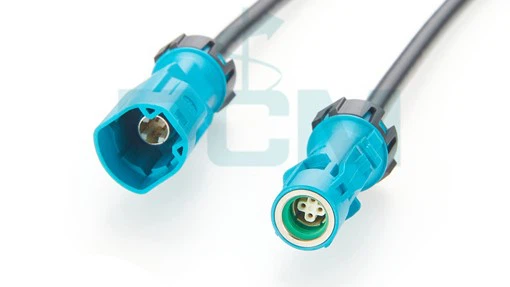
HSD Male to Female Automotive Cable
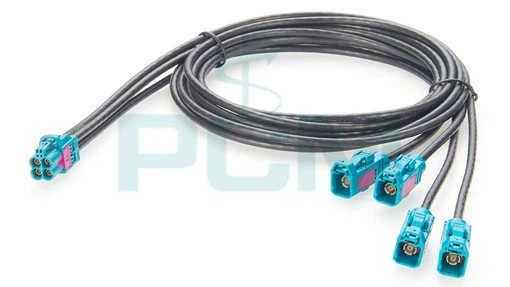
FAKRA Mini HFM Quad to 4 x FAKRA Z Plug
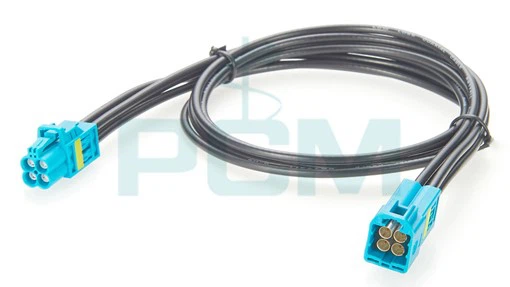
Quad Mini Fakra Male to Female Cable


