Rosenberger Waterproof H-MTD Automotive Ethernet Extension Cable: Features, Applications and Selection Guide
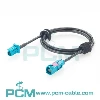
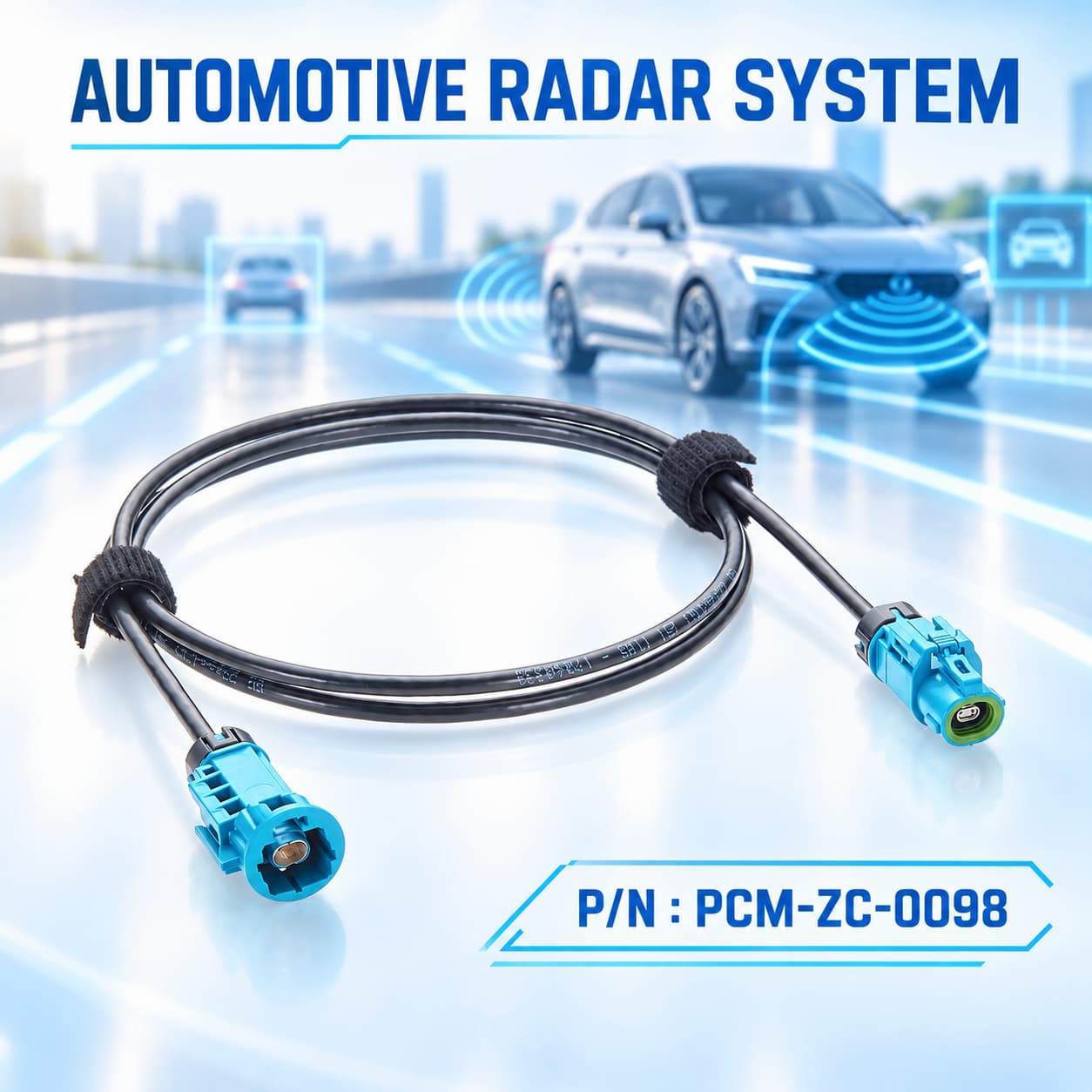
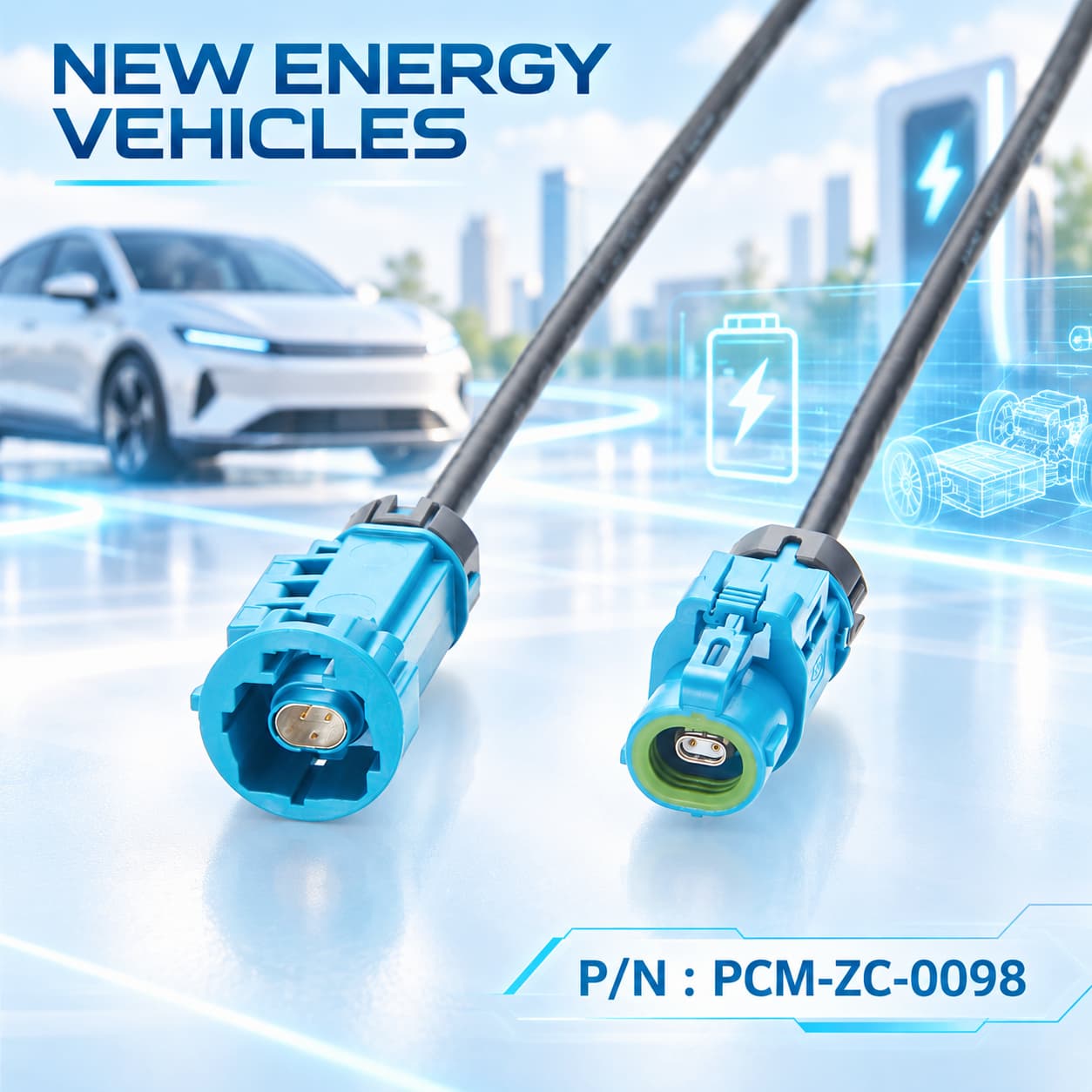
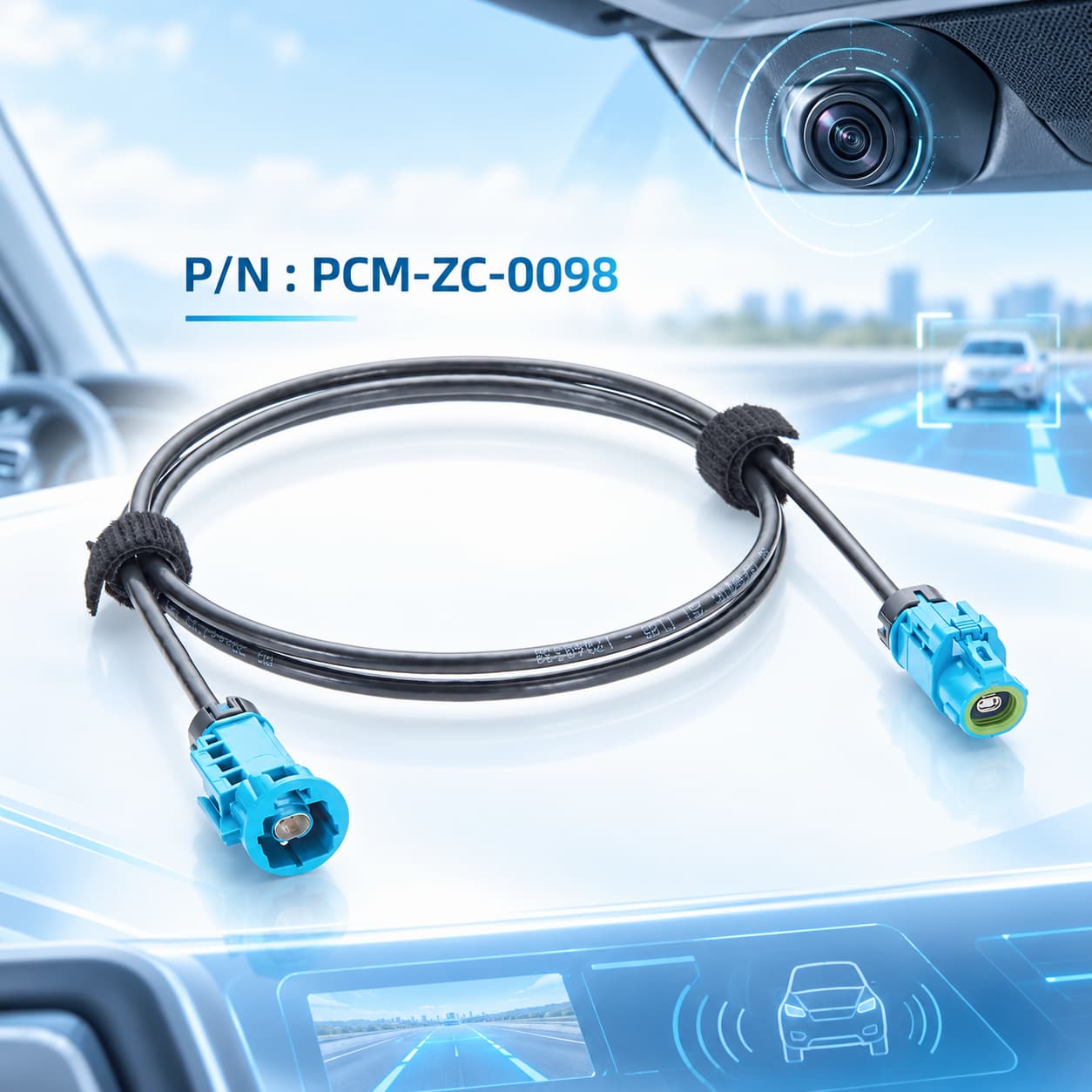
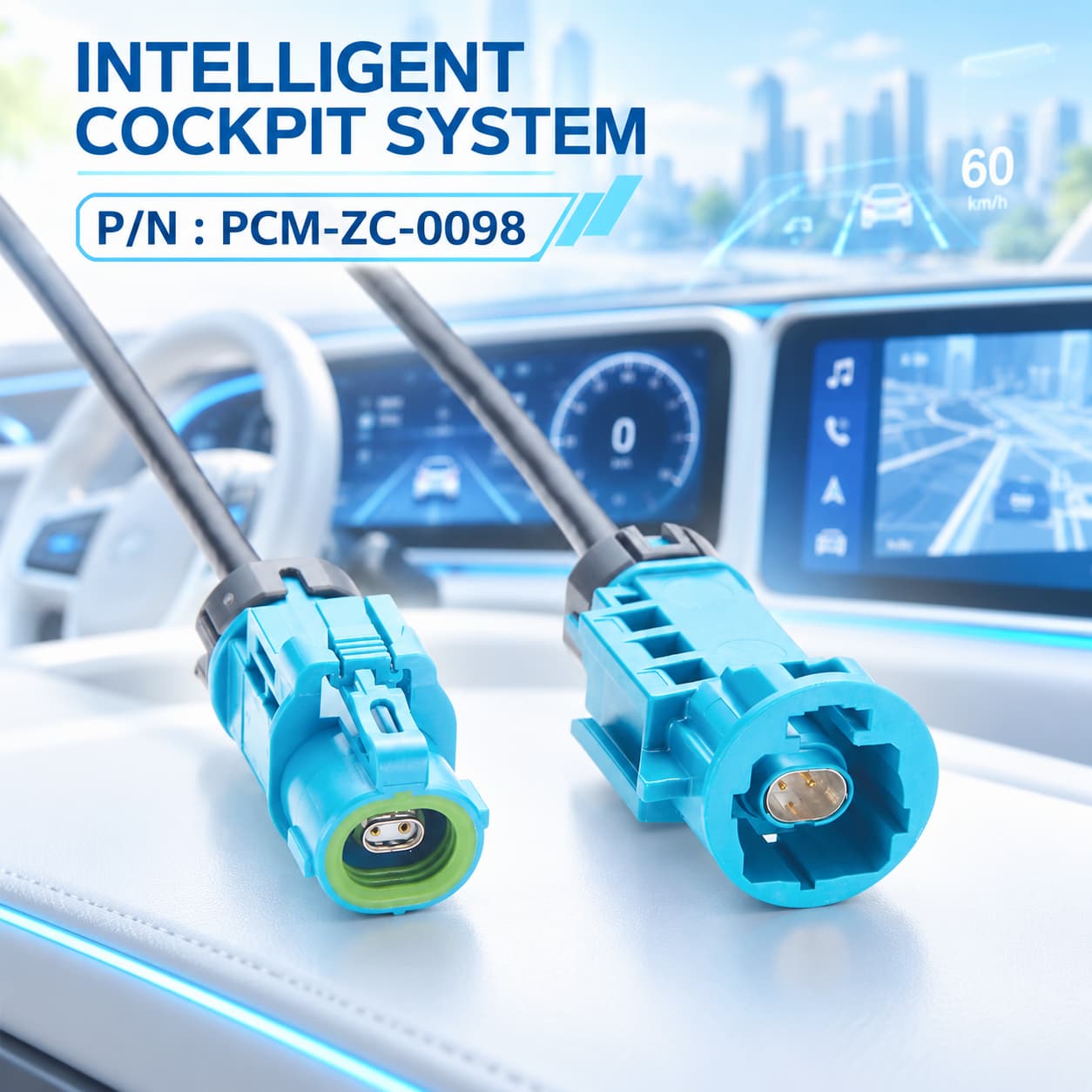
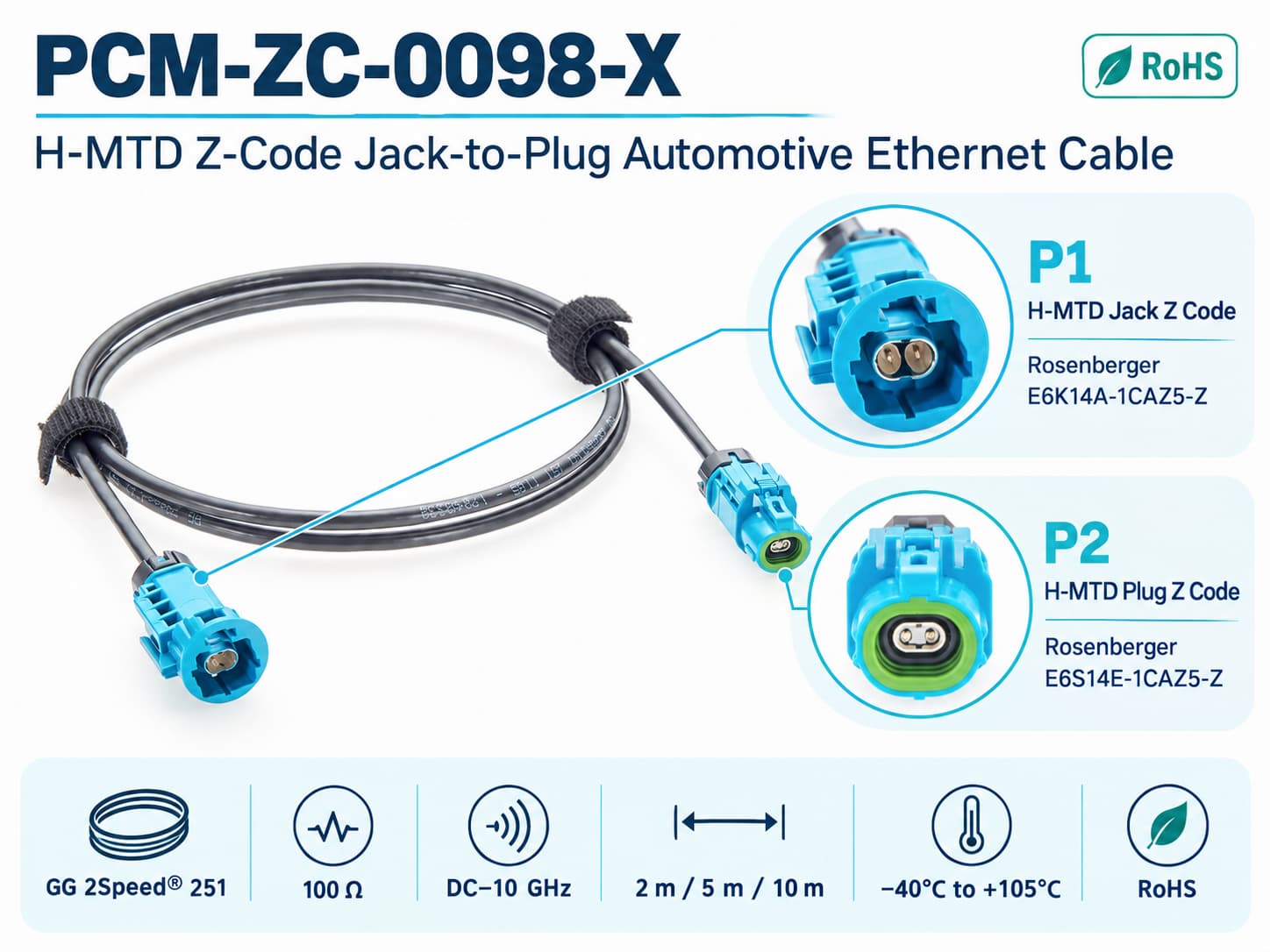
PCM-ZC-0098 is a high-speed data extension cable built with a Rosenberger E6K14A-1CAZ5-Z waterproof H-MTD Z-code female connector, an E6S14E-1CAZ5-Z waterproof H-MTD Z-code male connector and G&G 2SPEED 251 shielded Automotive Ethernet cable. Featuring a 100Ω differential transmission structure, the specified assembly supports up to 10Gbps and DC–10GHz. It is designed for device interconnection and high-speed link extension in ADAS cameras, radar, ECUs, domain controllers, smart cockpits and Automotive Ethernet networks, with customizable lengths and configurations according to vehicle routing, device interfaces and test environments.
What Does This Article Cover ?
This article provides a systematic introduction to the PCM-ZC-0098 Rosenberger waterproof H-MTD Automotive Ethernet extension cable, covering H-MTD interface fundamentals, 100Ω differential transmission, Z coding, waterproof construction, shielded Automotive Ethernet cable, 10Gbps high-speed link design, product selection, applications, compatibility risks and customization capabilities.
Rather than simply answering "what cable is this," the article explains why this type of cable is required in high-speed vehicle networks, how it differs from ordinary data extension cables, and why H-MTD cable selection cannot be based solely on connector appearance.
Quick Product Introduction
PCM-ZC-0098 uses a Rosenberger E6K14A-1CAZ5-Z waterproof H-MTD Z-code female connector at one end and an E6S14E-1CAZ5-Z waterproof H-MTD Z-code male connector at the other, interconnected by G&G 2SPEED 251 shielded Automotive Ethernet cable.
| Product Name | H-MTD Z-Code Jack-to-Plug AutomotiveEthernet Extension Cable |
| Premier Cable P/N | PCM-ZC-0098 |
| P1 Connector | H-MTD Jack, Z Code |
| P2 Connector | H-MTD Plug, Z Code |
| Connection Structure | H-MTD Jack to H-MTD Plug |
| Signal needle position | 2-pin differential signal plus shield |
| Cable Model | G&G GG 2Speed 251 |
| Temperature Range | -40°C to +105°C |
| Nominal lmpedance | 1000 nominal |
What Is an H-MTD Automotive Ethernet Extension Cable ?
H-MTD is a compact connector system designed for high-speed differential data transmission in automotive applications. Unlike conventional low-speed multi-core wiring harnesses, high-speed automotive links require more than electrical continuity; they require controlled impedance, differential balance, return loss, insertion loss, crosstalk and EMC performance.
Rosenberger defines H-MTD as a High-Speed Modular Twisted-Pair Data connector system based on a 100Ω differential interface architecture for Automotive Ethernet and various other high-speed data protocols.
PCM-ZC-0098 applies this high-speed physical interface in a waterproof male-to-female extension cable. One end connects to an existing H-MTD device interface while the other continues the corresponding H-MTD interface, increasing the physical routing distance without changing the original high-speed connector architecture.
Why Is an H-MTD High-Speed Extension Cable Needed ?
Modern vehicle electronic architectures are evolving from large numbers of distributed ECUs toward domain controllers, zonal controllers and central computing platforms. Cameras, radar, high-resolution displays and other high-speed nodes generate increasing amounts of data, requiring not only physical connectivity but also stable and verifiable high-speed transmission links.
In actual vehicle designs, sensors and controllers are often located far apart. Cameras may be installed behind the windshield, in bumpers, at the rear or around the vehicle body, while domain controllers may be centralized in the cockpit or other vehicle zones. Dedicated automotive high-speed extension cables therefore help bridge the gap between device interfaces and physical installation distances.
Pain Points
Why Choose PCM-ZC-0098 ?
◆ Specified Rosenberger H-MTD Interfaces
The E6K14A-1CAZ5-Z and E6S14E-1CAZ5-Z connector configuration provides a clearly defined interface basis for automotive high-speed data projects.
◆ G&G 2SPEED 251 High-Speed CableThe shielded automotive high-speed differential cable structure provides a physical transmission medium for Automotive Ethernet and other compatible high-speed differential applications.
◆ 100Ω Differential Transmission
Designed around automotive high-speed differential data links, the 100Ω architecture helps maintain impedance continuity between the cable and connectors and reduces reflection risks in high-speed links.
◆ Waterproof Design + Z Coding
The waterproof connector structure supports more demanding automotive installation environments, while Z coding assists interface identification and reduces the risk of incorrect mating.
◆ Designed for 10Gbps-Class Vehicle Networks
PCM-ZC-0098 is specified for data transmission requirements up to 10Gbps and can be used in high-data-volume applications including ADAS, autonomous driving, smart cockpits and high-speed Automotive Ethernet networks.
Products Display
Similar products
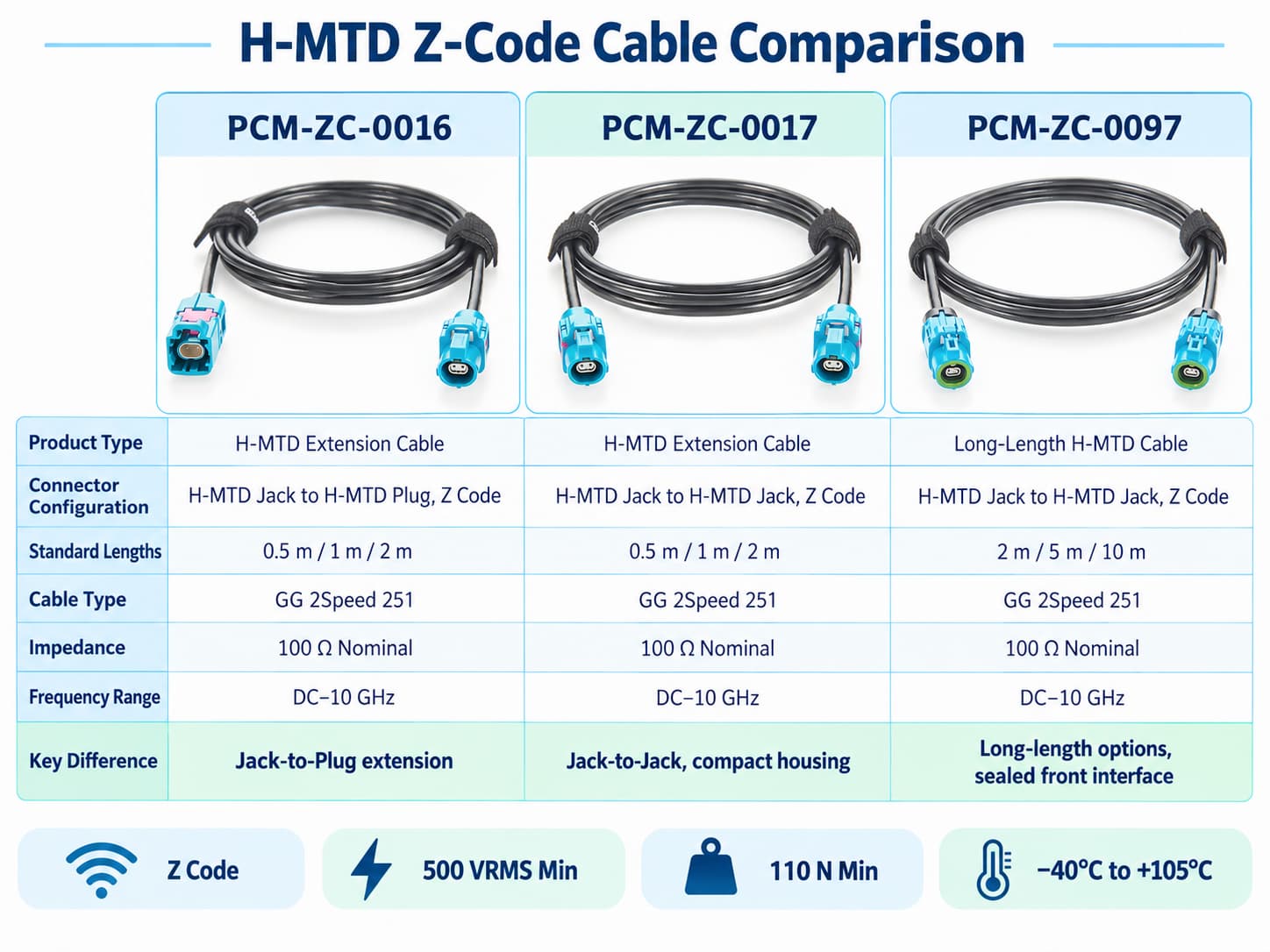
Compatibility Statement
Compatibility Verification
PCM-ZC-0098 uses an H-MTD Z Code interface and a 100Ω high-speed differential architecture. However, matching connector families or similar appearances do not guarantee mating or communication. Selection requires verification of the complete connector part number, gender, coding, keying, locking mechanism, waterproof structure, cable group, pinout, PHY, protocol and target data rate.
Before connecting ADAS cameras, radar modules, ECUs, domain controllers or Automotive Ethernet equipment, both mechanical and electrical compatibility must be confirmed against the device-interface definition and complete link requirements. Compatibility should never be assumed solely from the term "H-MTD interface."
Technical Compatibility Notice
PCM-ZC-0098 is a passive cable assembly that provides a physical path for high-speed differential signals. It performs no protocol conversion, switching, amplification or signal retiming.
The achievable data rate depends on PHY capability, cable length, connector quantity, PCB routing, insertion loss, return loss, crosstalk, EMC conditions and the complete channel link budget. Mechanical mating and connector bandwidth alone do not guarantee a 10Gbps communication link.
For 2m, 5m, 10m or longer customized versions, complete channel performance must be revalidated, particularly for demanding 2.5GBASE-T1, 5GBASE-T1 and 10GBASE-T1 applications.
How to Select the Right Product ?
Verify the Complete Connector Part Number
Verify the complete device-side connector P/N, gender, coding and mating interface before selection. PCM-ZC-0098 uses E6K14A-1CAZ5-Z and E6S14E-1CAZ5-Z connectors. If the equipment has a different coding, gender, keying or housing structure, mechanical compatibility must be confirmed. Never identify an H-MTD interface solely by its color or appearance.
Select the Cable for the Target Data Rate
Links operating at 100Mbps, 1Gbps and 10Gbps have different performance requirements. Cable selection should consider the PHY standard, cable length, connector quantity, insertion loss and complete link budget. A 100Ω impedance rating alone does not prove that every cable is suitable for the same Automotive Ethernet data rate or channel configuration.
Select Length According to Installation Distance
The 2m version suits nearby equipment connections, while 5m and 10m versions support cross-zone or front-to-rear vehicle routing. Because longer cables generally increase high-frequency loss, customized extended versions require renewed validation of signal integrity, insertion loss, return loss and available link margin at the intended data rate.
Select Waterproofing and Shielding for the Environment
For external, humid or contamination-prone locations, verify the sealing design of both the device interface and cable assembly. In environments containing cameras, radar, motors and power electronics, shielding continuity, grounding strategy and complete vehicle EMC performance must also be evaluated. The cable alone cannot compensate for unsuitable grounding, installation or system-level electromagnetic design.
Customization Capabilities
↕ Overall Cable Length Customization
Standard 2m, 5m and 10m lengths and customized versions are available. Longer cables require renewed validation of losses, crosstalk and the complete link budget.
□ H-MTD Gender Customization
Multiple H-MTD gender combinations are available. The complete device-side connector part number must be provided before customization to verify correct mechanical mating.
◉ Coding and Keying Customization
Coding and keying can be customized for the device interface. Selection must follow the complete connector part number to ensure identification and prevent mismating.
⚙ Connector Combination Customization
H-MTD can be combined with other high-speed interfaces for testing or adaptation. These passive harnesses provide physical connections but do not convert communication protocols.
⌘ Cable and Shielding Customization
Cable and shielding structures can be customized for data rate, length and EMC requirements, followed by renewed verification of impedance and high-frequency losses.
◇ Prototype, Testing and Project-Level Customization
Prototype, HIL and production harness development is supported. For 10Gbps-class applications, system-level validation with the actual ECU, PHY and complete channel is recommended.
Product FAQ
What Is PCM-ZC-0098 ?
PCM-ZC-0098 is a waterproof H-MTD Z-code male-to-female automotive high-speed data extension cable using Rosenberger H-MTD connectors and G&G 2SPEED 251 shielded Automotive Ethernet cable for 100Ω high-speed differential data connectivity and link extension between automotive electronic devices.
Does PCM-ZC-0098 Support 10Gbps ?
According to the current product specification, the cable assembly targets data transmission up to 10Gbps. However, whether the complete system can establish and reliably maintain a 10Gbps link also depends on the PHY, cable length, PCB design, number of connectors and signal integrity of the complete channel.
Can It Connect Directly to Every H-MTD Z-Code Device ?
Compatibility cannot be determined solely from the term "H-MTD Z Code." The complete connector P/N, gender, keying, housing, mating interface and device pin assignment must also be verified.
Can This Cable Convert One Protocol into Another ?
No. PCM-ZC-0098 is a passive high-speed cable assembly without a PHY, switch, converter or active signal-processing circuitry. Its primary function is physical connectivity and differential signal transmission rather than protocol conversion.
How Should I Choose Between 2m, 5m and 10m ?
The length should be selected according to the actual routing distance between devices while allowing reasonable installation margin. For high-speed applications, selecting an unnecessarily long cable is not recommended because greater length generally results in higher high-frequency losses.
Can the H-MTD Gender or Coding Be Changed ?
Alternative gender or coding configurations can be evaluated according to the device-side interface, but the complete connector P/N should be provided before customization. Different genders, codings and keying arrangements may involve different mechanical mating relationships and should not be selected based only on connector color or product photographs.