Compatible Molex 2257724212 HSAutoLink II 6-Pin LVDS Cable: Features, Applications and Selection Guide
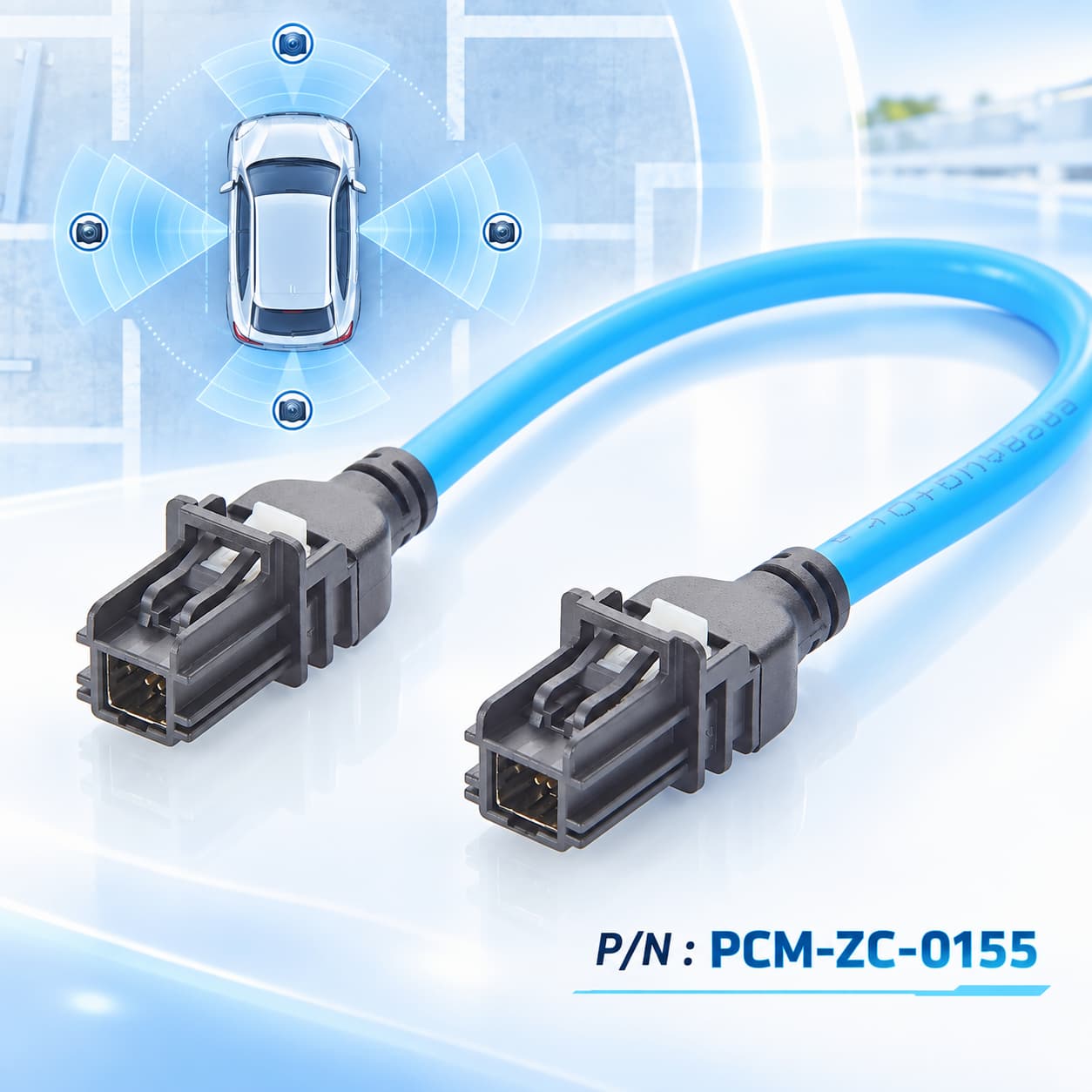
PCM-ZC-0155 is an HSAutoLink II 6-pin male-to-male cable assembly designed for automotive high-speed video and differential data connections. It uses straight Type-A 6-pin interfaces corresponding to the Molex 100337-8007 connector format, together with 28AWG high-speed differential conductors, a drain wire and shielding structure. The assembly is designed for 90Ω characteristic impedance with a standard length of 1000±20mm. It is mainly intended for point-to-point physical links among automotive displays, digital clusters, cameras, infotainment head units, smart cockpit controllers and related electronic modules.
For Molex 2257724212 replacement applications, pin assignment, sealing configuration, cable definition, impedance and target protocol should be verified before confirming mechanical, electrical and system-level compatibility.
What Does This Article Cover ?
This article focuses on the PCM-ZC-0155 HSAutoLink II 6-pin high-speed data cable assembly and systematically explains the HSAutoLink II interface, LVDS differential transmission, 90Ω impedance control, 28AWG differential conductors, drain wire, multilayer shielding, Polarization A mechanical coding, Molex 2257724212 compatibility, automotive applications, product selection, customization capabilities and common compatibility risks.
It addresses several practical engineering and purchasing questions: What is HSAutoLink II? Why should an automotive display or camera link not simply be replaced with an ordinary six-core cable? Does "6-pin, Type A, male-to-male" automatically mean full compatibility? Why do 90Ω impedance, shielding and pin assignment affect LVDS and other high-speed differential signals?
Quick Product Introduction
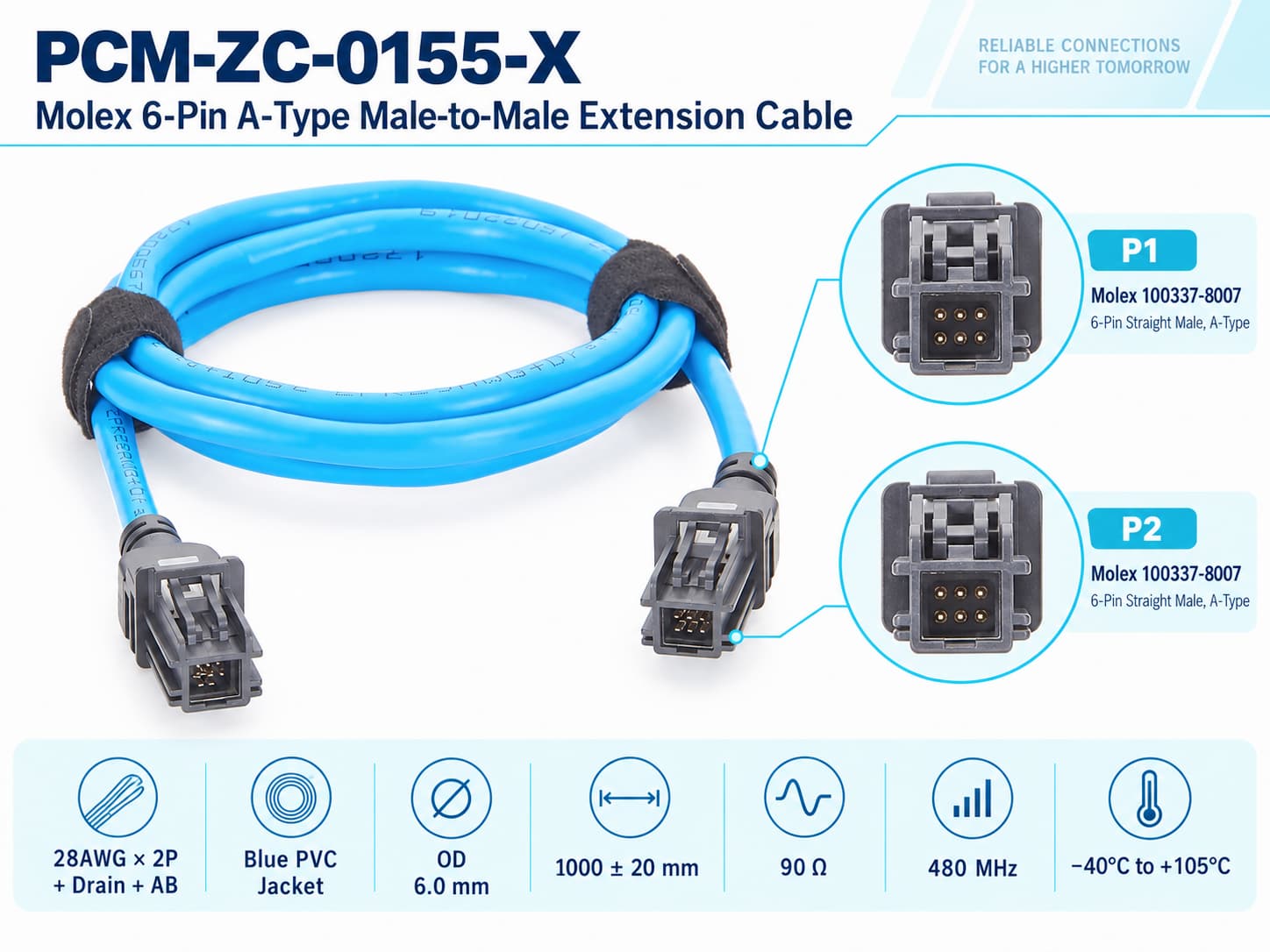
PCM-ZC-0155 is an HSAutoLink II 6-pin male-to-male high-speed data cable assembly. Both ends use straight Type-A 6-pin interfaces corresponding to the Molex 100337-8007 connector format, creating a point-to-point male-to-male connection.
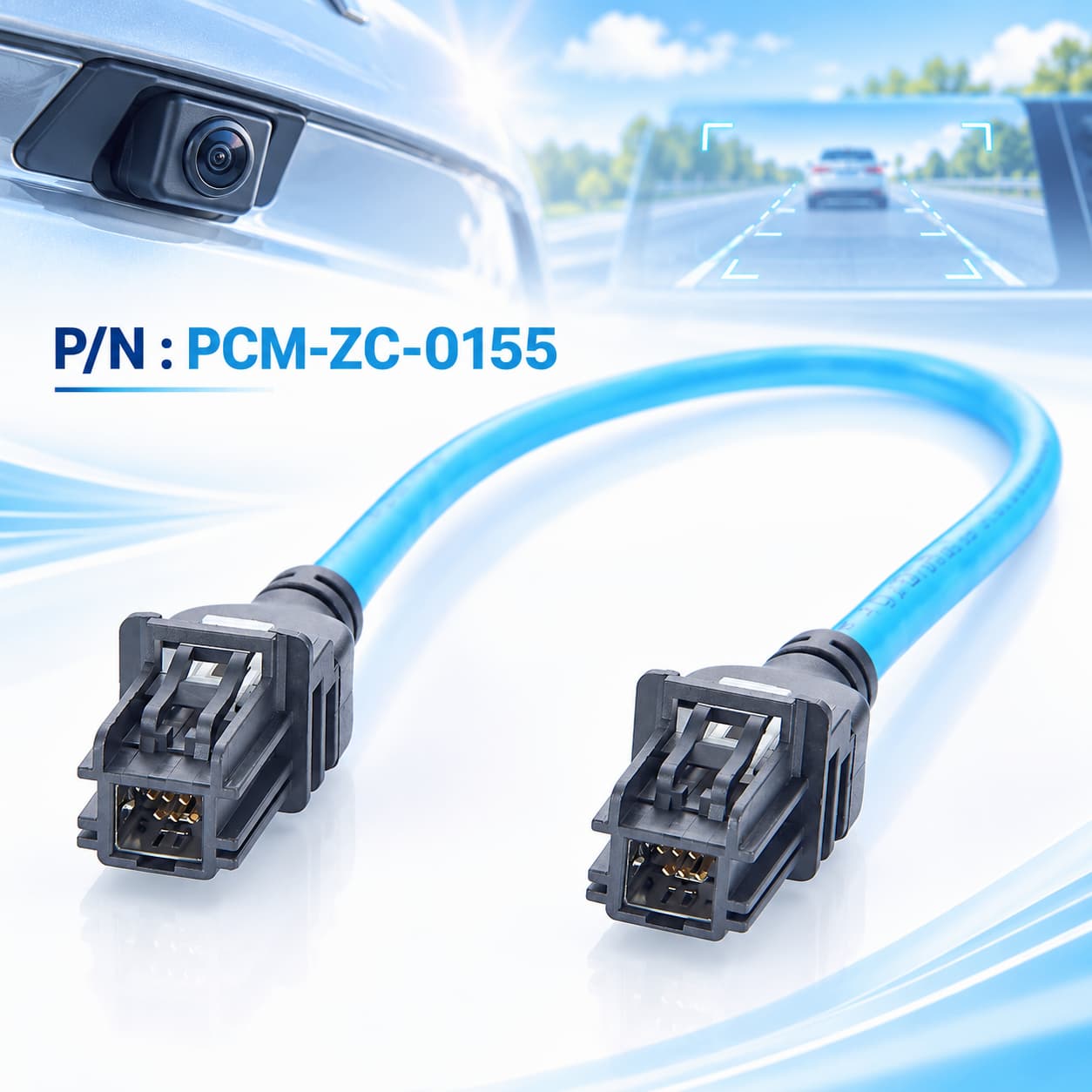
Typical applications include automotive displays, digital instrument clusters, cameras, 360-degree surround-view systems, ADAS, infotainment systems and smart cockpit equipment requiring high-speed video or differential data connectivity.
| Product Name | Molex 6-Pin A-Type Male-to-Male Extension Cable |
| Premier Cable P/N | PCM-ZC-0155 |
| Connection Structure | Molex 6-pin straight male to Molex 6-pin straight male |
| P1 Connector | Molex 100337-8007 |
| P2 Connector | Molex 100337-8007 |
| Connector Type | 6-pin, straight, male, A-Type, black |
| Standard Length | 1000 + 20mm |
| Cable Structure | 28AWG x 2P + Drain + AB |
| Cable Outer Diameter | 6.0mm OD |
|
What Is HSAutoLink II ?
HSAutoLink II is a differential-data interconnect system developed by Molex for high-speed transportation and automotive connectivity applications. Its primary objective is to provide reliable high-speed differential, power, low-speed or hybrid signal interconnections within a more compact architecture than conventional low-speed automotive connectors.
Current Molex documentation includes HSAutoLink II configurations with 6, 12 and 14 circuits as well as hybrid versions, together with multiple polarizations, sealed and unsealed options and various cable assembly configurations.
For high-speed applications, the value of HSAutoLink II extends beyond simply connecting two modules. Its connector architecture considers high-speed differential paths, shielding, mechanical positioning and EMI control, making it suitable for vehicle cameras, displays, infotainment, telematics and ADAS electronics.
What Is LVDS ?
LVDS stands for Low Voltage Differential Signaling. It transmits small-amplitude signals of opposite polarity over a conductor pair, and the receiver interprets the voltage difference between the two conductors rather than relying on the absolute voltage of one conductor relative to ground.
This differential approach provides several important advantages:
First, common-mode interference coupled into both conductors can be partially rejected by the differential receiver.
Second, the relatively low voltage swing supports high-speed switching while helping reduce power consumption and EMI.
Third, twisted-pair construction helps expose both conductors more equally to the surrounding electromagnetic environment.
For these reasons, LVDS has long been used in displays, instrument clusters, cameras, image-processing equipment and other electronic systems requiring high-speed data transmission.
Pain Points
Core Performance Advantages
- High-Speed Differential Transmission Architecture
Uses 28AWG differential pairs rather than ordinary independent multi-core conductors, making the assembly more appropriate for automotive video and high-speed data links.
- 90Ω Impedance Control
Designed around a 90Ω high-speed differential link to help reduce signal reflections caused by impedance discontinuities.
- Drain + Shielding Architecture
The drain wire and shielding system provide a stronger foundation for interference control in complex automotive EMC environments.
- HSAutoLink II Type-A Mechanical Keying
Polarization A uses mechanical keying to restrict incorrect orientation and incompatible mating, improving connector identification during assembly and maintenance.
- Suitable for Pre-Assembled Harness Integration
Compared with field-assembled high-speed wiring, a pre-assembled HSAutoLink II harness helps standardize the connector, pinout, cable and shielding configuration and reduce system-integration complexity.
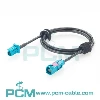
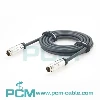
Products Display
Similar products
Compatibility Statement
Compatibility Verification
PCM-ZC-0155 can be evaluated as a compatible solution for Molex 2257724212 applications, but this does not guarantee a direct 1:1 replacement.
Connector P/N, 6-circuit configuration, Polarization A, pin assignment, 90Ω differential impedance, shielding, grounding and mating interfaces should be verified. Mechanical mating alone does not establish electrical or system compatibility.
Technical Compatibility Notice
HSAutoLink II is a high-speed physical interconnect system, not a communication protocol. PCM-ZC-0155 contains no PHY, SerDes or protocol converter and therefore performs no protocol conversion.
Although the HSAutoLink II family supports multiple high-speed protocols, this does not mean they are all verified for this cable. Actual performance depends on pin assignment, 90Ω impedance, cable length, loss, shielding and complete channel signal integrity.
How to Select the Right Product ?
Verify Connector P/N, Circuit Count & Polarization
Verify that the device uses an HSAutoLink II 6-circuit interface and confirm the exact connector P/N, Type-A polarization and keying. For 2257724212-compatible applications, also verify the actual mating relationship between the device header and the 100337-8007 plug.
Verify Pin Assignment & Target Protocol
Mechanical compatibility is only the first step. Verify all six circuit functions, including high-speed differential pairs, ground, drain and other assignments, as well as the target LVDS or other protocol. Successful mating and locking alone do not confirm system compatibility.
Verify Impedance & High-Speed Link Performance
PCM-ZC-0155 uses a 90Ω high-speed differential design that should match the equipment requirements. For longer cables, higher frequencies or different SerDes applications, reassess cable type, insertion loss, return loss and the complete link budget rather than simply extending cable length.
Confirm Sealed or Unsealed Design
2257724212 is an unsealed cable assembly and should not be assumed waterproof. If IP protection, sealing or greater environmental resistance is required, select an appropriate sealed design. Customized sealed PCM-ZC-0155 versions should specify their sealing structure and validated protection rating.
Customization Capabilities
↕ Cable Length Customization
Cable length can be customized for displays, cameras and ECUs. Longer cables require renewed verification of loss, pair skew and link margin.
□ HSAutoLink II Interface Customization
Plug, header, circuit count and cable exit can be customized to the device interface. Exact connector P/N must be confirmed first.
◉ Polarization & Keying Customization
Polarization and keying can be customized for the HSAutoLink II system. Device-side connector key and mating compatibility must be verified.
⚙ Pin Assignment Customization
Pin-to-pin mapping, differential pairs and ground/drain assignments can be customized, with signal integrity revalidated after changes.
⌘ Cable & Shielding Customization
Cable, foil, braid and drain structures can be customized for frequency, EMC and flexibility requirements, with impedance and insertion loss reverified.
◇ Prototype & Replacement Customization
Custom cables can be developed for 2257724212 replacement, HIL and ECU testing. Drop-in replacement requires verification of dimensions, pinout and high-speed performance.
Product FAQ
What Is PCM-ZC-0155 ?
PCM-ZC-0155 is an HSAutoLink II 6-pin male-to-male high-speed differential cable assembly for automotive displays, cameras, infotainment and smart cockpit video and data applications.
Its design uses Type-A six-pin interfaces, 28AWG high-speed differential conductors, 90Ω impedance and a shielding system.
Why Does This Cable Use 90Ω Impedance ?
A 90Ω characteristic impedance is one of the design parameters of the PCM-ZC-0155 high-speed differential cable and is used to control transmission-line behavior at high frequencies.
The equipment and PCB interfaces must also meet the corresponding impedance and termination requirements to reduce reflections and maintain better signal integrity.
Does HSAutoLink II Support Only LVDS ?
No.
Official Molex HSAutoLink II documentation lists multiple high-speed applications including LVDS, USB, Ethernet, GMSL, FPD-Link and DisplayPort.
However, this does not mean that PCM-ZC-0155 automatically supports every one of these protocols without changes to the cable, pinout or impedance design.
The specific cable assembly and complete system must be validated for the intended protocol.
Can an HSAutoLink II Cable Convert Protocols ?
No.
The cable assembly is a passive interconnect that provides electrical and physical signal transmission without active protocol-conversion circuitry.
For example, connecting one end to an LVDS device and the other to a device using a different protocol will not automatically convert data formats merely because the connectors are mechanically compatible.
Can 1.5m, 2m or 4m Versions Be Produced ?
Different lengths can be evaluated according to project requirements.
The Molex 225772 family itself includes multiple length options, but for customized PCM assemblies, increasing cable length should still trigger a reassessment of high-speed performance according to the target protocol and frequency.
Cable length should not be treated as a purely mechanical parameter with no effect on signal performance.
Can Other Jacket Colors or Materials Be Customized ?
Different jacket colors, materials, flexibility levels and temperature ratings can be evaluated according to project requirements.
However, changing the cable construction may also affect impedance, capacitance, attenuation and flexibility, so electrical performance should be revalidated whenever the cable material is changed in a high-speed product.