USB-A to XLR 3-Pin Active Audio Conversion Cable: Features, Applications and Selection Guide
Learn how the PCM-KW-180 USB-A to XLR 3-pin active audio cable combines a DP108 audio conversion IC, KA-867 REV1.0 PCB, 24AWG shielded cable and durable PVC construction for recording, streaming, live sound and professional audio systems.
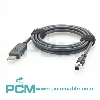
PCM-KW-180 is a 0.6m USB-A to XLR 3-pin active audio conversion cable featuring a KA-867 REV1.0 PCB and DP108 digital audio conversion IC. It uses 24AWG shielded conductors, a durable PVC jacket and reinforced connector housings for compatible USB and analog audio equipment.
Quick Product Introduction
PCM-KW-180 combines a USB-A connector, internal digital audio conversion circuit and XLR 3-pin analog interface in a compact cable assembly.
| Product Name | USB to XLR Microphone Audio Cable |
| Premier Cable P/N | PCM-KW-180 |
| Connector A | USB-A Male |
| Connector B | XLR 3-Pin Female |
| Length | 600±15mm |
| Cable OD | 4.2mm |
| Conductor | 24AWG Stranded Copper |
| Shielding | Shielded Cable Structure |
| Internal Molding | Black 45P PVC |
PCM-KW-180 vs USB Audio Interface + XLR
| Comparison | PCM-KW-180 | USB Audio Interface + XLR |
|---|---|---|
| Integrated Cable Design | Excellent | No |
| Portability | High | Medium |
| Built-In Audio Conversion | Yes | Yes |
| XLR Connection | Yes | Yes |

What Is a USB-to-XLR Audio Cable?
A USB-to-XLR audio cable is more than a simple cable that connects two different connector types. USB normally carries digital audio data, while XLR equipment typically handles analog audio signals, meaning the two interfaces use fundamentally different signal and electrical formats.
A functional USB-to-analog-XLR connection therefore generally requires active circuitry associated with a USB Audio Interface, audio codec, DAC/ADC, and analog input or output stage, depending on the signal direction. PCM-KW-180 integrates a DP108 Digital Audio IC and KA-867 REV1.0 PCB to provide the required digital-to-analog or related audio signal processing. Therefore, it should be classified as an Active Audio Conversion Cable, rather than a conventional passive adapter cable.
PCM-KW-180 →What Does USB-A Do in an Audio System ?
The USB-A itself is just a physical interface.
It can carry:
● USB Data;
● Device Enumeration;
● Audio Streaming;
● Bus Power.
When PCM-KW-180 is inserted into the computer, the internal PCB needs to communicate with the USB Host.
If the firmware is designed as a standard USB audio device, the operating system usually recognizes it as:
USB Audio Device
However, whether it is truly driver-free and supports which operating systems and sampling rates still needs to be confirmed based on DP108 firmware and product testing.Professional USB audio devices on the market can indeed be recognized by operating systems through the USB Audio Class, but different products support varying Audio Classes, sample rates, and driver methods.

Common Industrial Ethernet Challenges
Core Product Value

PCM-KW-180
The core product value of PCM-KW-180 can be summarized as follows:
◆ Built-in Digital Audio Conversion Module
The integrated KA-867 REV1.0 PCB and DP108 digital audio IC provide active signal processing and conversion between USB digital audio and XLR analog audio, distinguishing the cable from conventional passive USB-to-XLR adapters.
◆ USB-A Digital Audio Interface
The USB-A interface connects to compatible computers, laptops and other USB Host devices with appropriate USB Audio support, providing the host-side connection for digital audio data and the cable's internal conversion circuitry.
◆ XLR 3-Pin Professional Audio Interface
The XLR 3-pin format is widely used with microphones, mixers, recording and sound-reinforcement equipment. XLR input/output direction, pin assignment and Mic/Line signal level should be verified before connection.
◆ Shielded & Durable Cable Construction
The cable combines 24AWG stranded copper conductors, shielding, metal connector housings and a durable PVC jacket to improve mechanical protection, everyday durability and resistance to external electromagnetic interference in audio applications.

Products Display

Similar products

Compatibility Statement
Compatibility Verification
PCM-KW-180 uses USB-A and XLR 3-pin interfaces with integrated digital audio processing circuitry, but successful physical connection does not guarantee compatibility with every computer, laptop, microphone, mixer, amplifier or recording device.
Before selection, verify USB Host capability, USB Audio driver support, operating-system recognition, XLR input/output direction, Mic/Line signal level, pin assignment and the interface definition of the target equipment to reduce the risk of device-recognition failures, no audio, abnormal volume or signal distortion.
Technical Compatibility Notice
The current PCM-KW-180 pinout uses XLR Pin 2 as the audio signal hot connection, while Pins 1 and 3 are connected to ground. This differs from conventional balanced XLR wiring, where Pin 1 is Ground, Pin 2 is Hot and Pin 3 is Cold for differential signaling.
The product should therefore be treated as an unbalanced audio connection, not a standard balanced microphone interface. Unless the internal circuitry, voltage tolerance and equipment compatibility have been specifically validated, connection to an interface with 48V phantom power enabled is not recommended, and the cable should not be marketed as a standard balanced XLR microphone cable.
How to Choose a USB-to-XLR Audio Solution ?
Compact One-Cable USB-XLR Connection
If the application requires a compact one-cable solution between a USB device and XLR audio equipment, PCM-KW-180 can help reduce separate interface boxes, adapters and additional cables. Before selection, verify the signal direction, USB Audio behavior, XLR pinout, input/output type and audio level against the target equipment. Once these parameters are confirmed, the active conversion cable can provide a convenient solution for portable and space-constrained audio installations.
Professional Microphone Recording
For applications involving condenser microphones, 48V phantom power, microphone preamps, gain control, balanced inputs, or demanding requirements for recording dynamic range and noise performance, a full-featured USB Audio Interface is generally the more appropriate solution. The current PCM-KW-180 XLR pinout is an unbalanced configuration and should not be treated as a conventional balanced XLR microphone input cable or connected to 48V phantom power unless specifically validated.
Computer Playback to Professional Audio Equipment
If testing confirms that PCM-KW-180 enumerates on the computer as a USB Playback Output and converts USB digital audio into an analog signal at the XLR end, it can be positioned as a playback connection from a computer to compatible professional audio equipment. Potential applications include mixers, PA systems, amplifiers and powered speakers, provided that the XLR input type, pin assignment and Line/Mic signal levels are correctly matched.
XLR Microphone Audio Capture to Computer
If testing confirms that PCM-KW-180 enumerates as a USB Recording Input or USB Audio Capture Device and converts the analog XLR signal into USB digital audio, it may be positioned as an XLR Microphone to USB Audio Capture Cable. Input sensitivity, supported audio formats, noise performance and microphone compatibility should also be validated. Until USB enumeration and actual signal direction have been confirmed, the product should not be marketed as supporting both audio input and output.
Customization Capabilities
↕ USB Interface Customization
USB-A, USB-C and other host-side USB audio configurations can be developed according to the target platform, with USB Audio compatibility verified for the host device and operating system.
□ XLR Interface Customization
XLR 3-pin male or female connectors, metal housings, strain-relief boots and locking structures can be customized for mixers, microphones, speakers, audio interfaces and other professional audio equipment.
◉ Audio Input / Output Direction Customization
USB Audio Output or USB Audio Input architectures can be developed according to the required signal direction, using suitable DAC, ADC or audio codec circuitry.
⚙ XLR Pin Assignment Customization
XLR Pin 1, Pin 2 and Pin 3 assignments can be customized according to the signal and grounding requirements of balanced or unbalanced audio equipment.
⌘ Cable Length Customization
The standard cable length is 0.6m, while custom lengths can be developed for desktop audio, recording studios, stage systems, conference installations and equipment racks.
◇ PCB & Audio Codec Customization
PCB and audio codec configurations can be customized according to sampling rate, bit depth, USB Audio Class, audio direction, signal level and operating-system compatibility requirements.
Conclusion:
PCM-KW-180 integrates USB connectivity, active digital audio processing and an XLR analog interface into a compact cable assembly.
Its real compatibility depends not merely on connector shape, but on USB device behavior, conversion direction, XLR wiring, audio level, phantom-power conditions and the target equipment.
Product FAQ
Why Can't a Passive USB Cable Directly Drive XLR Audio ?
Digital USB audio must be decoded and converted electronically before it can become an analog XLR audio signal.
What Does the DP108 Audio IC Do ?
Based on the supplied design information, the DP108 provides the active digital audio processing required by the cable. Specific bit depth and sampling-rate claims should only be published after firmware or datasheet verification.
Balanced vs Unbalanced Audio
Balanced audio uses separate hot and cold signal conductors plus a shield, improving common-mode noise rejection. Unbalanced audio uses a simpler signal-and-ground arrangement.
Why Is Shielding Important ?
Shielding helps reduce EMI and RFI, but ground loops, USB grounding and equipment design can still introduce audible noise.
Does It Need External Power ?
The circuit may use USB bus power, but this should be confirmed from the PCB and actual device operation.