IP67 Waterproof FAKRA Cable :
Features Applications And Selection Guide
Explore IP67 waterproof FAKRA cables for automotive RF links and signal transmission. Learn about Z code female connectors, 50 ohm coaxial construction, waterproof sealing, operating conditions, and key selection criteria for compatible vehicle electronics, including custom cable and OEM solutions.
> Product Introduction

What Is an IP67 Waterproof FAKRA Connector Cable ?
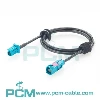
An IP67 waterproof FAKRA cable is an RF cable with Z code female connectors at both ends and LEONI DACAR 302-4 coaxial cable. It connects vehicle electronics through matching FAKRA male ports, transmitting antenna, navigation, wireless and camera signals.
Used in vehicle cabins and moisture prone exterior areas, it provides a shielded, impedance matched signal path with an IP67 rating when properly mated and sealed.
What Is VSWR and How Does It Affect FAKRA RF Cables ?
VSWR (Voltage Standing Wave Ratio) measures impedance matching in RF systems. A value closer to 1 indicates less reflection. This 50 ohm IP67 waterproof FAKRA cable has a specified maximum VSWR below 1.80.
Connector geometry, impedance continuity and coaxial cable assembly affect performance. Proper construction also helps maintain RF signal quality for vehicle antennas, GPS/GNSS and in vehicle communication systems.

How to Select the Right FAKRA Cable ?
Choose a FAKRA cable by checking the equipment and signal, connector code, gender and keying, impedance, frequency and RF performance. Confirm the required IP rating, mating seals and installation conditions. Finally determine cable length and routing, allowing for cable bend radius and signal loss.
> Core Product Value

◆ Stable RF Signal Transmission Path
With a 50 ohm coaxial path and matched FAKRA connectors, the cable helps limit impedance discontinuities and reflections, supporting stable RF transmission for vehicle antennas, navigation and communication systems.
◆ IP67 Waterproof Sealing Protection
The sealed connector structure helps resist dust and water ingress. When correctly mated with compatible seals and installed as specified, it can meet IP67 protection requirements in exposed vehicle locations.
◆ Automotive Coaxial Shielding Design
LEONI DACAR 302-4 coaxial cable combines a center conductor, dielectric and metallic shielding under an outer jacket. This structure maintains the RF path and helps reduce electromagnetic interference in vehicles.
◆ Secure FAKRA Interface for Vehicles
Z code female FAKRA connectors provide a keyed, standardized interface, while the water blue housing aids identification. The specified operating range of -40°C to +105°C supports use in varied automotive environments.

> Product Customization Capabilities
Cable Length
Cable length can match vehicle layouts, routing paths and space requirements.
Connector Configuration
FAKRA gender, coding and keying can match the required equipment interface.
Coaxial Cable Options
Coaxial cable options address RF loss, shielding and cable flexibility needs.
Waterproof Sealing Design
Seals and housings can be assessed for required waterproof protection levels.
Harness Routing
Cable exits and connector angles suit tight vehicle installation spaces well.
OEM Bulk Production
Plan OEM labels, packaging, and batch tracking; confirm MOQs and delivery dates.
> Product FAQ
How Does FAKRA Z Differ from Other Codes ?
FAKRA Z is the universal mechanical code; other codes use specific keying to prevent mismating. Color aids identification, but coding and connector gender determine compatibility.
Why Use Female to Female FAKRA Connectors ?
Both female ends mate with FAKRA male ports, linking two devices through a continuous 50 ohm coaxial path. This configuration suits RF extensions and device interconnections.
Can the FAKRA Cable Joint Affect RF Quality ?
Yes. Poor assembly may damage the dielectric, weaken contact or interrupt shielding, causing impedance changes, reflections or loss. Proper termination and RF tests help preserve signal integrity.
Can This Waterproof FAKRA Cable Be Used Outside ?
It can suit exterior locations when the mated assembly meets IP67 requirements. Check seals, jacket weathering, UV exposure and wear; IP67 alone does not ensure suitability for every location.