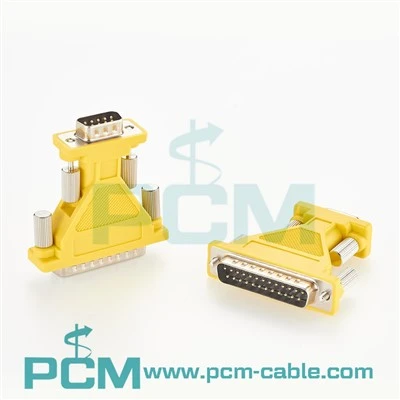
In the ever - evolving landscape of home and office networking, wireless routers have become the cornerstone of seamless connectivity. As a provider of angled cables, I often encounter the question: Can I use angled cables for wireless routers? This blog post aims to delve into this topic, exploring the technical aspects, benefits, and potential drawbacks of using angled cables with wireless routers.


Understanding Wireless Routers and Cables
Wireless routers are essential devices that create a local area network (LAN) by transmitting data wirelessly to connected devices such as laptops, smartphones, and tablets. However, they also require a physical connection to the internet service provider (ISP) through an Ethernet cable. This is where cables, including angled ones, come into play.
Traditional straight cables are the most common type used for router connections. They are simple, straightforward, and widely available. Angled cables, on the other hand, have a bend at one or both ends, typically at a 90 - degree angle. This design feature allows for more flexible routing in tight spaces, which can be particularly useful in various installation scenarios.
Technical Compatibility
From a technical perspective, angled cables are fully compatible with wireless routers. Most modern routers are equipped with standard Ethernet ports that support both straight and angled cables. The electrical signals transmitted through the cable are not affected by the angle of the connector. As long as the cable meets the necessary Ethernet standards (such as Cat5e, Cat6, or Cat6a), it can be used to establish a reliable connection between the router and the ISP or other network devices.
The key factor in ensuring compatibility is the connector type. The most common connector for Ethernet cables is the RJ45 connector, which is used in both straight and angled cables. As long as the angled cable has an RJ45 connector that fits snugly into the router's Ethernet port, there should be no issues with connectivity.
Benefits of Using Angled Cables for Wireless Routers
Space - Saving
One of the primary advantages of using angled cables with wireless routers is their space - saving design. In many home and office setups, routers are placed in confined spaces, such as cabinets or behind desks. Straight cables can take up a significant amount of space and may cause clutter, making it difficult to organize the area. Angled cables, with their bent connectors, can be routed more neatly along the edges of surfaces, allowing for a more compact and organized installation.
For example, if your router is placed in a narrow cabinet, a Left Right Angled VGA Cable can be used to connect it to other devices without taking up too much horizontal space. This not only makes the setup look cleaner but also reduces the risk of the cable being accidentally pulled or damaged.
Flexibility in Routing
Angled cables offer greater flexibility in cable routing. They can be bent in different directions, allowing you to route the cable around obstacles or in areas where a straight cable would be difficult to install. This is especially useful in complex network setups where multiple cables need to be routed through a limited space.
Suppose you have a router located in a corner of a room, and you need to connect it to a modem on the opposite side of the room. Using an angled cable, you can easily route the cable along the wall and around furniture, ensuring a smooth and unobstructed connection.
Reduced Stress on Connectors
Another benefit of angled cables is that they can reduce stress on the router's Ethernet ports. When a straight cable is plugged into a router, the weight of the cable can put pressure on the port, especially if the cable is pulled or moved frequently. Over time, this can cause the port to become loose or damaged, leading to connectivity issues.
Angled cables, however, distribute the weight of the cable more evenly, reducing the stress on the port. This can help prolong the lifespan of the router's Ethernet ports and ensure a more reliable connection.
Potential Drawbacks
Higher Cost
One of the main drawbacks of angled cables is their higher cost compared to straight cables. The manufacturing process for angled cables is more complex, as it requires additional steps to create the bent connectors. This results in a higher price tag for consumers.
However, it's important to consider the long - term benefits of using angled cables. If the space - saving and flexibility features are crucial for your network setup, the additional cost may be worth it.
Limited Availability
In some cases, angled cables may be less readily available than straight cables. Not all stores carry a wide selection of angled cables, especially for specialized types or lengths. This can make it more difficult to find the right cable for your needs, and you may need to order them online.
Specific Angled Cables for Router Setups
Apart from the standard Ethernet angled cables, there are other types of angled cables that can be useful in router setups. For example, the Slim DB9 Right Angle Low Profile can be used in certain router models that have a DB9 port for specific functions, such as console access. This cable's low - profile design allows for a more compact installation in tight spaces.
The Mini DIN To DB9 Cable can also be handy in scenarios where you need to connect devices with different port types. It provides a reliable connection between a device with a Mini DIN port and a router with a DB9 port.
Conclusion
In conclusion, yes, you can definitely use angled cables for wireless routers. They offer numerous benefits, including space - saving, flexibility in routing, and reduced stress on connectors. While there are some potential drawbacks, such as higher cost and limited availability, the advantages often outweigh the disadvantages, especially in complex or space - constrained network setups.
If you're looking to upgrade your router setup or are in the process of setting up a new network, consider using angled cables to enhance the functionality and organization of your network. As a leading provider of angled cables, we offer a wide range of high - quality products to meet your needs. Whether you need a simple Ethernet angled cable or a specialized cable like the ones mentioned above, we have you covered.
If you're interested in purchasing angled cables for your wireless routers or have any questions about our products, we encourage you to contact us for a procurement discussion. We're here to help you find the best solutions for your network requirements.
References
- Ethernet Cable Standards Documentation.
- Wireless Router User Manuals.