If you’ve ever worked with RF (radio frequency) devices—whether for telecommunications, wireless networking, or even aerospace applications—you know that choosing the right coaxial cable is non-negotiable. Mismatched connectors, improper impedance, or signal loss can turn a high-powered setup into a frustrating underperformer. As a supplier of N To TS9 Cables, I get asked this question all the time: Can our N To TS9 Cable work in a radar device? It’s a fair question, and the answer isn’t a simple “yes” or “no.” To get to the bottom of it, we need to break down what radar systems demand, how N and TS9 connectors stack up, and when our cable is (and isn’t) the right fit for these specialized devices.
First, let’s ground ourselves in what a radar system needs from its cabling. Radar works on a basic principle: it sends out an RF signal, waits for it to bounce off a target (like an aircraft, weather system, or ground object), and measures the time it takes to return. For this to work accurately, two non-negotiables are low signal loss and consistent impedance (usually 50 ohms for most radar applications). Any dip in signal strength mid-journey means the return signal is weaker, making it harder to detect small or distant targets, and any impedance mismatch causes signal reflections, which create “ghost targets” or distort data. That’s why radar designers are hyper-selective about every component—from the coax cable itself to the connectors on either end.
Now, let’s talk about N and TS9 connectors, since that’s the core of our N To TS9 Cable. N connectors are robust, threaded connectors designed for high-frequency applications (up to 11 GHz, depending on the variant) and long cable runs. They’re resistant to vibration and weather, which is why you’ll find them on fixed radar stations, marine radar, and some industrial radar systems—they’re built to hold up in harsh environments. TS9 connectors, on the other hand, are smaller, push-on connectors often used in 4G/5G modems, hotspots, and some portable wireless devices. They’re compact and lightweight, but they’re not engineered for the same high-power, high-vibration, or high-frequency demands as N connectors.
So, right off the bat, there’s a tradeoff. Our N To TS9 Cable bridges two very different connector types, but that doesn’t automatically make it a radar-ready cable. Let’s start with when it might work. Some low-frequency radar applications—like short-range proximity radar (used in parking sensors or small industrial level sensors) that operates below 3 GHz—could potentially use this cable in a pinch. The N end can mate directly with the radar’s N port, and the TS9 end with a device’s TS9 antenna port, creating a quick jumper for a temporary setup. Even here, though, it’s not ideal: TS9 connectors aren’t designed to handle the consistent signal power that most radar systems put out over time. Over months of use, the push-on connection can loosen, leading to intermittent signal loss, which would make the radar unreliable for its intended task.
Where things get trickier is when we look at medium and high-frequency radar. Most long-range radar—like air traffic control radar or weather radar—operates at 3 GHz or higher, often up to 18 GHz. At those frequencies, even tiny imperfections in connectors or cable can cause massive signal loss. TS9 connectors simply don’t have the precision for that: their internal contact isn’t as tightly controlled as N connectors, so at high frequencies, signal reflection goes up, and loss becomes unacceptably high. For these applications, you’re better off with other cable assemblies that are built for radar’s frequency demands, like the Antenna Cable TNC To Type-N, which is engineered to handle higher frequencies than TS9 and is often used in military and industrial radar setups. That being said, some designers might use an adapter alongside our N To TS9 Cable for a temporary test setup—though we always warn them that it’s not a long-term solution.
Another key factor is cable length. All coax cables have signal loss, measured in decibels (dB) per foot. For radar, minimizing that loss is critical, so longer runs often require thicker, lower-loss cables like the N Male To N Male RG213 Cable, which is known for its low loss at high frequencies and is a staple in fixed radar installations. Our N To TS9 Cable is typically used for short runs (under 10 feet) because its smaller gauge can’t handle the high power and frequency of long radar cables. If a radar setup has a 5-foot jumper that needs to connect a small, portable transceiver to an N port, our cable might work for short-term testing, but again, not for permanent installation.
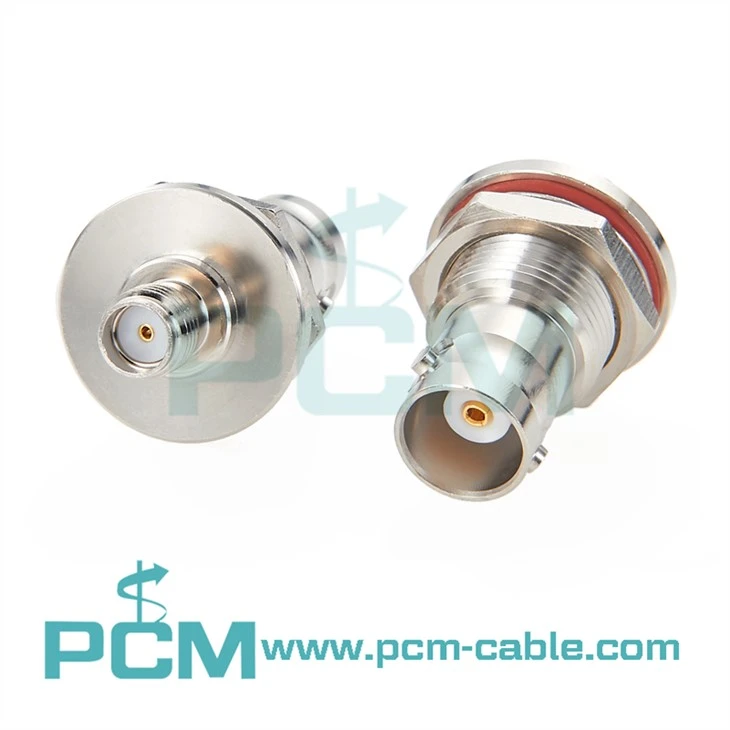
Wait a minute—what about adapter flexibility? Sometimes, radar systems have mixed connector needs, and designers use adapters to modify their setups. For example, if a radar has an SMA port instead of N, an SMA Panel Mounting Coupler can convert that to N, letting you pair with different cables. But it’s important to note that every adapter adds a small amount of signal loss and a potential point of failure, so even these are only used when necessary. If you’re looking for an adapter for your radar setup, the BNC To SMA Bulkhead Coaxial Adapter is another option for specific frequency ranges, but again, it’s meant for specific, short-run applications where versatility is needed over maximum performance.
Let’s also address a common misconception: just because two connectors mate physically doesn’t mean they’re compatible electrically. Impedance is the big one here. N connectors are almost always 50 ohms, which is standard for RF, but some TS9 variants—wait, no, TS9 is also mostly 50 ohms, but their internal construction isn’t matched for high frequencies. Even if the impedance matches at low frequencies, at radar frequencies, the TS9’s push-on design creates a discontinuity in the signal path, leading to reflections. That’s why high-frequency radar setups rely on threaded, precision connectors like N, SMA, or TNC, not push-on types like TS9.
So, putting this all together, here’s the real answer: Our N To TS9 Cable is not a recommended primary cable for permanent, high-performance radar systems. It’s best suited for low-frequency, short-range radar test setups or temporary connections where portability is more important than maximum signal integrity. For any radar application that needs consistent, high-frequency performance, long cable runs, or harsh environment durability, you’ll want to look for cables and connectors built specifically for RF radar demands—like the RG213 for low loss, or the TNC to N cable for higher frequencies.
That said, we work with a lot of engineers who need flexible solutions for prototyping or field testing, and our N To TS9 Cable fills that niche perfectly. If you’re building a prototype that uses a small TS9-connected transceiver and needs to interface with an N-based radar test port, our cable will work for those short-term, non-critical tasks. The key is to be honest about the limitations—we never want a customer to use our cable in a permanent radar setup and then blame us for signal issues that come from choosing a connector that’s not designed for the job.
At the end of the day, RF is all about matching components to their intended use. We design our N To TS9 Cable to connect TS9 devices (like modems) to N-based antennas or test equipment, and that works great for 4G/5G, IoT, and short-range RF. When it comes to radar, though, the bar is much higher. But that doesn’t mean our products can’t play a role in radar development—they just aren’t the right fit for the final, deployed system.
If you’re working on a radar project and have questions about whether our N To TS9 Cable is right for your needs, or if you’re looking for other cable assemblies, adapters, or couplers that are built for RF and radar applications, we’re here to help. Every project is different, and we can guide you to the best components for your frequency range, power needs, and environment. Whether you need a short jumper for testing or a long cable for a fixed radar station, we can point you to the right solution that balances performance, durability, and cost.

Don’t hesitate to reach out if you have specific requirements for your radar setup—our team has years of experience in RF cabling and can help you make an informed choice that will keep your system running smoothly, no matter the frequency range.
References
- RF Connector Basics: Impedance, Frequency, and Application Notes. IEEE Microwave Theory and Techniques Society, 2022.
- Coaxial Cable Signal Loss Calculations for RF Systems. ARRL Inc., 2021.
- Military Standard for RF Interconnect Components (MIL-STD-1574). U.S. Department of Defense, 2020.
- "Connector Compatibility for Radar and Aerospace Applications." Microwave Journal, vol. 64, no. 8, 2021, pp. 48-52.
- Push-On vs. Threaded Connectors for High-Frequency RF. Wireless Design & Development, 2022.