In the realm of RF (Radio Frequency) technology, cables play a pivotal role in ensuring seamless signal transmission. One such cable that has gained significant attention in the market is the N To TS9 Cable. As a leading supplier of these cables, I often receive inquiries about their compression resistance. In this blog, I will delve into the concept of compression resistance of N To TS9 Cables, exploring its importance, factors affecting it, and how our cables stand out in this regard.
Understanding Compression Resistance
Compression resistance refers to the ability of a cable to withstand external pressure without significant degradation in its performance. In the context of N To TS9 Cables, this is crucial as these cables are often used in various environments where they may be subjected to mechanical stress, such as being bent, squeezed, or compressed during installation, maintenance, or normal operation.
When a cable is compressed, it can lead to several issues. Firstly, the internal structure of the cable may be damaged, causing signal loss or interference. For example, if the dielectric material inside the cable is compressed, it can change the electrical properties of the cable, leading to a decrease in signal quality. Secondly, compression can also affect the connectors of the cable. The N and TS9 connectors are precision components, and any deformation due to compression can result in poor contact, which further degrades the signal transmission.
Factors Affecting the Compression Resistance of N To TS9 Cables
Cable Construction
The construction of the cable is one of the most important factors affecting its compression resistance. Our N To TS9 Cables are carefully designed with high - quality materials. The outer jacket of the cable is made of a tough and flexible material that provides excellent protection against external pressure. It acts as a shield, preventing the internal components from being directly affected by compression.
The inner conductor is typically made of copper or copper - clad aluminum, which has good electrical conductivity and mechanical strength. A proper insulation layer is also crucial. We use high - performance dielectric materials that can maintain their integrity even under compression. These materials have a stable dielectric constant, which ensures that the electrical characteristics of the cable remain consistent.
Connector Design
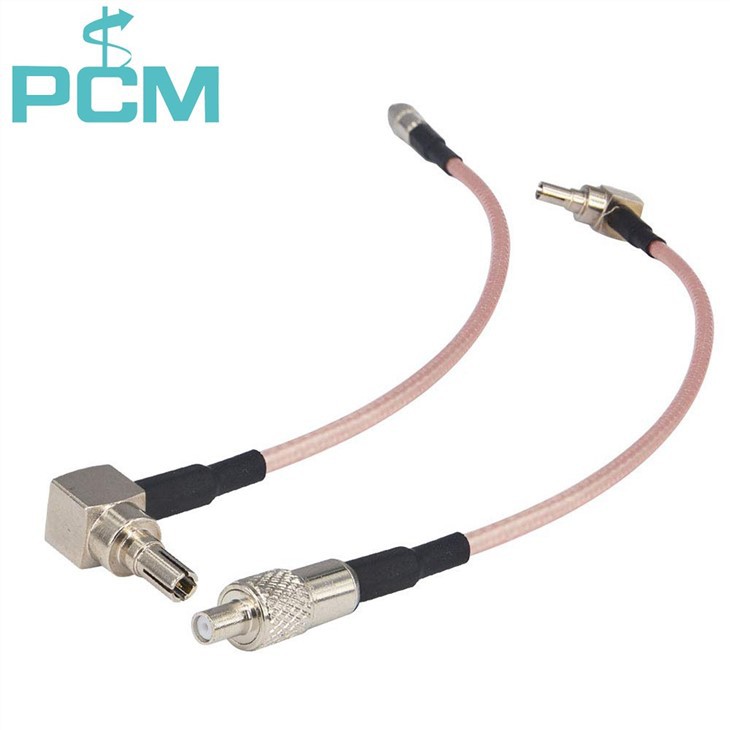
The connectors of the N To TS9 Cable are another critical factor. The N connector is a well - known and widely used RF connector, known for its robustness. It has a threaded coupling mechanism that provides a secure connection and can withstand a certain amount of mechanical stress. The TS9 connector, on the other hand, is a smaller and more delicate connector, but it is also designed to be reliable.
Our connectors are precision - machined to ensure a perfect fit. They are made of high - quality metals, such as brass or stainless steel, which have good corrosion resistance and mechanical strength. The contact surfaces of the connectors are gold - plated to reduce resistance and improve signal transmission. This design not only enhances the electrical performance of the cable but also increases its compression resistance.
Cable Routing and Installation
How the cable is routed and installed also affects its compression resistance. During installation, it is important to avoid sharp bends or kinks in the cable, as these can cause internal damage and reduce the cable's ability to withstand compression. We provide detailed installation guidelines to our customers to ensure that the cables are installed correctly.
For example, when routing the cable, it should be kept away from areas where it may be subjected to excessive pressure, such as between heavy equipment or in tight spaces. Proper cable management, such as using cable ties or clips, can also help to prevent the cable from being compressed.
Testing the Compression Resistance of Our N To TS9 Cables
As a responsible supplier, we conduct rigorous testing on our N To TS9 Cables to ensure their compression resistance. We use specialized testing equipment to simulate different levels of compression and measure the cable's performance under these conditions.
One of the common tests is the bend test. In this test, the cable is bent at different radii and angles, and the signal loss and return loss are measured. Our cables are designed to meet strict industry standards for bend performance. Another test is the crush test, where a specified amount of pressure is applied to the cable, and we check for any damage or change in electrical properties.
We also perform long - term reliability tests. The cables are subjected to continuous compression over an extended period, and their performance is monitored regularly. This helps us to ensure that our cables can maintain their performance in real - world applications.
Comparing with Other Cables
To better understand the compression resistance of our N To TS9 Cables, let's compare them with some other similar cables in the market. For example, the N Male To N Male RG213 Cable is a popular RF cable. While it has its own advantages, our N To TS9 Cables are more suitable for applications where smaller connectors are required. In terms of compression resistance, our cables are designed to provide similar or even better performance, thanks to our advanced construction and connector design.
The CRC9 To TS9 Coax Cable is another option. However, our N To TS9 Cables offer a different combination of connectors, which may be more appropriate for certain systems. And again, our focus on compression resistance ensures that our cables can perform well in challenging environments.
The UHF To 3.5mm Cable is also in the same category of RF cables. But our N To TS9 Cables have a unique advantage in terms of the N and TS9 connector combination, which is widely used in many modern RF systems. And our commitment to quality and compression resistance makes our cables a preferred choice for many customers.
Importance of Compression Resistance in Different Applications
Telecommunications
In the telecommunications industry, N To TS9 Cables are often used in base stations, mobile phones, and other communication devices. Compression resistance is crucial in these applications because the cables may be installed in confined spaces or subjected to vibrations. Any signal degradation due to compression can lead to dropped calls, poor data transfer rates, or other communication problems.
Aerospace and Defense
In the aerospace and defense sectors, RF cables are used in radar systems, satellite communication, and military equipment. These applications require high - reliability cables that can withstand extreme environmental conditions, including compression. Our N To TS9 Cables are designed to meet the strict requirements of these industries, ensuring reliable signal transmission even in harsh environments.
Test and Measurement
In test and measurement applications, accurate signal transmission is essential. Compression resistance of the cables is important to ensure that the test results are accurate. Our cables can maintain their performance under compression, providing reliable data for testing and measurement equipment.
Conclusion
In conclusion, the compression resistance of N To TS9 Cables is a critical factor that affects their performance and reliability. As a supplier, we are committed to providing high - quality cables with excellent compression resistance. Our cables are designed with advanced construction, precision connectors, and are subjected to rigorous testing to ensure that they meet the needs of various industries.
If you are looking for reliable N To TS9 Cables, we invite you to contact us for procurement and further discussion. Our team of experts is ready to assist you in finding the right cables for your specific applications.

References
- "RF and Microwave Transmission Line Design Handbook" by Collin, R. E.
- "Connectors for High - Speed Digital Interfaces" by Pucel, R. A.
- Industry standards for RF cables and connectors, such as those from the Institute of Electrical and Electronics Engineers (IEEE).