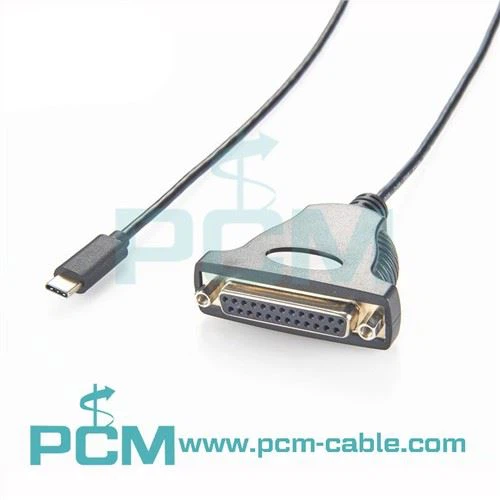
As an FTDI cables supplier, I often get asked whether FTDI cables support half-duplex or full-duplex communication. It's a common question, and the answer isn't always straightforward. In this blog post, I'll break down the differences between half-duplex and full-duplex communication, explain how FTDI cables fit into the picture, and share some insights based on my experience in the industry.
Understanding Half-Duplex and Full-Duplex Communication
Let's start by getting a clear understanding of what half-duplex and full-duplex communication mean. In simple terms, communication can be thought of as the exchange of data between two devices. The way this data is exchanged determines whether it's half-duplex or full-duplex.
Half-duplex communication is like a walkie-talkie conversation. Only one device can send data at a time. When one device is transmitting, the other has to wait its turn to send its own data. It's a back-and-forth kind of communication. For example, in a traditional CB radio system, you press a button to talk, and while you're talking, the other person can't speak. Once you release the button, the other person can then respond.
On the other hand, full-duplex communication is like a regular phone call. Both devices can send and receive data simultaneously. It's a continuous two-way flow of information. Just like when you're on the phone, you can talk while the other person is also speaking, and you can both understand each other clearly because the communication channels are separate.
FTDI Cables and Communication Modes
Now, let's talk about FTDI cables. FTDI, which stands for Future Technology Devices International, is a well-known company that makes a wide range of cables and chips for serial communication. Their cables are used in many different applications, from industrial control systems to consumer electronics.
The good news is that FTDI cables can support both half-duplex and full-duplex communication, depending on the specific model and how it's configured. Most FTDI cables are designed to be flexible and adaptable, so they can work in different communication scenarios.
For half-duplex communication, FTDI cables can be set up to alternate between sending and receiving data. This is useful in situations where the devices don't need to communicate constantly in both directions at the same time. For example, in a simple sensor system, the sensor might send data to a control unit at regular intervals, and the control unit might send occasional commands back to the sensor. A half-duplex FTDI cable can handle this kind of back-and-forth communication efficiently.
When it comes to full-duplex communication, FTDI cables can be configured to use separate channels for sending and receiving data. This allows for continuous two-way communication between devices. In applications like high-speed data transfer between a computer and a peripheral device, full-duplex communication is essential to ensure fast and reliable data exchange.
Factors Affecting Communication Mode
There are a few factors that can affect whether you choose to use half-duplex or full-duplex communication with FTDI cables.
One factor is the nature of the data being transmitted. If the data is time-sensitive and needs to be sent and received continuously, full-duplex communication is usually the better choice. For example, in a real-time video streaming application, full-duplex communication ensures that the video data can be sent and received without any interruptions.


Another factor is the bandwidth requirements. Full-duplex communication generally requires more bandwidth because both devices are sending and receiving data at the same time. If your system has limited bandwidth, you might need to consider using half-duplex communication to conserve resources.
The distance between the devices can also play a role. In some cases, longer distances can introduce signal interference and delays, which can affect the performance of full-duplex communication. In such situations, half-duplex communication might be more reliable.
Applications of FTDI Cables in Different Communication Modes
Let's take a look at some specific applications where FTDI cables are used in half-duplex and full-duplex communication modes.
Half-Duplex Applications
- Industrial Sensors: As mentioned earlier, industrial sensors often use half-duplex communication to send data to a control unit and receive occasional commands. FTDI cables can be used to connect these sensors to the control unit, providing a reliable and cost-effective solution.
- Serial Communication with Simple Devices: Many simple devices, such as barcode scanners and RFID readers, use half-duplex communication to send data to a computer or a controller. FTDI cables can be used to establish a serial connection between these devices and the host system.
Full-Duplex Applications
- High-Speed Data Transfer: In applications where large amounts of data need to be transferred quickly, such as between a computer and a high-speed storage device or a network interface card, full-duplex communication is essential. FTDI cables can support high-speed data transfer rates, making them suitable for these types of applications.
- Real-Time Communication Systems: Real-time communication systems, such as voice and video conferencing, require full-duplex communication to ensure smooth and seamless interaction between users. FTDI cables can be used to connect the audio and video devices to the network, providing a reliable communication link.
Related Products
If you're looking for other types of cables for your communication needs, we also offer a range of related products. Check out our LIN Connection Cable For CAN-LIN, which is designed for use in CAN-LIN networks. We also have the FAKRA IP67 Waterproof Extension Cable Right Angle To Straight Female, which is perfect for automotive applications. And for those in need of a battery extension cable, our M8 Lithium Battery Extension Cable is a great option.
Conclusion
In conclusion, FTDI cables are versatile and can support both half-duplex and full-duplex communication modes. The choice between the two depends on the specific requirements of your application, such as the nature of the data, bandwidth, and distance. Whether you need a reliable connection for industrial sensors or high-speed data transfer between devices, FTDI cables can provide a solution.
If you're interested in purchasing FTDI cables or any of our other products, I encourage you to reach out to us for a consultation. We have a team of experts who can help you choose the right cables for your needs and provide you with all the information you need to make an informed decision. Let's work together to find the best communication solution for your project.
References
- FTDI official documentation
- Industry whitepapers on serial communication
- Technical articles on communication modes and cable applications