In the ever - evolving landscape of digital technology, the demand for high - quality video has reached new heights. With the advent of 8K video, which offers an incredibly sharp and detailed visual experience, consumers and professionals alike are constantly on the lookout for the right cables to support this advanced format. As a leading supplier of angled cables, I am frequently asked the question: Do angled cables support 8K video? In this blog post, we will explore this topic in depth and provide you with the information you need to make an informed decision.

Understanding 8K Video Requirements
Before we delve into the capabilities of angled cables, it's essential to understand what 8K video entails. 8K resolution refers to a display resolution of approximately 8000 pixels wide, with the most common 8K format being 7680×4320 pixels. This represents four times the pixel count of 4K and sixteen times that of 1080p. To support 8K video, a cable must be able to handle a large amount of data at high speeds.
The data transfer rate required for 8K video depends on several factors, including the frame rate and color depth. For example, to support 8K at 60 frames per second with a high - bit - depth color format like 4:4:4, a cable needs to have a bandwidth of at least 48 Gbps. This is a significant increase compared to the requirements for lower - resolution formats.
How Angled Cables Work
Angled cables are designed with a bend at one or both ends, which allows for easier routing in tight spaces. They are commonly used in situations where traditional straight cables would be difficult to install, such as behind a TV stand or in a crowded server rack. The angled design can also help to reduce cable clutter and improve the overall aesthetics of a setup.
The internal construction of angled cables is similar to that of straight cables. They typically consist of multiple conductors surrounded by insulation and shielding. The quality of the materials used and the manufacturing process play a crucial role in determining the cable's performance.
Can Angled Cables Support 8K Video?
The short answer is yes, angled cables can support 8K video, but it depends on several factors. First and foremost, the cable must meet the necessary bandwidth requirements. High - quality angled cables that are specifically designed for high - speed data transfer can handle the large amounts of data required for 8K video.
For instance, some HDMI angled cables are available with a bandwidth of up to 48 Gbps, which is sufficient to support 8K at 60 frames per second. These cables use advanced shielding techniques to minimize signal interference and ensure a stable connection.
However, not all angled cables are created equal. Cheaper or lower - quality angled cables may not have the necessary bandwidth or may suffer from signal degradation over longer distances. It's important to choose a cable from a reputable manufacturer that provides clear specifications regarding its bandwidth and compatibility with 8K video.
Our Range of Angled Cables for 8K Video
As an angled cables supplier, we offer a wide range of products that are suitable for 8K video applications.
One of our popular products is the DB44 HDB44 Angled Connector 45 Degree. This connector is designed to provide a reliable connection in high - performance systems. It is made with high - quality materials and has been tested to ensure that it can handle high - speed data transfer, making it a great option for 8K video setups.
Another option is our DVI Angle Cable. Although DVI is an older technology compared to HDMI, our angled DVI cables are still capable of supporting high - resolution video. For users who have existing DVI - compatible equipment and want to upgrade to 8K, our DVI angle cables can provide a cost - effective solution.
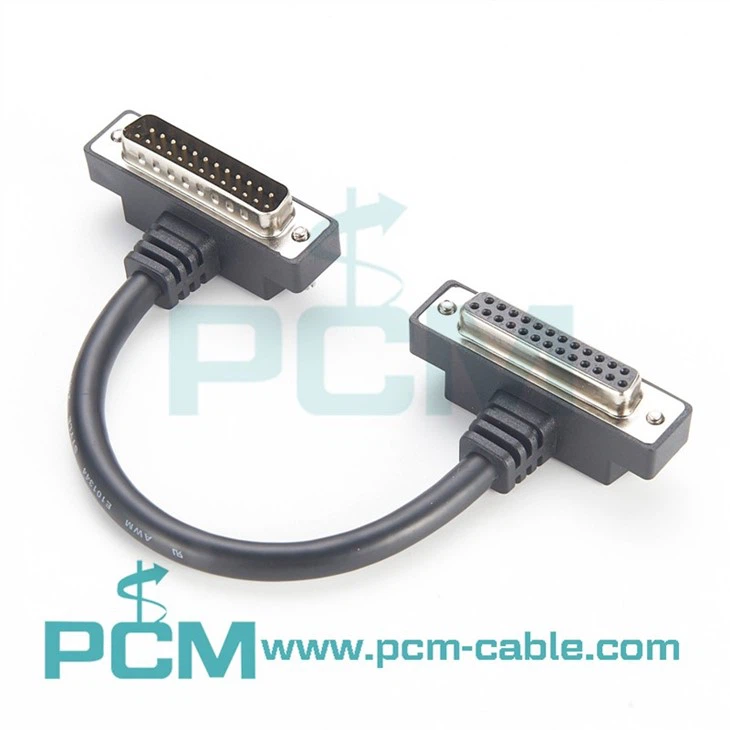
We also offer the Low Profile Up Down Angle Adapter Cable DB25 Extension Cable. This cable is ideal for applications where space is limited. Its low - profile design allows for easy installation in tight spaces, and it can be used in conjunction with other components to support 8K video systems.
Factors to Consider When Choosing Angled Cables for 8K Video
When selecting angled cables for 8K video, there are several factors to keep in mind.
Bandwidth: As mentioned earlier, the cable must have a sufficient bandwidth to support 8K video. Look for cables that are labeled as 8K - compatible or have a bandwidth of at least 48 Gbps.
Length: The length of the cable can also affect its performance. Longer cables may experience more signal loss, so it's important to choose the shortest cable possible for your setup. If you need a longer cable, consider using a cable with better shielding or signal - boosting capabilities.
Connector Type: Different devices may require different connector types. Make sure that the cable you choose has the appropriate connectors for your equipment. For example, most 8K TVs and monitors use HDMI connectors, so an HDMI angled cable would be the best choice.
Quality and Brand: It's always a good idea to choose cables from a reputable brand. A well - known brand is more likely to use high - quality materials and have strict quality control measures in place. This can help to ensure that you get a reliable cable that will perform well over time.
Conclusion
In conclusion, angled cables can support 8K video, but it's important to choose the right cable for your needs. By considering factors such as bandwidth, length, connector type, and brand, you can ensure that you get a cable that will provide a stable and high - quality connection for your 8K video setup.
As a leading supplier of angled cables, we are committed to providing our customers with the best products and solutions. If you are interested in purchasing angled cables for your 8K video system, we invite you to contact us for more information and to discuss your specific requirements. Our team of experts is ready to assist you in finding the perfect cable for your setup.
References
- "8K Resolution: What It Is and Why It Matters." TechRadar.
- "HDMI Cable Standards and Bandwidth Requirements." HDMI.org.