Hey there! As a supplier of TT Patch Cables, I often get asked a burning question: "Can TT Patch Cables be used in a network switch?" Well, let's dive right into this topic and find out.
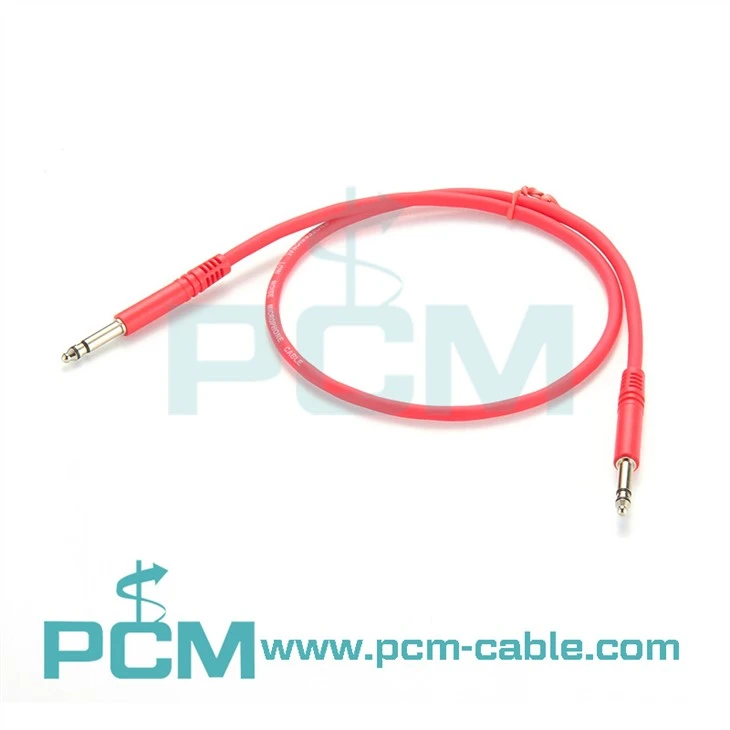
First off, let's understand what TT Patch Cables are. TT Patch Cables come in various types, like the Mini-Quad Gold Plated TT Cables, TRS TT Patch Cords, and Balanced Audio Cable with TT-TT Male Connector. These cables are typically used in audio setups. They're designed to transfer audio signals between different audio devices such as mixers, amplifiers, and audio interfaces.
Network switches, on the other hand, are used in computer networks. Their main job is to connect multiple devices within a local area network (LAN). They receive, process, and forward data packets between connected devices like computers, servers, and printers. The data transferred through network switches is digital information in the form of binary code, which is quite different from the analog audio signals that TT Patch Cables are made to handle.
Now, let's talk about the technical aspects. Network switches usually use Ethernet cables, like Cat5e, Cat6, or Cat6a. These cables are specifically engineered for high - speed data transmission. They have a certain number of wires (usually 4 or 8 pairs), and they follow strict standards for impedance, signal integrity, and data rate. For example, a Cat6 cable can support data transfer speeds of up to 10 Gigabits per second (Gbps) over a distance of about 100 meters.
TT Patch Cables, in contrast, are not built to meet these network - specific requirements. Their wiring configuration, impedance, and shielding are optimized for audio frequencies, which are much lower than the high - frequency signals used in network data transfer. Using a TT Patch Cable in a network switch would likely result in poor signal quality, high signal loss, and a significant reduction in data transfer speed. In some cases, it might even prevent the network switch from functioning properly.
But wait, there are always exceptions. In some very low - speed, non - critical network applications, you might be able to get away with using a TT Patch Cable. For instance, if you're setting up a simple home network with very slow data transfer requirements, like a network for a few old computers that only need to share basic files occasionally, you could give it a try. However, this is more of a last - resort solution and not recommended for long - term or reliable network operation.
Another thing to consider is the connectors. Network switches typically use RJ45 connectors, which are designed to fit snugly into the switch ports and ensure a stable electrical connection. TT Patch Cables usually have different types of connectors, such as TRS (Tip - Ring - Sleeve) or XLR connectors. These connectors won't fit into the network switch ports, so you'd need to use some kind of adapter. Adapters can introduce additional signal interference and reduce the overall performance of the network.
In the audio world, TT Patch Cables shine. They offer excellent audio quality, low noise, and good shielding against electromagnetic interference. They're the go - to choice for audio professionals who need to ensure clear and accurate audio signal transfer. But when it comes to network switches, they just don't cut it.
So, to sum it up, while it's technically possible to try using TT Patch Cables in a network switch in some rare situations, it's generally not a good idea. If you're looking to set up a reliable and high - performance network, stick with the standard Ethernet cables.
If you're in the market for high - quality TT Patch Cables for your audio setup, we've got you covered. We offer a wide range of TT Patch Cables, including the Mini-Quad Gold Plated TT Cables, TRS TT Patch Cords, and Balanced Audio Cable with TT-TT Male Connector. Our cables are made with top - notch materials and undergo strict quality control to ensure you get the best audio performance.
If you're interested in purchasing our TT Patch Cables, feel free to reach out to us. We're always happy to answer any questions you might have and help you find the right cables for your needs. Whether you're a professional audio engineer or a hobbyist, we can provide you with the perfect solution.
References:

- "Networking Basics" by Andrew S. Tanenbaum
- "Audio Engineering Handbook" by Glen Ballou