Can I use a serial cable to connect to a data logger?
In the world of data acquisition and monitoring, data loggers play a crucial role in recording and storing data from various sensors and devices. One common question that arises is whether a serial cable can be used to connect to a data logger. As a serial cable supplier, I'm here to provide you with in - depth insights on this topic.


Understanding Serial Cables
Serial cables are a type of cable used for data transmission. They transfer data one bit at a time over a single communication line. There are different types of serial cables, such as RS - 232, RS - 422, and RS - 485. Each type has its own characteristics and is suitable for different applications.
RS - 232 is one of the most widely used serial communication standards. It is commonly used for short - distance communication between a computer and a peripheral device. The standard defines the electrical characteristics and signaling protocol for data transfer. RS - 422, on the other hand, is a differential signaling standard that can support longer distances and higher data rates compared to RS - 232. RS - 485 is also a differential signaling standard, which is often used in multi - drop networks, allowing multiple devices to be connected on the same communication line.
Compatibility with Data Loggers
The ability to use a serial cable to connect to a data logger depends on several factors. First, the data logger must have a compatible serial port. Many modern data loggers come equipped with RS - 232, RS - 422, or RS - 485 ports. If your data logger has an RS - 232 port, you can use an appropriate RS - 232 serial cable to establish a connection.
For example, if you have a data logger with an RS - 232 DB9 port, you can use a Serial DB9 RS232 DB25 Parallel Cable. This cable is designed to connect devices with DB9 or DB25 serial ports, providing a reliable data transfer path.
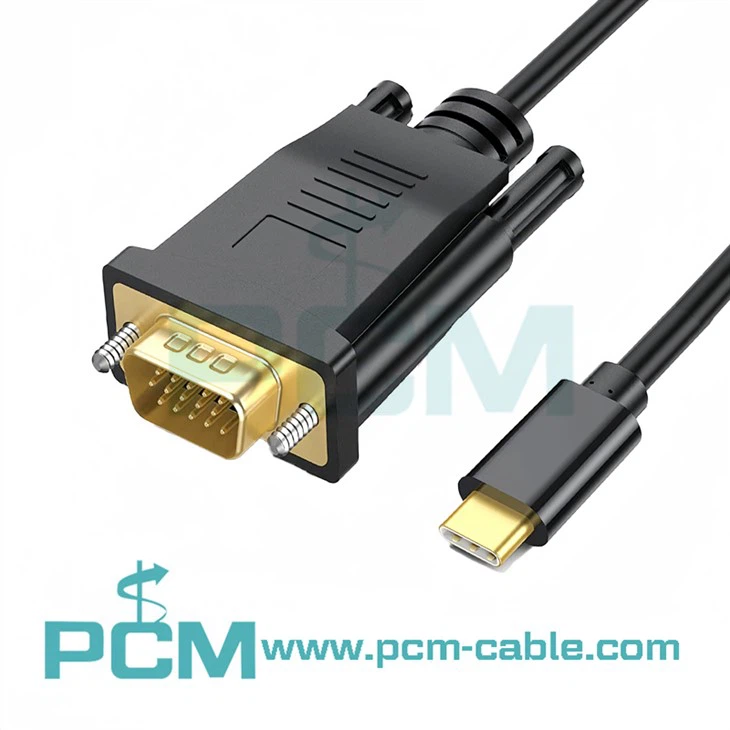
If your computer does not have a native serial port, you can use a USB to serial adapter. A USB C To Serial Adapter Cable can convert the USB interface of your computer into a serial interface, allowing you to connect to the data logger. This is especially useful for laptops and modern computers that do not have built - in serial ports.
Advantages of Using Serial Cables for Data Loggers
- Reliability: Serial cables provide a stable and reliable connection for data transfer. They are less prone to interference compared to wireless connections, which can be affected by environmental factors such as electromagnetic interference.
- Long - distance communication: Some serial communication standards, such as RS - 422 and RS - 485, support long - distance data transfer. This makes them suitable for applications where the data logger is located far from the data acquisition system.
- Simple setup: Connecting a data logger using a serial cable is relatively simple. You just need to plug the cable into the appropriate ports on the data logger and the computer or other device.
Considerations When Using Serial Cables
- Data rate: Different serial communication standards support different data rates. You need to ensure that the data rate of the serial cable is compatible with the data rate of the data logger. If the data rate is too high or too low, it may cause data transfer errors.
- Cable length: The length of the serial cable can also affect the data transfer performance. Longer cables may introduce signal attenuation, which can lead to data errors. It is important to choose the appropriate cable length based on the requirements of your application.
- Pin configuration: Different serial ports may have different pin configurations. You need to make sure that the pin configuration of the serial cable matches the pin configuration of the data logger and the other device.
Use Cases of Serial Cables with Data Loggers
- Industrial monitoring: In industrial settings, data loggers are used to monitor various parameters such as temperature, pressure, and humidity. Serial cables can be used to connect the data loggers to a central control system for data collection and analysis.
- Environmental monitoring: Serial cables are also commonly used in environmental monitoring applications. For example, data loggers can be placed in remote locations to collect data on air quality, water quality, and weather conditions. The data can then be transferred to a central server using serial cables.
- Scientific research: In scientific research, data loggers are used to collect data from experiments. Serial cables can be used to connect the data loggers to a computer for data storage and analysis.
Our Serial Cable Offerings
As a serial cable supplier, we offer a wide range of serial cables to meet your needs. Our USB To DB25 Parallel Printer Cable is ideal for connecting devices with USB interfaces to devices with DB25 parallel ports. We also have a variety of USB to serial adapter cables, which can provide a convenient solution for connecting devices without native serial ports.
Conclusion
In conclusion, using a serial cable to connect to a data logger is a viable option in many cases. It offers reliability, long - distance communication, and simple setup. However, you need to consider factors such as compatibility, data rate, cable length, and pin configuration. If you have any questions about choosing the right serial cable for your data logger, feel free to contact us for more information. We are here to help you make the best decision for your data acquisition needs.
If you are interested in purchasing our serial cables or have any other inquiries, please reach out to us for a detailed discussion. We look forward to the opportunity to work with you.
References
- "Serial Communication Handbook", a comprehensive guide on serial communication standards and applications.
- Manufacturer's documentation of data loggers and serial cables.