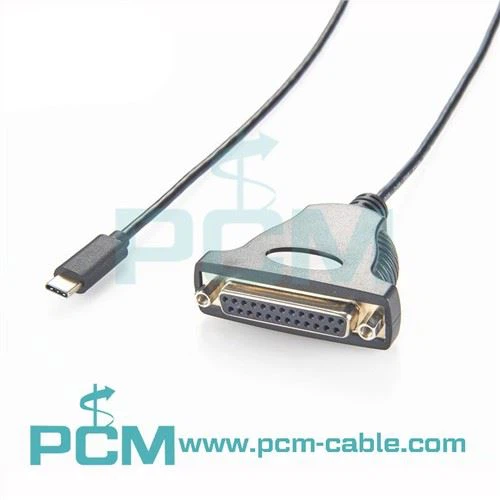
In the era of the Internet of Things (IoT), seamless and reliable communication between devices is the linchpin that holds the entire ecosystem together. As a seasoned supplier of serial adapters, I've witnessed firsthand the transformative power of these unassuming devices in the IoT landscape. This blog aims to explore the viability of using serial adapters for IoT device communication, delving into the technical aspects, advantages, limitations, and real - world applications.
Understanding Serial Adapters
Serial adapters are hardware devices that facilitate communication between different types of serial interfaces. They act as intermediaries, converting signals from one serial protocol to another, enabling devices with incompatible serial interfaces to communicate effectively. For instance, an Industrial RS - 232 To RS - 422 Converter With Terminal Block can convert the RS - 232 signals commonly used in older computers to RS - 422 signals, which are more suitable for long - distance and multi - drop communication.
Technical Compatibility with IoT Devices
Many IoT devices rely on serial communication due to its simplicity, reliability, and low power consumption. Serial communication protocols such as RS - 232, RS - 422, and RS - 485 have been around for decades and are well - established in industrial and embedded systems. Serial adapters can bridge the gap between these legacy serial protocols and modern IoT connectivity options.
For example, an Industrial Grade RS232 To RS485 Serial Converter can take the RS - 232 output from a microcontroller in an IoT device and convert it to RS - 485, which is ideal for multi - drop networks. This allows multiple IoT devices to communicate over a single bus, reducing the complexity of wiring and installation.
Advantages of Using Serial Adapters in IoT
Cost - Effectiveness
Serial adapters are relatively inexpensive compared to other communication technologies. They offer a cost - effective solution for IoT deployments, especially in projects with budget constraints. By using serial adapters, companies can leverage existing serial - enabled devices and infrastructure, avoiding the need for a complete overhaul of their communication systems.
Reliability
Serial communication is known for its reliability. It has been used in industrial applications for many years, where stable and error - free communication is crucial. Serial adapters inherit this reliability, ensuring that IoT devices can communicate without frequent disruptions. This is particularly important in applications such as industrial monitoring, where real - time data collection is essential.
Ease of Integration
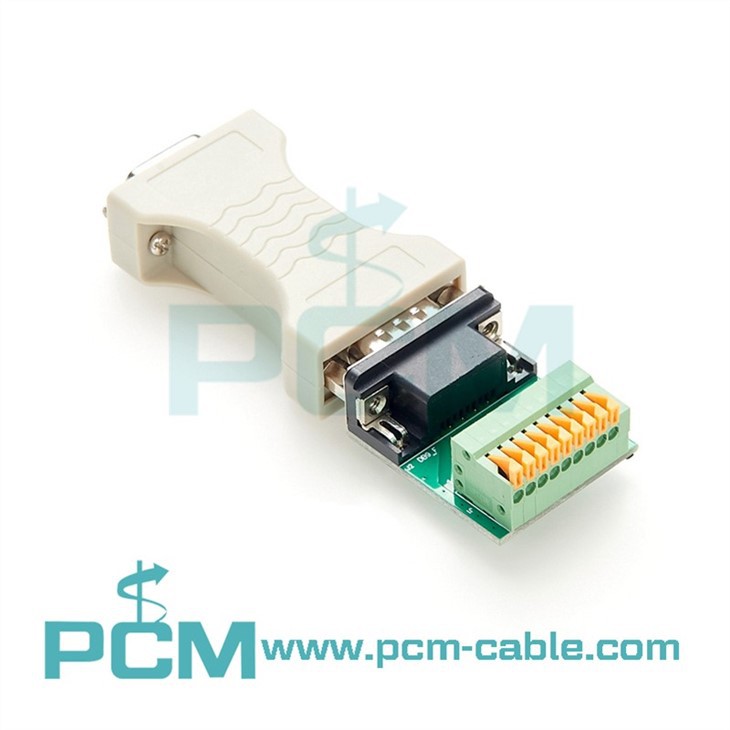
Serial adapters are easy to integrate into existing IoT systems. They typically require minimal configuration and can be connected directly to serial ports on IoT devices. For example, a DB9 To Terminal Block 5 Pin Passive Adapter can be used to connect a device with a DB9 serial connector to a terminal block, simplifying the wiring process.
Limitations of Serial Adapters in IoT
Limited Bandwidth
One of the main limitations of serial communication is its relatively low bandwidth compared to other communication technologies such as Ethernet or Wi - Fi. This can be a bottleneck in IoT applications that require high - speed data transfer, such as video surveillance or large - scale data analytics.
Distance Constraints
Although some serial protocols like RS - 422 and RS - 485 support longer distances than RS - 232, they still have limitations. In large - scale IoT deployments, the distance between devices may exceed the maximum range of serial communication, requiring additional repeaters or signal boosters.
Lack of Standardization
The IoT ecosystem is highly diverse, with a wide range of devices and protocols. Serial communication protocols also vary in terms of their implementation, which can lead to compatibility issues. Ensuring seamless communication between different serial - enabled IoT devices may require careful selection and configuration of serial adapters.
Real - World Applications of Serial Adapters in IoT
Industrial Automation
In industrial automation, serial adapters are used to connect various sensors, actuators, and control devices. For example, in a manufacturing plant, serial adapters can be used to connect temperature sensors, pressure sensors, and motor controllers to a central control system. This allows for real - time monitoring and control of the production process.
Building Automation
In building automation systems, serial adapters are used to integrate different building management systems, such as HVAC, lighting, and security systems. Serial communication ensures reliable and stable operation of these systems, enabling energy efficiency and improved building management.
Smart Agriculture
In smart agriculture, serial adapters can be used to connect soil moisture sensors, weather stations, and irrigation controllers. This allows farmers to monitor and control their agricultural operations remotely, improving crop yields and reducing water consumption.

Conclusion
Serial adapters can indeed be used for IoT device communication, offering a cost - effective, reliable, and easy - to - integrate solution. While they have limitations in terms of bandwidth, distance, and standardization, these can be mitigated through careful planning and the use of appropriate serial adapters. In many real - world applications, serial adapters play a crucial role in enabling seamless communication between IoT devices.
If you are considering using serial adapters for your IoT projects, we invite you to contact us for more information and to discuss your specific requirements. Our team of experts is ready to assist you in selecting the right serial adapters for your applications, ensuring that your IoT devices can communicate effectively and efficiently.
References
- Stallings, W. (2017). Data and Computer Communications. Pearson.
- Tanenbaum, A. S. (2011). Computer Networks. Prentice Hall.
- IoT For All. (2023). Serial Communication in IoT Devices. Retrieved from [Website URL] (Replace with actual relevant website URL if available)