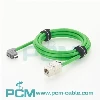
The minimum requirements for setting up an NMEA 2000 network are as follows:
NMEA 2000 backbone cable: The backbone cable is the main communication channel that connects all the devices on the network. The minimum requirement for the backbone cable is a single length of cable, which can be up to 78 feet (24 meters) in length.
NMEA 2000 terminator resistors: The network requires two terminator resistors, one at each end of the backbone cable. These resistors ensure that the network signals are properly terminated and prevent signal reflections that can cause communication errors.
NMEA 2000 power source: The network requires a 12-volt DC power source to power the devices on the network. This can be supplied by a dedicated NMEA 2000 power supply, or by tapping into an existing 12-volt DC power source on the vessel.
NMEA 2000 network connectors: The network requires connectors to attach the devices to the backbone cable. These connectors can be in the form of T-connectors, which connect devices to the backbone cable, or drop cables, which connect devices to the T-connectors.
With these minimum requirements, a basic NMEA 2000 network can be set up and used to connect compatible devices. However, it's important to note that additional accessories, such as junction boxes, extension cables, and adapters, may be required depending on the number and types of devices being connected to the network.