Angled cables are essential components in various industries and applications, offering unique advantages in terms of space utilization, flexibility, and ease of installation. As a leading angled cables supplier, we understand the diverse needs of our customers and offer a wide range of angled cable solutions. In this blog post, we will explore the different types of angled cables available in the market and their specific use cases.
Right Angle Cables
Right angle cables are perhaps the most commonly used type of angled cables. They feature a connector that is bent at a 90-degree angle, which allows them to be installed in tight spaces where a straight cable would not fit. This design is particularly useful in applications such as computer motherboards, where there is limited clearance between components.
One of our popular right angle cable products is the Right Angle DVI 18Pin Cable Assembly. This cable is designed for high-definition video transmission and is commonly used in computer monitors, projectors, and other display devices. The right angle design ensures that the cable can be connected to the device without taking up unnecessary space, making it ideal for use in compact setups.
Left Angle Cables
While less common than right angle cables, left angle cables also have their place in certain applications. As the name suggests, left angle cables have a connector that is bent at a 90-degree angle in the opposite direction of a right angle cable. This can be useful in situations where the layout of the equipment requires the cable to be routed in a specific way.
Our Left Angle RS232 Cable is a great example of a left angle cable. RS232 is a standard serial communication interface used in a variety of devices, including computers, printers, and industrial equipment. The left angle design of this cable allows it to be easily connected to devices in tight spaces, especially when the orientation of the connectors is such that a right angle cable would not work.
Low Profile Angled Cables
Low profile angled cables are designed to have a reduced height compared to standard angled cables. This makes them ideal for applications where space is extremely limited, such as in thin laptops, tablets, and other portable devices. The low profile design ensures that the cable does not protrude too far from the device, preventing it from getting in the way or being damaged.


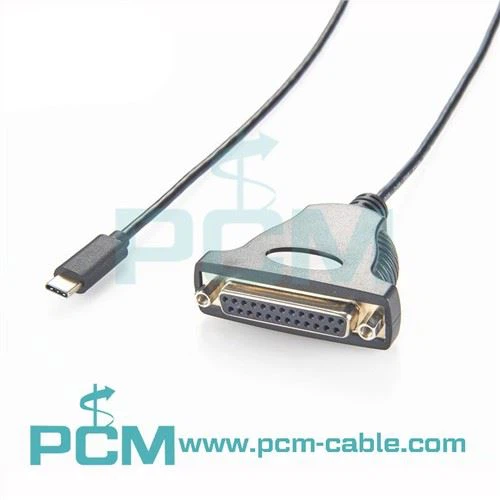
Our Low Profile Right Angle DB25 Connector is a prime example of a low profile angled cable product. The DB25 connector is commonly used in parallel communication applications, such as printers and data acquisition systems. The low profile right angle design of this connector allows it to be used in tight spaces without sacrificing functionality.
Other Angled Cable Variations
In addition to the standard right and left angle cables, there are also other variations available in the market. For example, some angled cables may have a custom angle, such as a 45-degree angle, to meet specific application requirements. These custom angled cables are often used in specialized industries, such as aerospace and military, where precise cable routing is critical.
Another variation is the double angled cable, which has connectors that are bent at 90-degree angles at both ends. This type of cable is useful in applications where the device and the connection point are not in a straight line, allowing for more flexible cable routing.
Applications of Angled Cables
Angled cables are used in a wide range of industries and applications. In the computer industry, they are commonly used to connect internal components such as hard drives, optical drives, and expansion cards. The right angle design allows these components to be installed in a more compact manner, reducing the overall size of the computer case.
In the telecommunications industry, angled cables are used to connect network devices such as routers, switches, and modems. The ability to route cables in tight spaces helps to optimize the use of rack space and improve cable management.
In the automotive industry, angled cables are used in various electronic systems, including infotainment systems, engine control units, and sensor networks. The compact design of angled cables is essential in automotive applications, where space is limited and reliability is crucial.
Advantages of Using Angled Cables
There are several advantages to using angled cables in your applications. Firstly, they offer better space utilization, especially in tight spaces where a straight cable would not fit. This can help to reduce the overall size of the equipment and improve its portability.
Secondly, angled cables can improve cable management. By allowing cables to be routed in a more organized manner, they can reduce cable clutter and make it easier to access and maintain the equipment.
Finally, angled cables can enhance the reliability of the connection. The angled design can help to prevent the cable from being accidentally pulled or damaged, which can lead to signal loss or other issues.
Choosing the Right Angled Cable
When choosing an angled cable for your application, there are several factors to consider. Firstly, you need to determine the type of connector required. Different devices use different types of connectors, so it is important to choose a cable with the correct connector for your device.
Secondly, you need to consider the angle of the cable. As discussed earlier, right angle, left angle, and custom angle cables are available, and you need to choose the one that best suits your application requirements.
Finally, you need to consider the length and quality of the cable. The length of the cable should be appropriate for your application, and the quality of the cable should be high to ensure reliable signal transmission.
Conclusion
Angled cables are an important component in many industries and applications, offering unique advantages in terms of space utilization, flexibility, and ease of installation. As a leading angled cables supplier, we offer a wide range of angled cable solutions to meet the diverse needs of our customers. Whether you need a right angle DVI cable, a left angle RS232 cable, or a low profile right angle DB25 connector, we have the products you need.
If you are interested in purchasing angled cables for your application, we invite you to contact us for more information. Our team of experts will be happy to assist you in choosing the right cable for your needs and provide you with a competitive quote. Let us help you find the perfect angled cable solution for your project.
References
- Grob, Bernard. "Introduction to Electronics." McGraw-Hill Education, 2007.
- Horowitz, Paul, and Winfield Hill. "The Art of Electronics." Cambridge University Press, 2015.
- IEEE Standards Association. "IEEE Standards for Electrical and Electronic Equipment." IEEE, 2022.