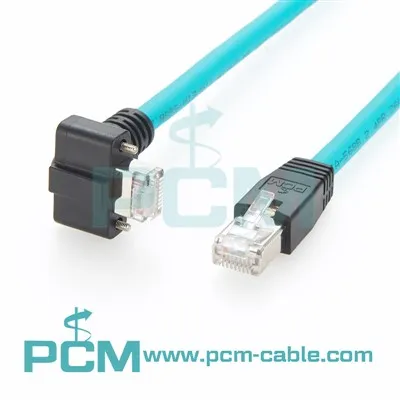
Hey there! As a GigE cable supplier, I often get asked about the standard specifications of GigE cables. So, I thought I'd take a moment to break it down for you in a way that's easy to understand.
What is a GigE Cable?
First off, let's start with the basics. GigE stands for Gigabit Ethernet, and a GigE cable is a type of network cable used to transmit data at high speeds, specifically at gigabit per second (Gbps) rates. These cables are commonly used in industrial applications, such as connecting industrial cameras, servers, and other network devices.
Standard Specifications of a GigE Cable
Cable Type
The most common type of GigE cable is Category 5e (Cat5e) or Category 6 (Cat6). Cat5e cables are capable of supporting Gigabit Ethernet speeds up to 1 Gbps over a distance of up to 100 meters. Cat6 cables, on the other hand, offer better performance and can support speeds up to 10 Gbps over the same distance.
Connector Type
GigE cables typically use RJ45 connectors, which are the same connectors used in most Ethernet cables. However, in industrial applications, you might also come across other connector types, such as M12 and IX. These connectors are more rugged and suitable for harsh environments.
Shielding
Shielding is an important factor to consider when choosing a GigE cable. Shielded cables, such as Shielded Twisted Pair (STP) cables, provide better protection against electromagnetic interference (EMI) and radio frequency interference (RFI). This is especially important in industrial settings where there are a lot of electrical devices and machinery that can generate interference.


Bandwidth
The bandwidth of a GigE cable determines how much data it can transmit at a given time. As mentioned earlier, Cat5e cables can support speeds up to 1 Gbps, while Cat6 cables can support speeds up to 10 Gbps. If you need to transmit large amounts of data quickly, such as high-resolution video or large files, you'll want to choose a cable with a higher bandwidth.
Length
The length of the cable can also affect its performance. As a general rule, the longer the cable, the more signal loss there will be. For GigE cables, the maximum recommended length is 100 meters. If you need to run a cable longer than this, you may need to use a signal booster or a fiber optic cable.
Our GigE Cable Products
At our company, we offer a wide range of GigE cables to meet the needs of different applications. Here are some of our popular products:
- GigE Vision Cable With RJ45 Down Angle Locking Screws Data Cable For Industrial Cameras: This cable is specifically designed for industrial cameras and features a down angle locking screw design for easy installation and secure connection.
- 90 Degree Right Angle M12 X-Code To IX Cat6A Cable: This cable is ideal for applications where space is limited. The 90-degree right angle design allows for easy routing and installation.
- IX B Key To RJ45 Jack IX Industrial Cat 6A Serial Cable: This cable features an IX B key connector on one end and an RJ45 jack on the other, making it compatible with a wide range of devices.
Why Choose Our GigE Cables?
- High Quality: Our GigE cables are made from high-quality materials and are designed to meet or exceed industry standards.
- Reliability: We understand the importance of reliable data transmission in industrial applications. That's why our cables are tested to ensure they provide consistent performance.
- Customization: We offer custom cable solutions to meet the specific needs of our customers. Whether you need a cable with a specific length, connector type, or shielding, we can help.
Contact Us for Procurement
If you're in the market for GigE cables, we'd love to hear from you. Our team of experts can help you choose the right cable for your application and provide you with a competitive quote. Whether you're a small business or a large industrial enterprise, we have the products and expertise to meet your needs.
References
- "Ethernet Cabling Standards." Ethernet Alliance.
- "Industrial Ethernet Cables: A Guide to Selection and Installation." Automation World.