As a supplier of FTTA (Fiber to the Antenna) cables, I often encounter inquiries regarding the capabilities of these cables, particularly whether they support wireless signal transmission. In this blog post, I aim to delve into this topic, providing a comprehensive understanding of FTTA cables and their role in wireless communication systems.
Understanding FTTA Cables
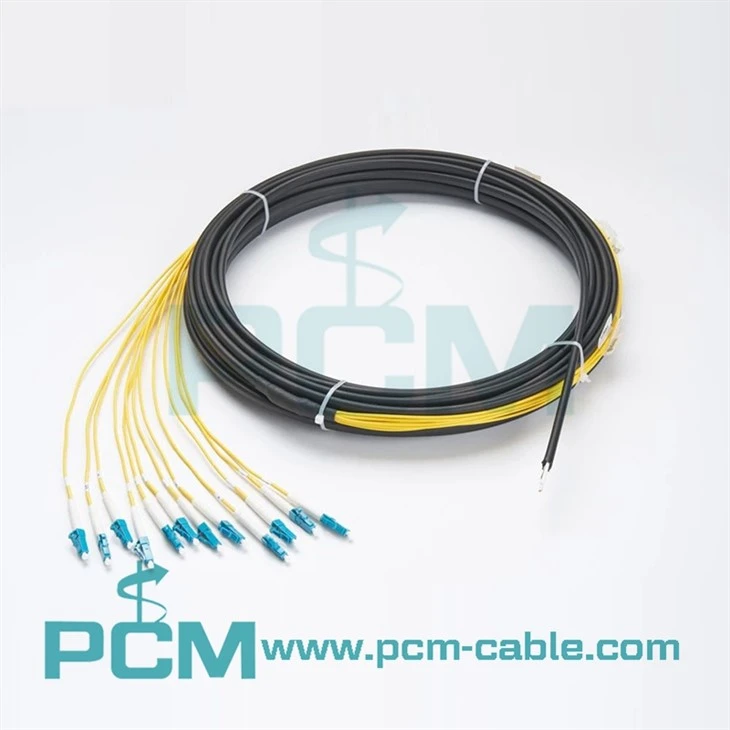
FTTA cables are specialized fiber optic cables designed to connect the base station equipment to the antennas in a wireless communication network. They play a crucial role in modern wireless networks, enabling high - speed data transmission and supporting the increasing demand for bandwidth.
Fiber optic cables, in general, have several advantages over traditional copper cables. They offer higher bandwidth, longer transmission distances, and are immune to electromagnetic interference. These properties make them ideal for use in wireless communication systems, where reliable and high - speed data transfer is essential.

How FTTA Cables Facilitate Wireless Signal Transmission
FTTA cables do not directly transmit wireless signals. Instead, they are used to transmit the baseband or intermediate - frequency signals between the base station and the antenna. The process involves several key steps:
- Signal Generation at the Base Station: In a wireless network, the base station generates the signals that will be transmitted to mobile devices. These signals are typically in the form of digital data, which is then converted into electrical signals.
- Conversion to Optical Signals: The electrical signals are then converted into optical signals using optical transceivers. These transceivers are located at the base station and are responsible for encoding the electrical signals onto light waves.
- Transmission through FTTA Cables: Once the signals are converted to optical signals, they are transmitted through the FTTA cables to the antenna. The fiber optic cables ensure that the signals can travel long distances with minimal loss and distortion.
- Conversion Back to Electrical Signals: At the antenna, the optical signals are converted back into electrical signals using another set of optical transceivers. These electrical signals are then amplified and radiated into the air as wireless signals.
Benefits of Using FTTA Cables for Wireless Networks
The use of FTTA cables in wireless networks offers several significant benefits:
- High - Speed Data Transmission: FTTA cables can support very high data rates, which is crucial for modern wireless applications such as 4G, 5G, and beyond. With the increasing demand for high - definition video streaming, online gaming, and other bandwidth - intensive services, the ability to transmit large amounts of data quickly is essential.
- Long - Distance Transmission: Fiber optic cables can transmit signals over much longer distances than copper cables without significant signal loss. This allows for greater flexibility in the design and deployment of wireless networks, especially in large - scale outdoor environments.
- Reduced Interference: Since fiber optic cables are immune to electromagnetic interference, they can provide a more reliable and stable connection. This is particularly important in areas with high levels of electromagnetic noise, such as near power lines or industrial equipment.
- Scalability: FTTA cables can easily be upgraded to support higher data rates as the wireless network evolves. This makes them a future - proof solution for wireless network operators.
Our FTTA Cable Products
As a leading supplier of FTTA cables, we offer a wide range of high - quality products to meet the diverse needs of our customers. Some of our popular products include:
- AARC LC Female Fiber Optic Cable Assemblies: These cable assemblies are designed for use in high - density applications and offer excellent performance and reliability.
- FULLAXS Outdoor Fiber Optic Patch Cord: Our outdoor patch cords are rugged and weather - resistant, making them suitable for use in harsh outdoor environments.
- Pigtail Fiber Optic Pigtail Jumper Cable: These pigtail cables are used for terminating fiber optic cables and provide a convenient and reliable connection.
Conclusion
In conclusion, while FTTA cables do not directly support wireless signal transmission, they are an essential component of wireless communication systems. They enable the efficient and reliable transmission of baseband and intermediate - frequency signals between the base station and the antenna, which is crucial for the operation of modern wireless networks.
If you are in the market for high - quality FTTA cables, we invite you to contact us for more information. Our team of experts is ready to assist you in selecting the right products for your specific needs and to provide you with the best possible service. Whether you are building a new wireless network or upgrading an existing one, we have the solutions you need.
References
- "Fiber Optic Communication Systems" by Govind P. Agrawal
- "Wireless Communications: Principles and Practice" by Theodore S. Rappaport
- Industry whitepapers on FTTA technology and wireless network design.