When it comes to setting up a video conferencing system, one of the key considerations is the type of cables to use. Gigabit Ethernet (GigE) cables have long been a staple in networking, but can they be used effectively for a video conferencing system? As a GigE cable supplier with years of experience in the industry, I'm here to provide an in - depth analysis of this question.
Understanding the Basics of GigE Cables
GigE cables, also known as Gigabit Ethernet cables, are designed to support data transfer speeds of up to 1 gigabit per second (Gbps) over Ethernet networks. They are commonly used in various applications, including local area networks (LANs), data centers, and industrial automation systems. These cables typically use the RJ45 connector and are available in different categories, such as Cat5e, Cat6, and Cat6a, each with different specifications and performance capabilities.
The main advantage of GigE cables is their high - speed data transfer and reliability. They are built to handle large amounts of data quickly and efficiently, which is crucial for applications that require real - time data transmission. For example, in a data center, GigE cables ensure that servers can communicate with each other seamlessly, enabling smooth operation of various services.
Requirements of a Video Conferencing System
A video conferencing system requires a stable and high - bandwidth connection to ensure smooth video and audio streaming. The quality of the video and audio depends directly on the amount of data that can be transferred in real - time. Low - bandwidth connections can lead to issues such as pixelation, buffering, and audio lag, which can significantly disrupt the communication experience.
In addition to bandwidth, a video conferencing system also demands low latency. Latency refers to the time it takes for data to travel from one point to another. In a video conferencing setting, high latency can cause a delay between when a person speaks and when their voice is heard on the other end, or between when a movement is made and when it is seen on the screen. This can make conversations feel unnatural and difficult to follow.
Evaluating GigE Cables for Video Conferencing
Bandwidth Capacity
Most modern GigE cables, especially Cat6 and Cat6a, can easily support the bandwidth requirements of typical video conferencing systems. Video conferencing services like Zoom, Microsoft Teams, and Skype usually require a bandwidth of around 1 - 2 Mbps for standard definition (SD) quality and 3 - 6 Mbps for high - definition (HD) quality. Since GigE cables can transfer data at speeds up to 1 Gbps, they have more than enough bandwidth to handle multiple video conferencing sessions simultaneously, even at the highest quality settings.
Latency
GigE cables generally have low latency, which is beneficial for video conferencing. The physical construction of these cables, along with the advanced Ethernet protocols they use, minimizes the time it takes for data to travel. This low latency ensures that the video and audio signals are transmitted in near - real - time, providing a smooth and natural communication experience.
Reliability
Reliability is a crucial factor in a video conferencing system. Interruptions or connectivity issues can derail an important meeting. GigE cables are known for their reliability. They are built with high - quality materials and are designed to resist interference from electromagnetic sources. For example, GigE Double Shielded High Flex Ethernet Cable uses double shielding to protect the data signals from external interference, ensuring a stable connection even in challenging environments.
Flexibility and Installation
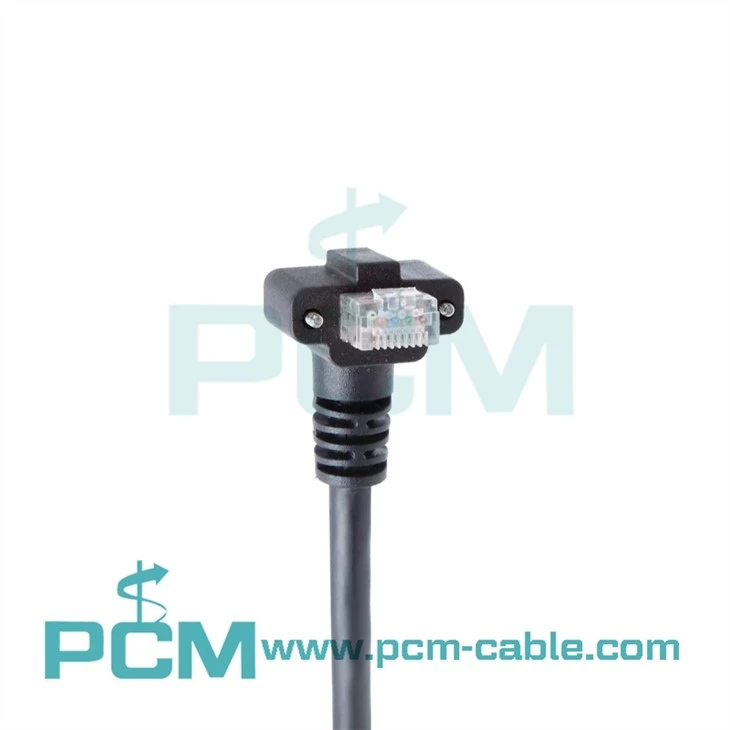
In a video conferencing setup, the cables need to be flexible and easy to install. GigE cables come in various forms to meet different installation requirements. For instance, the GigE High Flex RJ45 Cable Horizontal Up Angle Exit W/Thumbscrews is designed to be highly flexible, allowing it to be easily routed around obstacles. The thumbscrews provide a secure connection, preventing the cable from accidentally disconnecting during use.
Another useful option is the RJ45 Female To Female Cable With Screw Locking Panel Mount - CAT8 40Gbps. This cable is ideal for situations where a direct connection between two devices is required, and the screw - locking mechanism ensures a stable and long - lasting connection.

Challenges and Considerations
While GigE cables are generally suitable for video conferencing, there are some challenges and considerations to keep in mind.
Distance Limitations
GigE cables have distance limitations. For example, the maximum recommended length for a Cat6 cable in a Gigabit Ethernet network is around 100 meters. If the distance between the video conferencing endpoints exceeds this limit, signal degradation may occur, leading to reduced performance. In such cases, repeaters or fiber optic cables may need to be used to extend the network.
Environmental Factors
Environmental factors can also affect the performance of GigE cables. Extreme temperatures, moisture, and physical stress can damage the cables over time. It's important to choose cables that are suitable for the specific environment where the video conferencing system will be installed.
Conclusion
In conclusion, GigE cables can be an excellent choice for a video conferencing system. Their high - speed data transfer, low latency, and reliability make them well - suited for the demands of real - time video and audio communication. With a wide range of options available, such as the GigE High Flex RJ45 Cable Horizontal Up Angle Exit W/Thumbscrews and GigE Double Shielded High Flex Ethernet Cable, you can find the right cable for your specific installation needs.
If you're considering setting up a video conferencing system or upgrading your existing cables, I encourage you to explore our range of GigE cables. Our team of experts can help you choose the most suitable cables for your requirements and ensure a successful installation. Feel free to reach out to us to start a discussion about your procurement needs.
References
- Cisco Systems. Ethernet Cabling Guidelines.
- IEEE Standards Association. Standards for Ethernet Networks.
- Manufacturers' Specifications for GigE Cables.