Hey there! As a supplier of RS422 cables, I often get asked whether these cables are suitable for medical device communication. Well, let's dive right into it and figure out if RS422 cables are the right fit for the medical field.
First off, let's understand what RS422 cables are all about. RS422 is a standard for serial communication that uses differential signaling. This means it sends data as the difference between two signals on a pair of wires, which helps in reducing noise and interference. It can transmit data over longer distances compared to some other serial communication standards, and it supports multiple receivers on a single transmission line.
Now, when it comes to medical devices, communication is super crucial. These devices need to transfer data accurately and reliably, whether it's from a patient monitor to a central station or between different components within a complex medical system. So, the question is, can RS422 cables meet these high - stakes requirements?
One of the major advantages of RS422 cables in medical device communication is their noise immunity. Medical environments are full of electrical equipment that can generate a lot of electromagnetic interference (EMI). MRI machines, X - ray devices, and even fluorescent lights can create a noisy electrical environment. RS422's differential signaling helps to cancel out this EMI, ensuring that the data being transmitted remains accurate. For example, if a patient monitor is sending vital sign data like heart rate, blood pressure, and oxygen saturation levels, any interference could lead to incorrect readings, which could have serious consequences for patient care. The noise - canceling feature of RS422 cables gives us some peace of mind in these situations.
Another benefit is the long - distance transmission capability. In large hospitals or medical facilities, medical devices might be spread out over a significant area. RS422 cables can transmit data up to 4000 feet (about 1200 meters) at lower data rates. This means that a monitoring device in one corner of a large hospital ward can send data to a central control room without the need for a bunch of signal repeaters. It simplifies the setup and reduces the chances of signal degradation.
However, RS422 cables aren't without their limitations. One of the main drawbacks is that they are half - duplex, which means data can only be sent in one direction at a time. In some medical applications, real - time, two - way communication is essential. For instance, in a surgical robot system, the surgeon needs to send commands to the robot, and the robot needs to send back feedback on its position and the status of the surgical tools immediately. The half - duplex nature of RS422 might not be sufficient for such high - speed, bidirectional communication requirements.
Also, the cost can be a factor. RS422 cables and the associated hardware can be more expensive compared to some other communication options. For smaller medical device manufacturers or facilities on a tight budget, this could be a deterrent. Additionally, the installation and maintenance of RS422 systems require a certain level of technical expertise. If a medical facility doesn't have in - house IT support, they might need to hire external technicians, which adds to the overall cost.
Let's talk about some specific medical applications where RS422 cables could be a good fit. In patient monitoring systems, as mentioned earlier, the ability to transmit data over long distances with low noise is a big plus. These systems typically don't require continuous, high - speed, two - way communication. They just need to send data from the patient monitor to a central station at regular intervals.
In some diagnostic equipment, like certain types of blood analyzers or electroencephalogram (EEG) machines, RS422 cables can also work well. These devices often need to transfer data to a computer for analysis. The data transfer doesn't need to be instantaneous, and the noise immunity of RS422 helps in getting accurate test results.
On the other hand, for applications like telemedicine, where real - time video and audio communication are involved, RS422 might not be the best choice. The half - duplex limitation and the relatively lower data transfer rates compared to some other communication protocols can lead to lag and poor quality of the transmitted media.
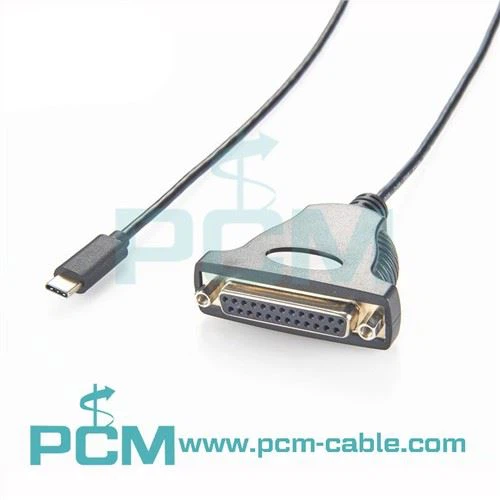
If you're in the market for RS422 cables for your medical devices, we have a great range of products. For example, our DB26 Male To Female Serial Cable High Flex is designed to be flexible and durable, making it suitable for applications where the cable might need to be moved around or bent frequently. Our DB9 USB Power Adapter Cable can be used to connect your RS422 device to a USB - enabled power source, providing a convenient power solution. And if you're working with a CANopen system, our CANopen Line Terminator Altivar Lexium for RJ45 Connector helps to ensure proper signal termination, reducing signal reflections and improving the overall performance of your communication system.
In conclusion, RS422 cables can be a suitable option for many medical device communication applications, especially those that prioritize noise immunity and long - distance data transmission. However, for applications that require high - speed, real - time, two - way communication, other options might be more appropriate. If you're unsure whether RS422 cables are right for your medical device, feel free to reach out to us. We're here to help you make the best decision for your specific needs. Whether you're a medical device manufacturer looking for reliable cables or a medical facility in need of a communication upgrade, we can provide you with the products and expertise you need. Contact us today to start the procurement process and let's find the perfect RS422 cable solution for you.
References:


- "Serial Communication Standards: RS - 232, RS - 422, and RS - 485" by John R. Vacca
- "Medical Device Communication Systems" by William J. Tompkins