Hey there! As a GigE cable supplier, I often get asked whether GigE cables are affected by electromagnetic fields. It's a super important question, especially for those who rely on these cables for their industrial and machine - vision applications. So, let's dig into this topic and see what's what.
First off, let's understand what GigE cables are. GigE, or Gigabit Ethernet cables, are used to transmit data at high speeds, typically around 1 gigabit per second. They're commonly used in industrial cameras, machine - vision systems, and other high - performance applications where fast and reliable data transfer is crucial.
Now, electromagnetic fields (EMFs) are all around us. They're generated by a variety of sources, like power lines, electrical appliances, and wireless devices. EMFs can be either static (like the magnetic field of a fridge magnet) or dynamic (like the radio waves from your phone).
So, do these EMFs mess with GigE cables? The short answer is, it depends. GigE cables are designed to be somewhat resistant to electromagnetic interference (EMI). Most of them come with shielding, which acts as a barrier to block out external EMFs. The shielding can be made of materials like aluminum foil or braided copper.
However, not all shielding is created equal. Some GigE cables have better shielding than others, and this can make a big difference in how well they perform in the presence of EMFs. For example, our IX Industrial Category 6A Serial Cable, IX B Key To IX B Key, TPU Jacket is built with high - quality shielding that provides excellent protection against EMI. This means that even in environments with strong EMFs, you can expect a stable and reliable data transfer.
But here's the deal. If the EMF is extremely strong, even the best - shielded cables can start to experience problems. Strong EMFs can induce electrical currents in the cable, which can lead to signal distortion or even complete signal loss. This is more likely to happen in industrial settings where there are large motors, generators, or high - voltage equipment.
Another factor to consider is the length of the cable. The longer the GigE cable, the more susceptible it is to EMI. This is because a longer cable has more surface area that can be exposed to the EMF, increasing the chances of interference. So, if you're working in an environment with a lot of EMFs, it's a good idea to keep your cable lengths as short as possible.
Let's talk about some real - world scenarios. In a factory, for instance, there are lots of electrical machines running all the time. These machines generate strong EMFs that can potentially affect the performance of GigE cables used in machine - vision systems. If the cables aren't properly shielded, the images captured by the industrial cameras might be blurry or have artifacts, which can lead to errors in the manufacturing process.
On the other hand, in an office environment, the EMFs are generally much weaker. You might have a few computers, printers, and Wi - Fi routers, but these don't produce enough EMF to cause significant problems for GigE cables. So, in this case, you might not need the highest - level of shielding.
Now, let's take a look at some of our other GigE cable products. The IX A Key In - Line Jack To RJ45 Plug Cable is a great option for those who need a flexible and easy - to - install cable. It also has good shielding properties, which helps to minimize the effects of EMFs.
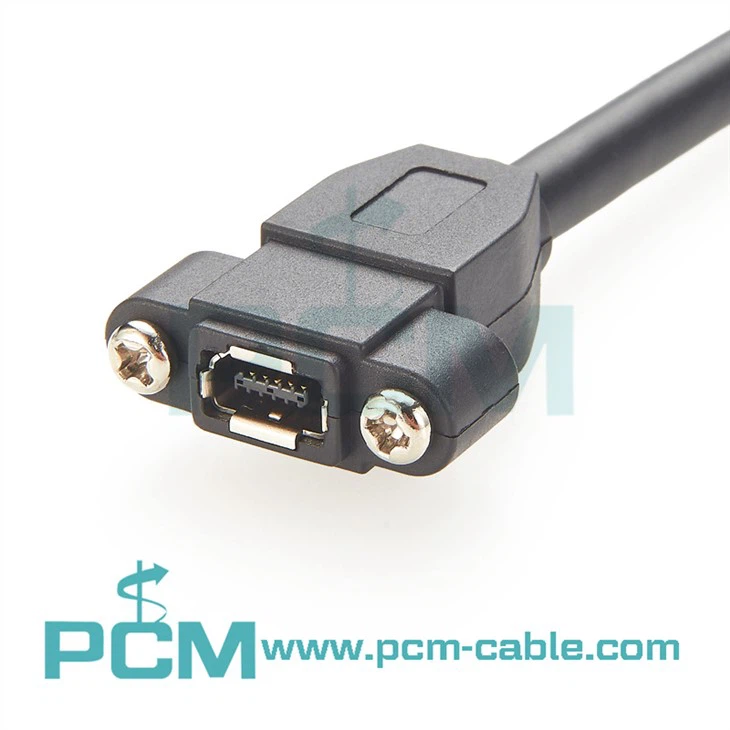

And then there's our GigE Machine Vision Cables High Flex Screw Lock Horizontal For CCD Industrial Camera. These cables are specifically designed for industrial camera applications, where they need to withstand a lot of movement and bending. They're also built with robust shielding to protect against EMI.
So, what can you do to protect your GigE cables from EMFs? First, choose the right cable for your environment. If you're in a high - EMI area, go for a cable with high - quality shielding. Second, try to route the cables away from sources of strong EMFs. For example, don't run them next to large motors or power lines.
In conclusion, while GigE cables can be affected by electromagnetic fields, there are ways to minimize the impact. By choosing the right cable and taking proper installation precautions, you can ensure that your data transfer remains fast and reliable, even in challenging environments.
If you're in the market for GigE cables and want to learn more about how they can perform in your specific situation, don't hesitate to reach out. We're here to help you make the best choice for your needs. Whether you're setting up a new machine - vision system or upgrading an existing one, we've got the cables and the expertise to get the job done right.
References:
- Textbooks on electromagnetic theory and cable engineering
- Industry reports on the performance of GigE cables in different environments