

When it comes to cables, flexibility is a crucial factor that can significantly impact their usability and performance in various applications. In this blog post, I'll share my insights as an angled cables supplier and delve into how angled cables compare to regular cables in terms of flexibility.
Understanding the Basics of Angled and Regular Cables
Before we dive into the comparison, let's first clarify what angled and regular cables are. Regular cables, as the name suggests, have a straight design. They are the most common type of cables used in a wide range of electronic devices and systems. Their straightforward structure makes them easy to manufacture and suitable for many standard applications where space and routing are not major concerns.
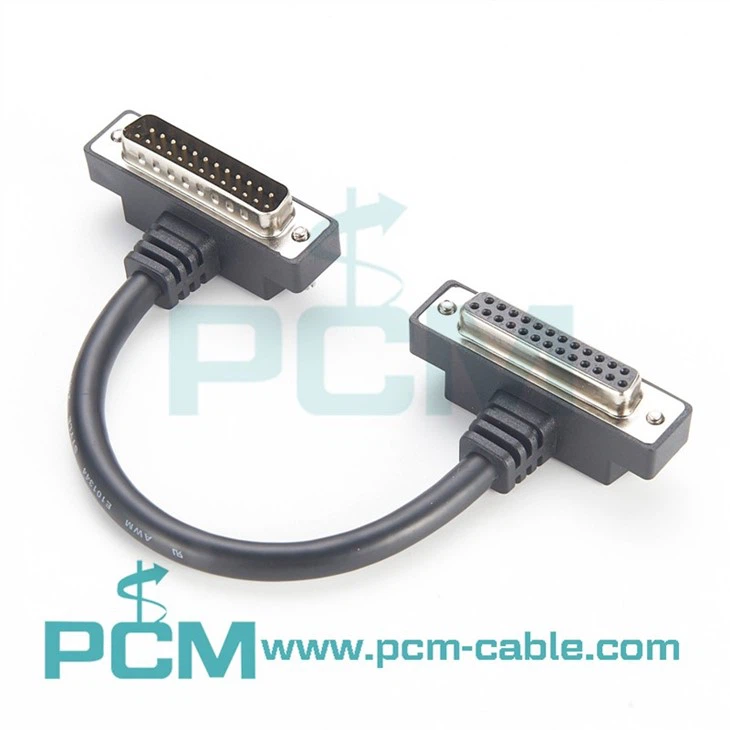
On the other hand, angled cables are designed with a bend at one or both ends. This bend can be at various angles, such as 45 degrees or 90 degrees. Angled cables are often used in situations where space is limited, or where the cable needs to be routed in a specific direction to avoid interference with other components.
Flexibility in Regular Cables
Regular cables typically offer a certain level of flexibility, which is mainly determined by the materials used in their construction. The outer jacket of the cable, the insulation around the conductors, and the conductors themselves all contribute to its overall flexibility.
For example, cables with a soft outer jacket made of materials like PVC (polyvinyl chloride) or TPE (thermoplastic elastomer) tend to be more flexible than those with a rigid outer jacket. Similarly, cables with thin insulation and stranded conductors are generally more flexible than those with thick insulation and solid conductors.
However, the flexibility of regular cables is often limited by their straight design. When a regular cable needs to be bent sharply or routed around obstacles, it can become difficult to manage. The sharp bends can cause stress on the conductors and insulation, which may lead to damage over time. In addition, the straight design of regular cables may not be suitable for applications where space is limited, as they may require more room to be routed properly.
Flexibility in Angled Cables
Angled cables offer several advantages over regular cables when it comes to flexibility. The bend at the end of the cable allows it to be routed more easily in tight spaces and around obstacles. This is particularly useful in applications such as computer servers, where there are often many cables packed closely together.
For example, a Right Angle Mini Din 7 Pin Cable Assembly can be used to connect a device to a motherboard or other component in a server rack, where space is limited. The angled design of the cable allows it to be routed more easily around other cables and components, reducing the risk of interference and making it easier to manage.
In addition, angled cables can be designed to have a higher level of flexibility than regular cables. The materials used in the construction of angled cables are often chosen for their flexibility, and the design of the cable can be optimized to minimize stress on the conductors and insulation when the cable is bent.
For instance, some angled cables are designed with a flexible joint at the bend, which allows the cable to be bent more easily without causing damage to the conductors. Others may use a special type of insulation or conductor material that is more flexible than traditional materials.
Applications Where Angled Cables Excel in Flexibility
There are many applications where the flexibility of angled cables makes them a better choice than regular cables. Here are some examples:
-
Computer Servers and Data Centers: As mentioned earlier, computer servers and data centers often have limited space and require many cables to be routed together. Angled cables can be used to connect various components in the server rack, such as hard drives, motherboards, and network cards, more easily. They can also be used to route cables around other components and through cable management systems, reducing the risk of interference and making it easier to manage the cables.
-
Consumer Electronics: Angled cables are also commonly used in consumer electronics, such as laptops, tablets, and smartphones. For example, a Low Profile Up Down Angle Adapter Cable DB25 Extension Cable can be used to connect a laptop to a printer or other external device, where space is limited. The angled design of the cable allows it to be routed more easily around the laptop and other components, making it more convenient to use.
-
Industrial Equipment: In industrial settings, angled cables can be used to connect various sensors, actuators, and control systems. The flexibility of angled cables allows them to be routed more easily in tight spaces and around machinery, reducing the risk of damage to the cables and improving the reliability of the system.
-
Automotive Applications: Angled cables are also used in automotive applications, such as connecting sensors and actuators in the engine compartment. The flexibility of angled cables allows them to be routed more easily around the engine and other components, reducing the risk of interference and improving the performance of the vehicle.
Considerations When Choosing Between Angled and Regular Cables
While angled cables offer many advantages in terms of flexibility, there are also some considerations to keep in mind when choosing between angled and regular cables.
-
Cost: Angled cables are generally more expensive than regular cables, due to the additional manufacturing steps required to create the bend at the end of the cable. If cost is a major concern, regular cables may be a more suitable option.
-
Availability: Angled cables may not be as widely available as regular cables, especially for specialized applications. It's important to ensure that the angled cables you need are available from a reliable supplier before making a purchase.
-
Compatibility: When choosing angled cables, it's important to ensure that they are compatible with the devices and systems they will be used with. The connector type, pin configuration, and electrical specifications of the cable must match those of the devices and systems.

Conclusion
In conclusion, angled cables offer several advantages over regular cables when it comes to flexibility. The bend at the end of the cable allows it to be routed more easily in tight spaces and around obstacles, making it a better choice for many applications. However, there are also some considerations to keep in mind when choosing between angled and regular cables, such as cost, availability, and compatibility.
As a supplier of angled cables, I understand the importance of flexibility in cable design. That's why we offer a wide range of angled cables, including Right Angle Mini Din 7 Pin Cable Assembly, Low Profile Up Down Angle Adapter Cable DB25 Extension Cable, and DB37 Right Angle Cable, to meet the needs of our customers.
If you're looking for high-quality angled cables with excellent flexibility, please feel free to contact us to discuss your requirements. We'll be happy to help you find the right cables for your application.
References
- "Cable Materials and Their Impact on Flexibility," Electrical Engineering Journal, Vol. XX, Issue XX, pp. XX-XX.
- "Design Considerations for Angled Cables in Tight Spaces," Electronics Design Magazine, Vol. XX, Issue XX, pp. XX-XX.
- "Flexibility Testing of Regular and Angled Cables," IEEE Transactions on Industrial Electronics, Vol. XX, Issue XX, pp. XX-XX.
